How to Buy Medicine in China
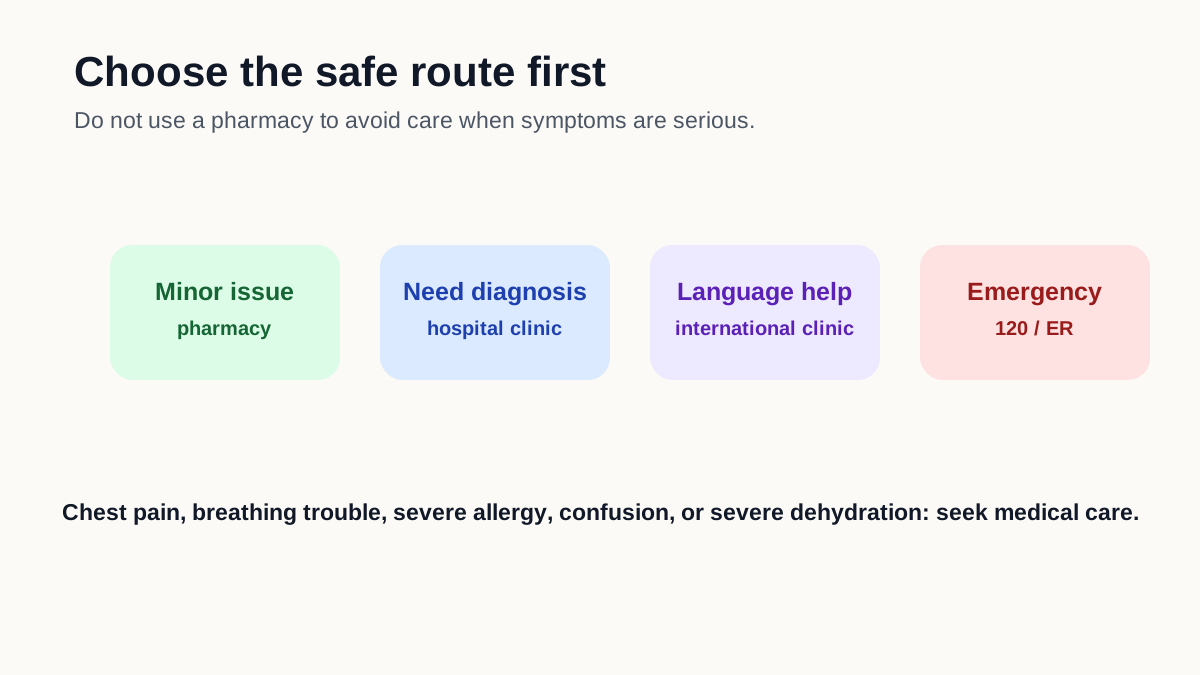
Chinese pharmacies are common and often convenient, but foreign brand names, prescription rules, Chinese-only packaging, and symptom language can make a simple purchase stressful. Use this guide to choose the safest route: pharmacy for minor issues, hospital or clinic for diagnosis/prescriptions, and emergency care for red flags.
Difficulty
Medium
Time needed
10-30 minutes for pharmacy, longer for hospital prescription
Updated
May 15, 2026
Start here
Quick answer
- For minor, familiar problems, look for a pharmacy with a green cross and the words 药店 or 大药房. Show symptoms, allergies, and the generic active ingredient name rather than only a foreign brand name.
- For prescription medicines, antibiotics, controlled medicines, unclear symptoms, children, pregnancy, chronic conditions, or severe symptoms, use a hospital outpatient department or international clinic. Shanghai's official guidance notes hospitals often have their own pharmacies after a visit.
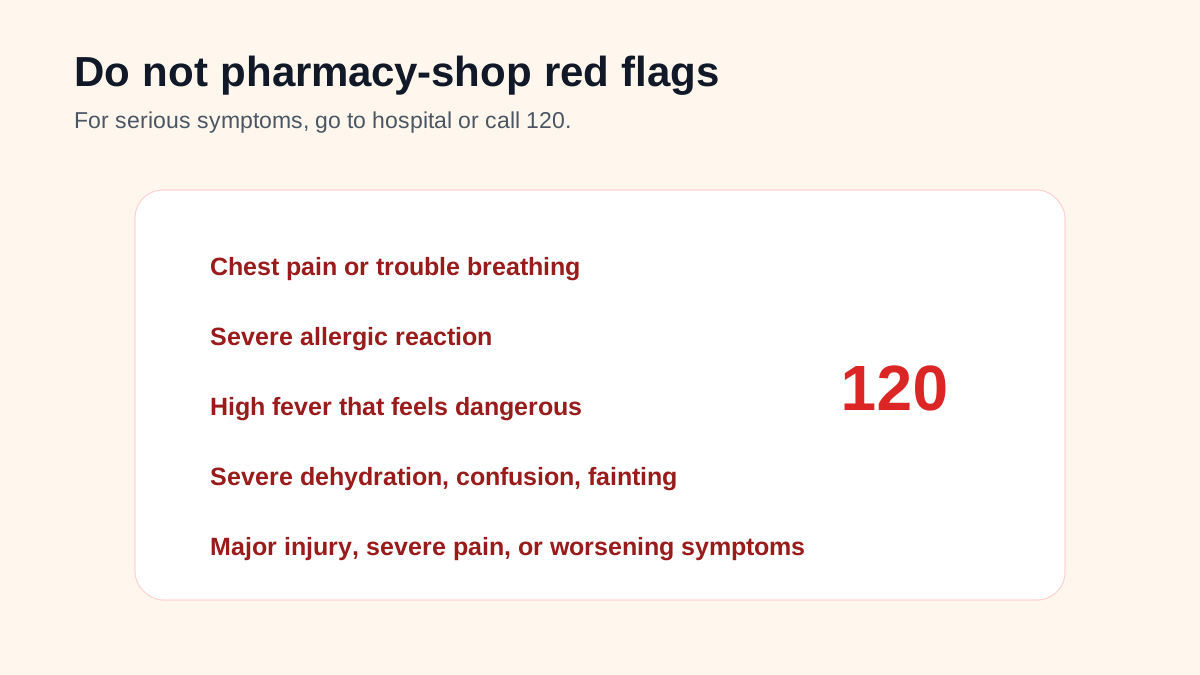
- Do not use this guide as medical advice. If you have chest pain, trouble breathing, severe allergy, confusion, severe dehydration, major injury, or worsening symptoms, seek medical care or call 120.
Requirements
- Required: translation app or Chinese text for your symptoms and medicine needs.
- Recommended: generic active ingredient name, original medicine packaging, prescription copy, or doctor's letter if relevant.
- Recommended: allergy list, chronic condition list, pregnancy/child age information, and medicines already taken.
- Recommended: Alipay/WeChat Pay, cash, or card backup.
- Required for hospital/clinic: passport or ID, phone number, and insurance details if you have travel insurance.
Visual manual
Step-by-step guide
Choose pharmacy, hospital, clinic, or emergency
Start by deciding whether this is a minor familiar issue or something that needs medical assessment. A pharmacy can help with simple over-the-counter needs. A hospital outpatient department or international clinic is better for diagnosis, prescriptions, antibiotics, controlled medicines, children, pregnancy, chronic illness, or symptoms you do not understand. For emergencies, call 120 or go to an emergency department.
This guide is practical navigation help, not a diagnosis or dosage guide.
Find a qualified pharmacy
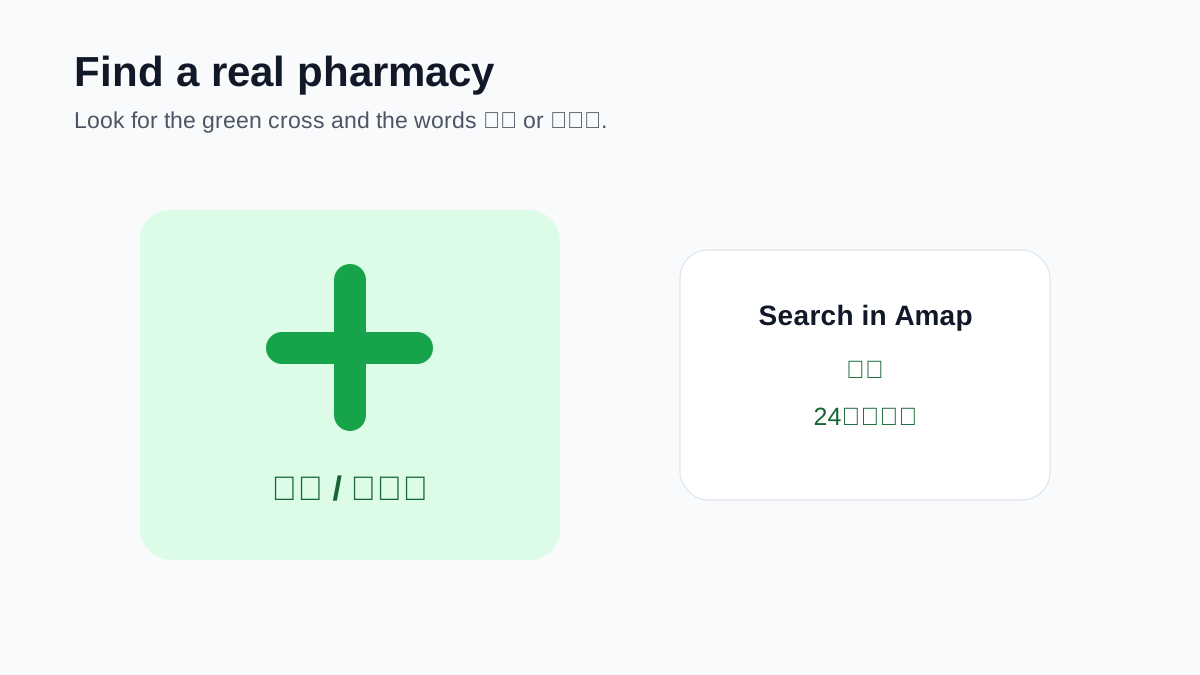
Search Amap for 药店, 大药房, or 24小时药店 if you need late-night help. Shanghai's official healthcare guidance says some large pharmacies operate 24 hours and advises going to qualified pharmacies equipped with licensed pharmacists. Look for the green cross sign and chain pharmacies when possible.
Convenience stores may sell basic health items, but a pharmacy is the better place to ask about medicine.
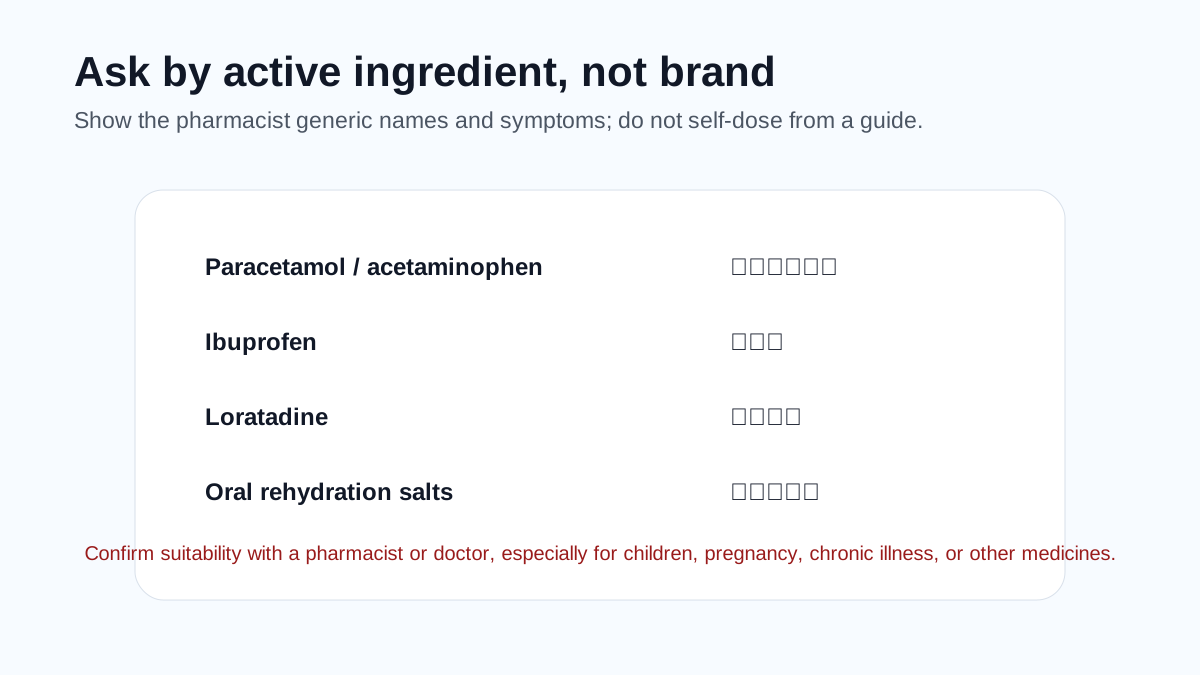
Ask by active ingredient, not only brand name
Foreign brand names may not be recognized. Show the generic active ingredient and ask the pharmacist whether an appropriate equivalent exists. Examples to show a pharmacist include paracetamol/acetaminophen 对乙酰氨基酚, ibuprofen 布洛芬, loratadine 氯雷他定, and oral rehydration salts 口服补液盐. Do not use this list to self-dose; confirm suitability with the pharmacist or doctor.
Avoid mixing medicines or duplicating active ingredients, especially cold/flu combinations.
Tell the pharmacist the important context
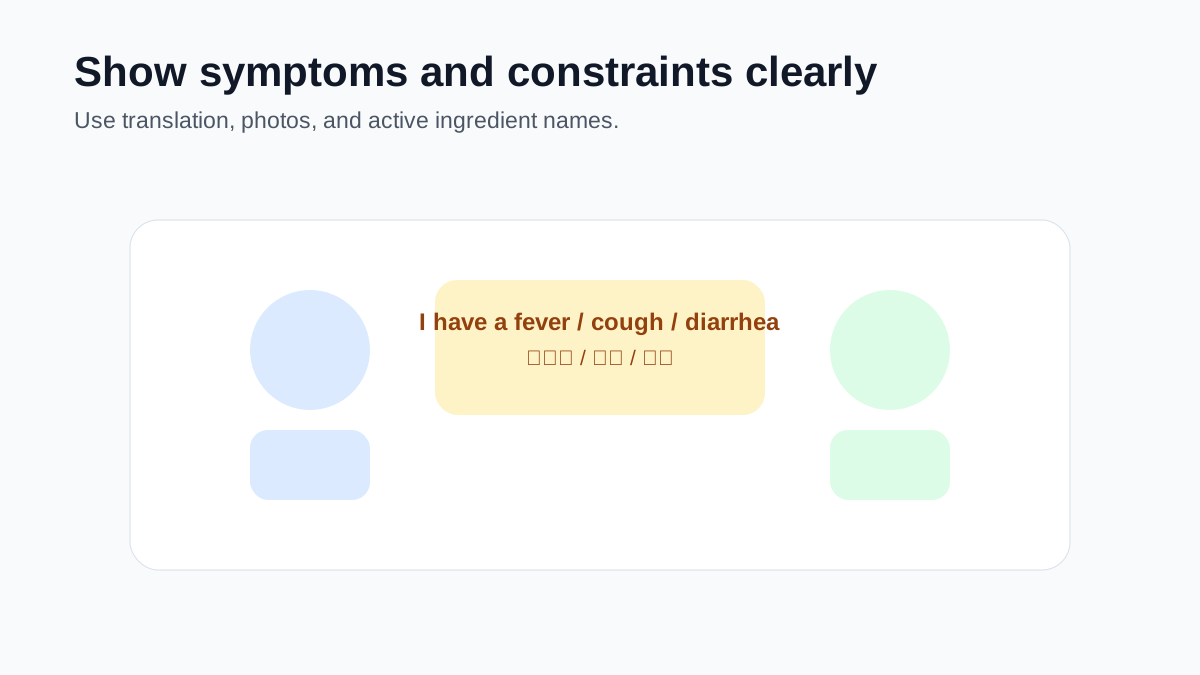
Use translation to explain symptoms, how long you have had them, allergies, pregnancy, age of a child, chronic illness, and medicines already taken. If you want a familiar medicine, show the original box or a photo. Ask: 这个需要处方吗? (Does this need a prescription?) and 怎么服用? (How is it taken?)
For serious allergies or complex medical history, skip the pharmacy and use a clinic/hospital.
Use the prescription route when needed
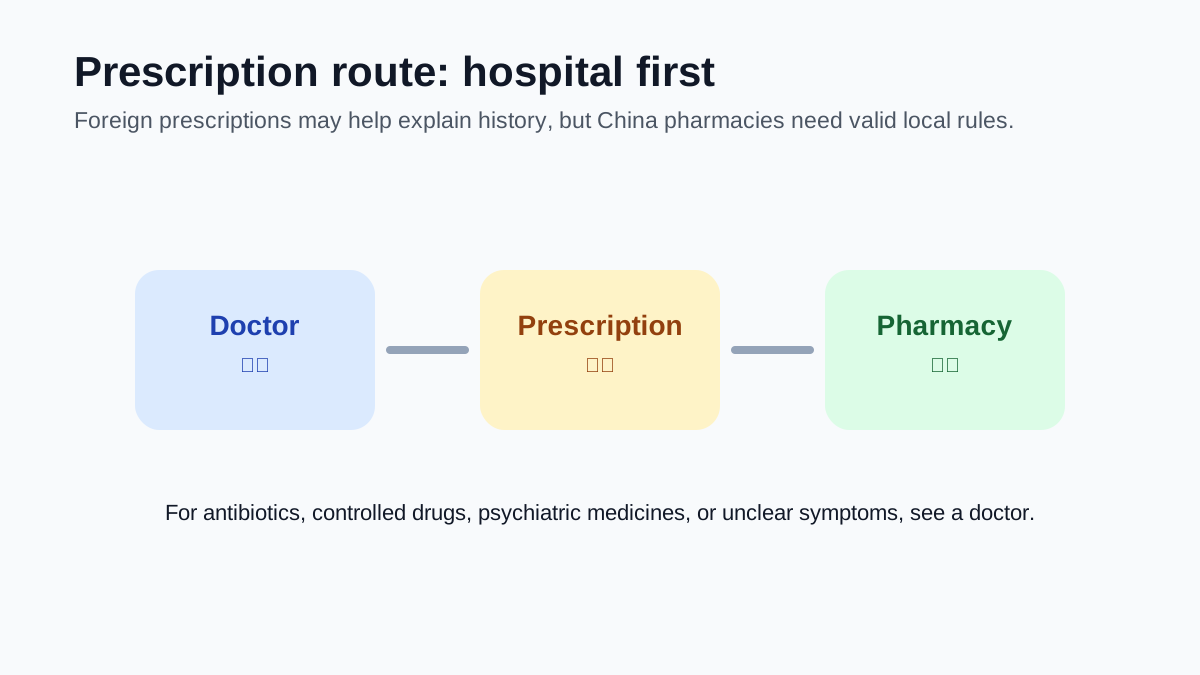
Some medicines require a valid Chinese prescription or are dispensed through hospital pharmacies. Foreign prescriptions can help explain your history but may not be accepted directly by a retail pharmacy. Visit a hospital outpatient department 门诊, international clinic, or internet hospital route if appropriate. After the doctor visit, medicine is often picked up at the hospital pharmacy 药房.
Do not try to bypass prescription rules for antibiotics, psychiatric medicines, controlled substances, injections, or chronic-disease medicines.
Use online medicine delivery carefully
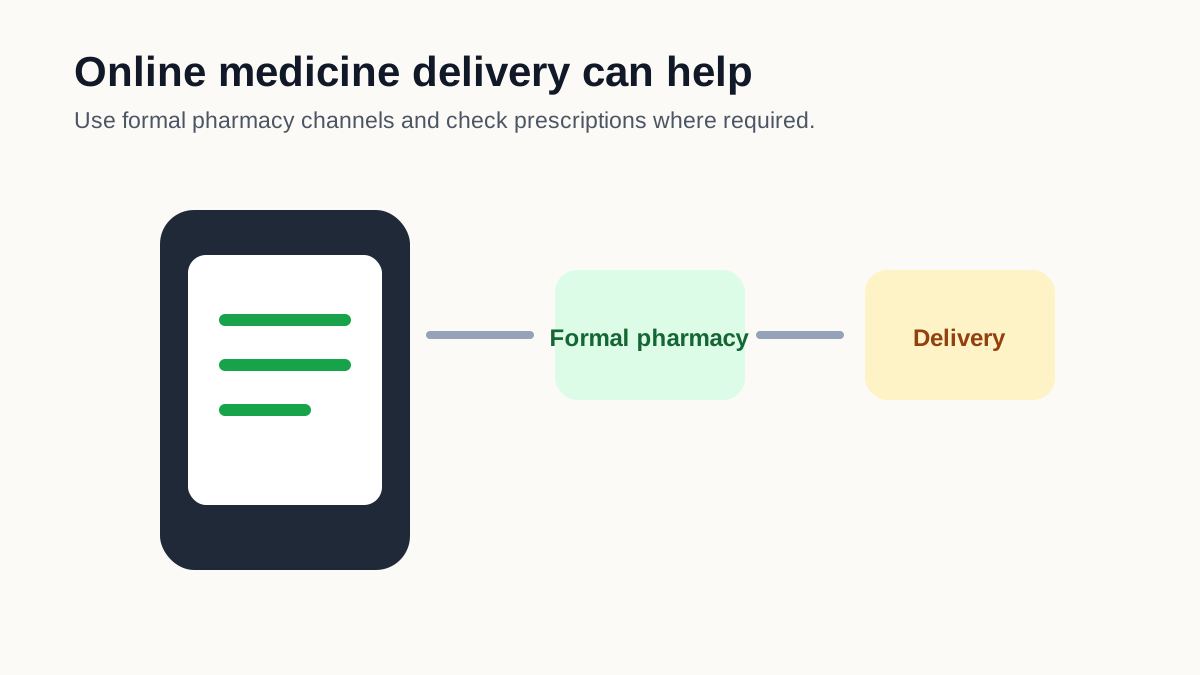
Online pharmacy delivery can be convenient through formal platforms, but it is harder if you cannot read Chinese, do not know the exact active ingredient, or need a prescription. Beijing's official FAQ says OTC medicine can be bought at formal pharmacies and prescription medicine needs prescriptions from medical practitioners; it also points users to NMPA data query for online pharmacy legitimacy.
Avoid random sellers, unofficial social-media medicine offers, and products with unclear labels.
Know when to stop and get medical help
Do not keep trying pharmacies if symptoms are severe, unusual, or worsening. Red flags include chest pain, trouble breathing, severe allergic reaction, high fever that feels dangerous, severe dehydration, confusion, fainting, major injury, severe abdominal pain, or symptoms in a child that worry you. Call 120 for emergency ambulance service in China.
When unsure, use a hospital, international clinic, or travel-insurance medical hotline.
Troubleshooting
Common problems and fixes
- The pharmacist does not know your brand name: show the active ingredient, original packaging, or a translated photo.
- The medicine is behind the counter: ask the pharmacist; many common medicines are not displayed like supermarket goods.
- You need antibiotics: do not assume they are OTC. Rules have tightened, and a doctor/prescription route may be required.
- You have a foreign prescription: it may help explain your condition, but a Chinese pharmacy may still require a local prescription.
- Online medicine page is confusing: use formal pharmacy channels and avoid ordering if you cannot verify the product.
- You feel too sick to navigate: ask hotel staff, call travel insurance, use an international clinic, go to hospital, or call 120 for emergencies.
Important warnings
- This guide does not provide diagnosis, dosage, or personalized medical advice.
- Do not mix medicines with the same active ingredient, especially cold/flu products.
- Do not buy antibiotics, controlled medicines, psychiatric medicines, injections, or chronic-disease medicines through unofficial channels.
- Check legality before bringing large supplies, controlled substances, or injectable medicines into China.
- If symptoms are severe or worsening, do not delay medical care to save time at a pharmacy.
Best route and backup plan
Recommended route
- Minor familiar issue: formal pharmacy, active ingredient name, pharmacist confirmation, clear packaging check.
- Need diagnosis or prescription: hospital outpatient department or international clinic, then hospital/pharmacy pickup.
- Urgent or severe symptoms: emergency department or 120.
Backup options
- Go to a hospital outpatient department or international clinic.
- Ask hotel staff to help search a 24-hour pharmacy or call a clinic.
- Use a formal online pharmacy platform only if you understand the product and prescription requirements.
- Bring your original medication packaging, prescription, and doctor's letter to a doctor for equivalent discussion.
Other ways to pay
- International clinic: easier English support and insurance paperwork, usually more expensive.
- Hospital outpatient department: often efficient and connected to hospital pharmacy, but Chinese-language navigation may be harder.
- Online pharmacy delivery: convenient for known OTC needs, but use formal channels and confirm product/prescription rules.
- Hotel/front desk help: useful for finding a 24-hour pharmacy, calling a clinic, or translating symptoms.
FAQ
How do I find a pharmacy in China?
Look for a green cross sign and the words 药店 or 大药房. In Amap, search 药店 for pharmacy or 24小时药店 for 24-hour pharmacy.
Can I buy medicine without a prescription?
Many common over-the-counter medicines can be bought at formal pharmacies, but prescription-only medicines require proper prescriptions. Ask the pharmacist whether a prescription is needed.
Can I use my foreign prescription in China?
It can help explain your medical history, but it may not be accepted directly by a retail pharmacy. For prescription medicines, see a doctor or clinic in China.
What are useful medicine words to show a pharmacist?
Examples include 药店 pharmacy, 药房 hospital pharmacy, 处方 prescription, 非处方药 OTC medicine, 布洛芬 ibuprofen, 对乙酰氨基酚 paracetamol/acetaminophen, 氯雷他定 loratadine, and 口服补液盐 oral rehydration salts.
Can I buy antibiotics in China?
Do not assume antibiotics are over the counter. Rules and enforcement have tightened, and you may need a doctor and prescription. Use medical care instead of self-treating infections.
Is online medicine delivery safe?
It can be useful through formal pharmacy channels, but avoid random sellers. Beijing's official FAQ points users to NMPA data query for online drug information service legitimacy.
Should I go to a pharmacy or hospital?
Use pharmacies for minor familiar OTC needs. Go to a hospital or clinic for diagnosis, prescriptions, severe symptoms, children, pregnancy, chronic illness, or uncertainty.
What number do I call in a medical emergency?
Call 120 for ambulance/emergency medical help in China.
Keep going
Related practical guides

How to Visit a Hospital in China as a Foreigner
Choose between international clinics and public hospitals, register with a passport, manage step-by-step payments, and collect the right medicine, results, and insurance documents.
How to Get Internet in China
Choose the right China internet setup for your trip: travel eSIM, roaming, local SIM, VPN, hotel Wi-Fi, and backup access before arrival.

First 72 Hours in China: Practical Setup Checklist
A focused checklist for payments, phone access, transport, hotel basics, food, and emergency backups.