
How to Visit a Hospital in China as a Foreigner
Hospitals in China can feel confusing because registration, department choice, payment, tests, pharmacy pickup, and receipts often happen as separate steps. This guide shows the practical route for foreigners who may not speak Chinese.
Difficulty
Medium
Time needed
30-90 minutes
Updated
May 14, 2026

Start here
Quick answer
- For non-emergency care, choose the easiest route first: international clinic or international department if you need English; public hospital if you need broad specialist access or lower public-hospital pricing.
- Bring your passport, phone, payment method, translated symptom note, allergy/medicine list, and insurance details. In public hospitals, expect a loop: register, see the doctor, pay, do tests, return with results, pay again if needed, then collect medicine or paperwork.
- For severe symptoms, injury, breathing trouble, stroke signs, chest pain, or a major allergic reaction, seek urgent local help immediately instead of following a normal outpatient process.
Requirements
- Required: passport or residence permit, working phone/data, payment method, hospital or clinic name/address, and a short symptom note.
- Strongly recommended: allergy list, current medication list, past reports or medicine photos, insurance card or policy details, and a translation app with photo/voice translation.
- Useful for public hospitals: a Chinese-speaking helper, hotel/school/employer contact, or patient escort for registration, payment windows, and department navigation.
Visual manual
Step-by-step guide
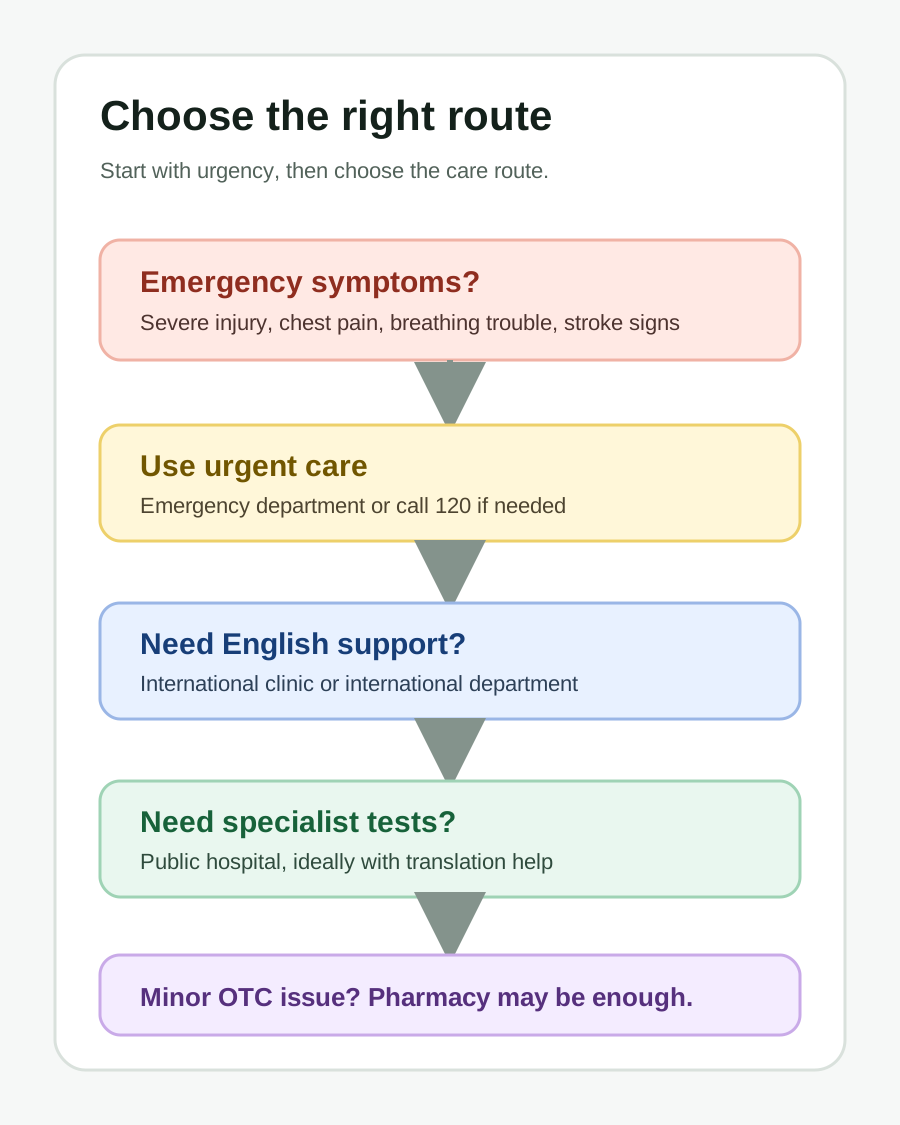
Decide whether this is emergency, clinic, public hospital, or pharmacy
Start with urgency. For severe symptoms or injury, use emergency care. For normal non-emergency care, international clinics are usually easiest in English; public hospitals are useful for specialists, tests, emergency departments, and wider availability. For simple over-the-counter needs, a pharmacy may be enough, but do not use a pharmacy for serious symptoms.
Original China Life Kit decision diagram.
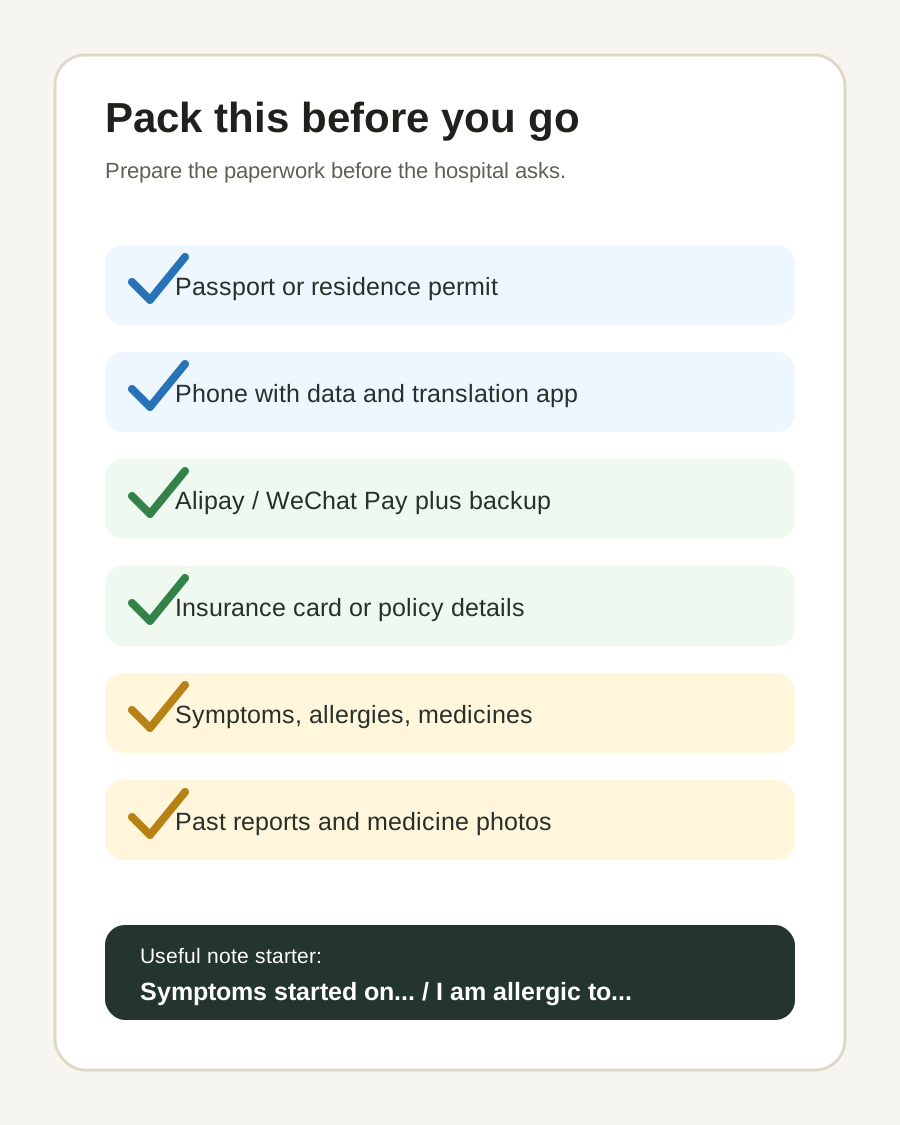
Prepare your documents and a translated symptom note
Before leaving, write down when symptoms started, where it hurts, fever or pain level, allergies, existing conditions, and medicines you take. Bring your passport, payment method, insurance details, previous reports, and photos of medicine packaging. This matters because registration staff and doctors may not speak English.
Original checklist visual; should be reviewed for brand styling.
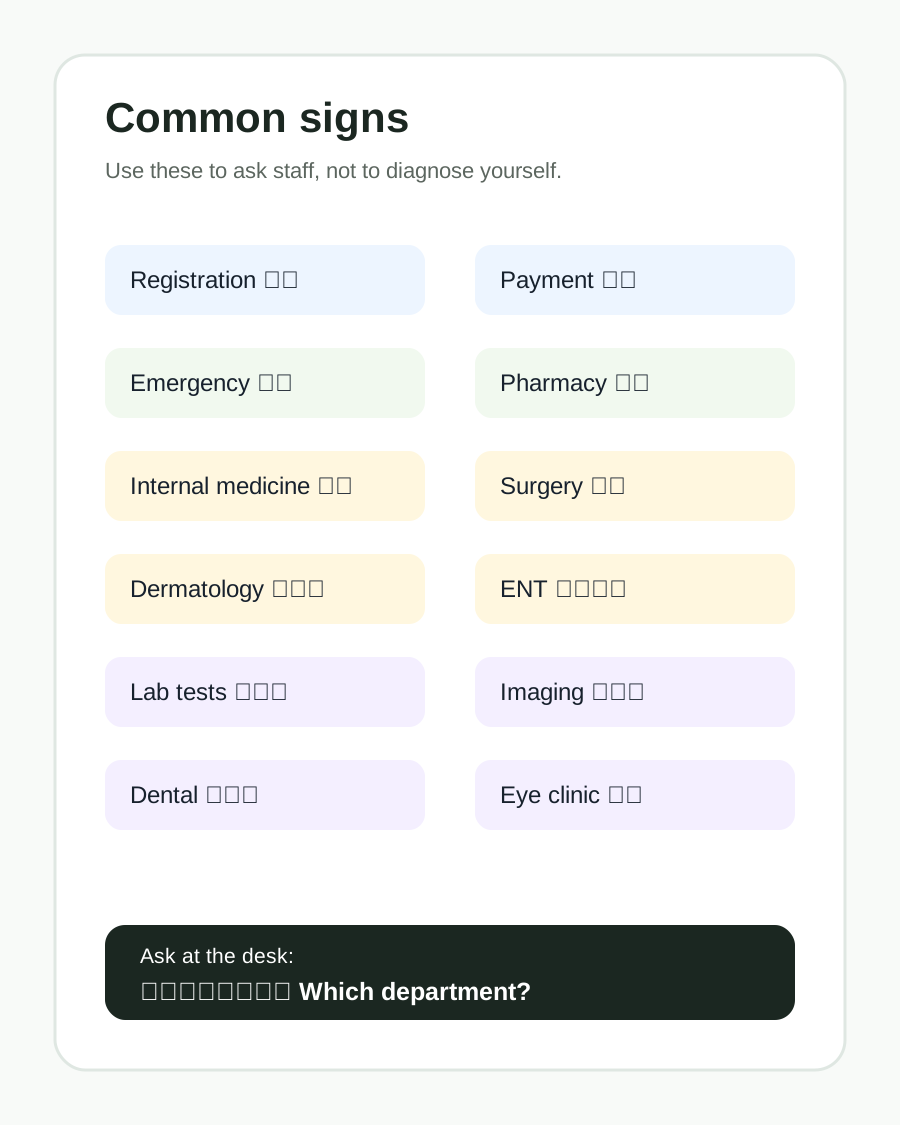
Find the hospital, then confirm the department before paying registration
Search the Chinese hospital name in Amap or ask your hotel, insurer, school, or employer for the correct hospital. At a public hospital, look for registration, 挂号, or an information desk. Show your passport and ask which department you should register for: 我应该挂哪个科?If the app or kiosk does not accept a passport number, go to the manual counter.
Original department cheat sheet based on common hospital signage.
Register with your passport and keep the hospital card or number
Official Shanghai guidance says passport details may be needed for registration, and first-time patients may receive a hospital card for future visits. Some city apps and WeChat hospital systems let you add a foreign patient, but the exact flow differs by city and hospital. If online booking fails, arrive early and use the registration counter.
Pexels hospital photo downloaded locally; review before publishing.

See the doctor and ask what happens next
Show your symptom note, allergy list, medicines, and previous reports. If the doctor orders blood tests, imaging, or medicine, ask where to pay, where to go, and whether you must return to the same doctor with results. In public hospitals, the doctor may not explain the whole route unless you ask.
Pexels consultation photo downloaded locally; generic but relevant.

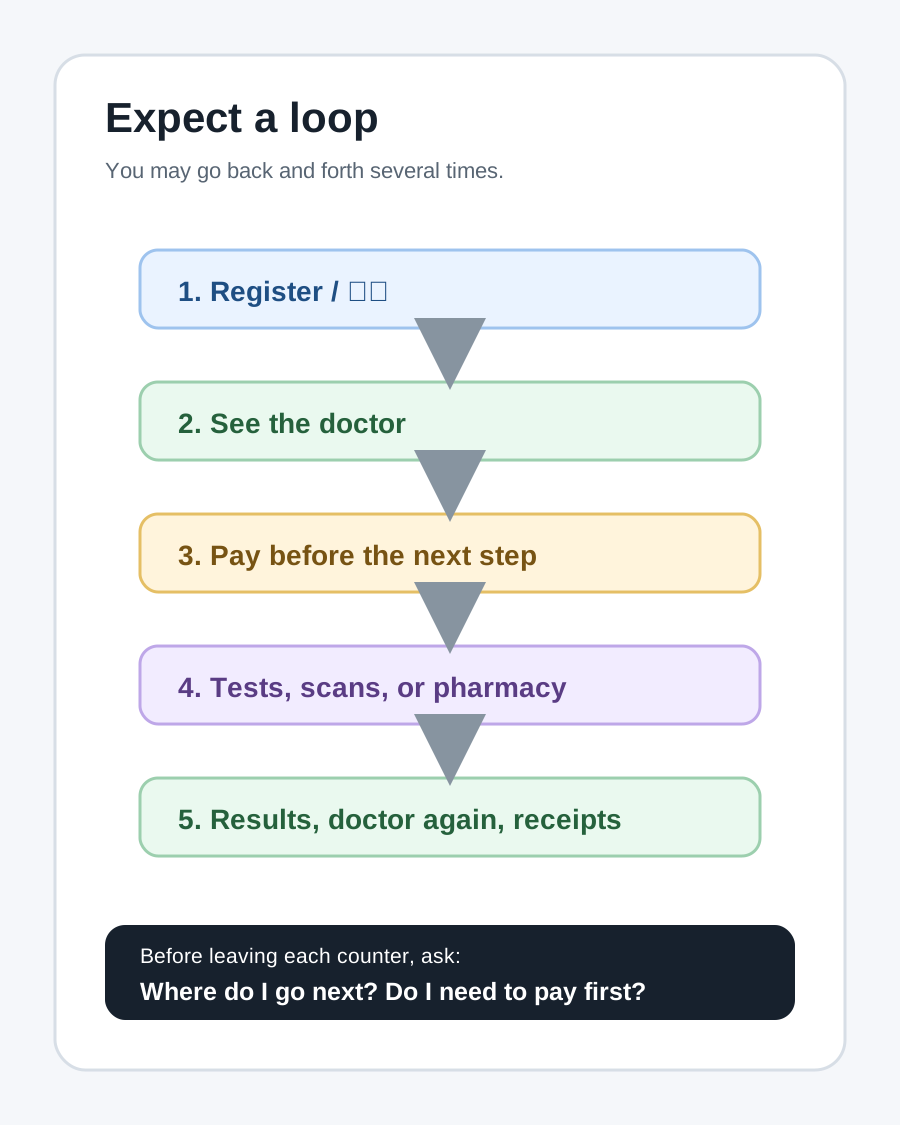
Pay before each test, scan, or medicine step
Many public hospital outpatient visits are not paid as one final bill. You may pay registration first, then pay again for tests, scans, medicine, or follow-up actions. Alipay or WeChat Pay often work, but foreign-card-linked wallets and passport accounts can fail in some hospital systems, so keep a backup method and ask for the cashier window if an app payment does not work.
Original process diagram based on official Shanghai flow and user reports.
Do tests, collect results, and return to the doctor if required
After payment, follow signs for 检验科 for lab tests or 影像科 / 放射科 for imaging. Some results are ready the same day; others may require a later return. Shanghai official guidance says if same-day results are quick, the patient may consult the original doctor without waiting again; if results come another day, registration may be needed again.
Pexels results discussion photo downloaded locally; generic but relevant.

Collect medicine, diagnosis notes, invoices, and follow-up instructions
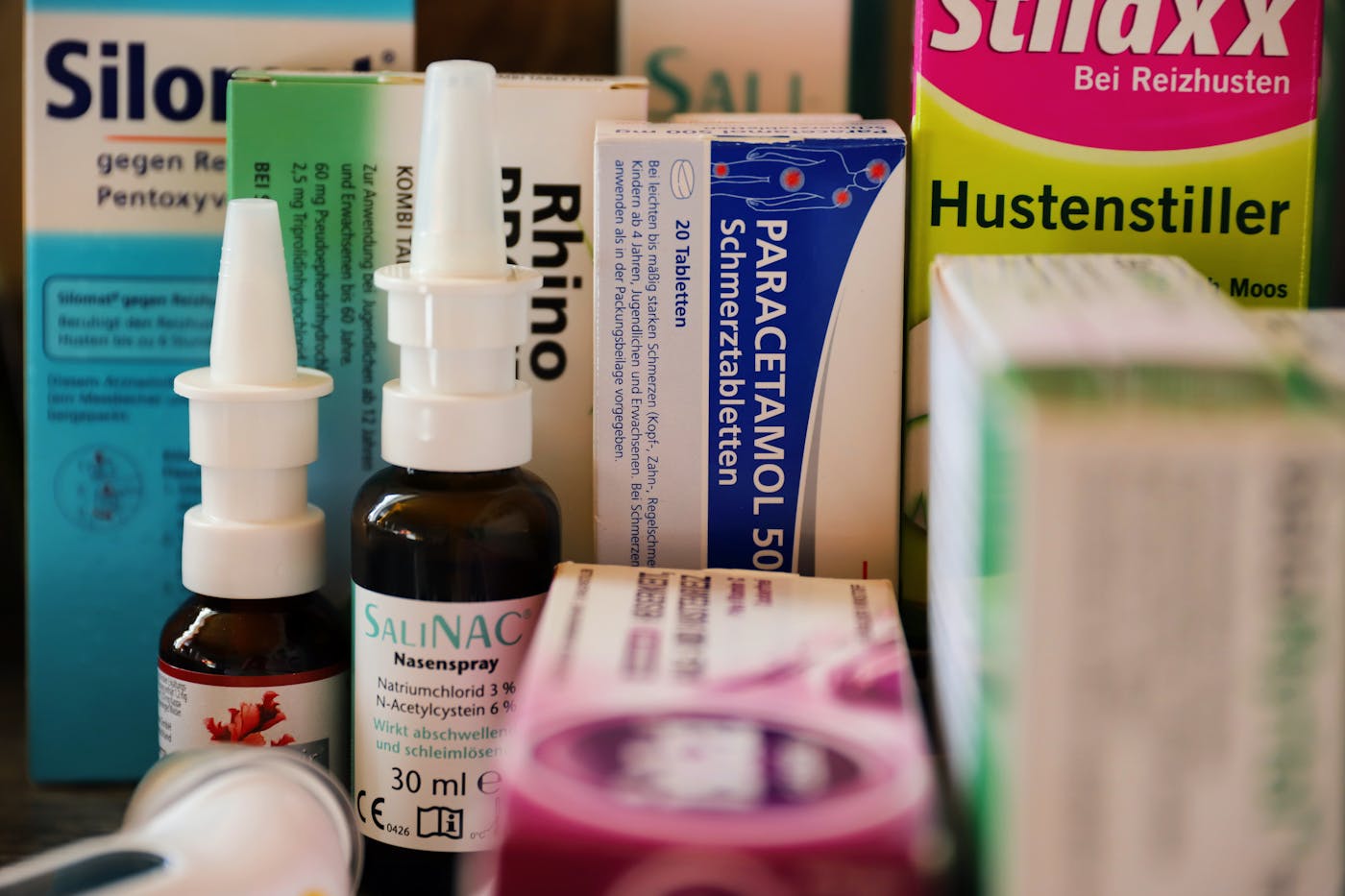
Before leaving, confirm whether medicine is collected at the hospital pharmacy, whether you need a diagnosis note, and which documents your insurer requires. Ask for fapiao/invoices, receipts, prescriptions, and printed or digital reports. Photograph every paper document immediately in case you need follow-up care or reimbursement later.
Pexels pharmacy medicine photo downloaded locally; review before publishing.
Troubleshooting
Common problems and fixes
- Wrong department chosen: ask the information desk 我应该挂哪个科?and consider an international department or general/internal medicine route if you are unsure.
- Hospital app or kiosk rejects passport: use the manual counter and say 护照挂号, meaning passport registration.
- Payment fails in the app: try the cashier window, another wallet, a Chinese bank card if you have one, or ask staff to generate a payment code.
- Doctor orders tests but you do not know where to go: ask 现在去哪里?Do I pay first? Should I come back to you after results?
- Insurance claim documents are missing: ask for invoice/fapiao, diagnosis note, prescription, test reports, and receipts before leaving.
- No English support: use translated symptom notes, photo translation, hotel/school/employer help, or an international clinic for complex visits.
Important warnings
- This guide is about navigating hospital systems, not medical diagnosis. For serious or worsening symptoms, use urgent medical care.
- For severe symptoms, injuries, chest pain, breathing trouble, stroke signs, or major allergic reactions, seek urgent local help immediately. Beijing's official English site lists 120 for medical emergencies.
- Do not buy appointment slots from unofficial people outside hospitals.
- Do not assume every hospital app accepts passports, foreign cards, or English names. Manual counters still matter.
- Keep receipts, diagnosis notes, prescriptions, test reports, and invoices if you may need insurance reimbursement.
Best route and backup plan
Recommended route
- For most tourists and non-Chinese speakers with non-emergency needs, start with an international clinic, hospital international department, or insurer-recommended provider. Use a public hospital when you need emergency care, specialist departments, advanced tests, lower public-hospital pricing, or when the international option refers you there.
Backup options
- Use an international clinic for clearer English support if available.
- Ask your school, employer, hotel, or insurer for hospital recommendations.
- Prepare a translated symptom summary before you go.
- Bring a trusted Chinese-speaking contact for complex hospital visits if possible.
Other ways to pay
- International clinic or private hospital for English support and smoother billing.
- Public hospital international department if available in your city.
- Standard public hospital outpatient route with a Chinese-speaking helper.
- Insurer-recommended provider if direct billing or reimbursement matters.
- School, employer, hotel, embassy resource page, or patient escort for hospital choice and translation.
- Pharmacy only for minor, non-urgent over-the-counter needs.
FAQ
Can foreigners go to public hospitals in China?
Yes. Foreigners can use public hospitals, but the practical difficulty is registration, department choice, payment windows, Chinese-only apps, and communication. Bring your passport and use the manual counter if the app or kiosk does not accept passport details.
Do I need my passport at the hospital?
Bring it. Shanghai's official medical service guide says passport details may be needed for registration, and first-time patients may receive a hospital card. A photo of your passport is useful, but the physical passport is safer.
Can I pay with Alipay or WeChat Pay?
Often yes, but do not rely on one method. User reports show some hospital systems or payment flows may not handle passport accounts smoothly, especially for foreigners using app-based systems. Keep backup payment and ask for the cashier window if mobile payment fails.
Should I go to an international clinic?
If you need English, have travel or international insurance, or want a simpler appointment flow, an international clinic or international department is usually the easiest first stop for non-emergency care. Public hospitals may be better for specialist access, emergency departments, advanced tests, or lower public-hospital pricing.
What should I bring for insurance?
Bring policy details, insurer contact, passport, and ask for invoices, diagnosis notes, prescriptions, and receipts.
How do I know which department to register for?
Ask the information desk before paying. Useful phrase: 我应该挂哪个科?which means, Which department should I register for? Do not guess if symptoms are unclear, because registering for the wrong department can waste time.
What if the hospital app only accepts a Chinese ID card?
Try the hospital's manual registration counter. Some city or hospital systems allow a foreigner/passport option, while others work poorly for passport users. This varies by city and hospital.
Do Chinese hospitals have English-speaking doctors?
Some international clinics, private hospitals, and international departments do. Standard public hospital departments may have little or no English support, even in large cities. Bring translated notes and consider a helper for complex visits.
Why do I have to pay several times?
Many public hospital outpatient visits require payment before each step: registration, tests, imaging, medicine, or follow-up actions. This is one of the most common foreigner pain points reported online.
Can I get medicine at the hospital?
Often yes. Shanghai's official guide notes that hospital pharmacies are commonly located in the outpatient building lobby. Confirm where to pick up medicine and ask staff to explain dosage instructions clearly.
What should I do in a medical emergency?
Use urgent local help immediately. Beijing's official English FAQ says to call 120 when medical emergency services are needed. If you are at a hotel, airport, school, office, or station, also ask staff nearby to help communicate the location.
Amap
A Chinese map app for finding stores, planning metro routes, checking addresses, and navigating daily life.
Keep going
Related practical guides

How to Set Up Amap in China as a Foreigner
Set up Amap, also called Gaode Maps, so you can search Chinese addresses, navigate metro/walking routes, save places, and use local map data in China.

First 72 Hours in China: Practical Setup Checklist
A focused checklist for payments, phone access, transport, hotel basics, food, and emergency backups.