TransportEssential

How to Board High-Speed Trains in China

China high-speed rail is efficient once you know the station flow. The hard part for first-time foreign visitors is not the train itself; it is choosing the correct station, using the passport/manual channel, reading the departure board, getting through security, and finding the right gate before it closes.

Difficulty

Easy

Time needed

45-90 minutes at the station

Updated

May 15, 2026

Helpful?
0-5 points
How to Board High-Speed Trains in China

Start here

Quick answer

  • Bring the exact physical passport used to buy the ticket. If your ticket was booked with a passport, use the staffed/manual channel at station entry, ticket gates, boarding, and exit if the automatic gates do not scan it.
  • For your first high-speed train, arrive 60-90 minutes before departure at large stations. Experienced travelers at smaller stations may need less time, but official 12306 guidance says to reserve enough time for ticket/ID checks, security, walking distance, and gate procedures.
  • Inside the station, find your train by train number first, then departure time and destination. The departure board tells you the waiting hall or gate; the gate opens before departure and closes before the train leaves.

Requirements

  • Required: physical passport used for the booking, not just a photo.
  • Required: confirmed train details: train number, departure station, destination station, departure time, carriage, and seat.
  • Required: enough time for station entry, passport/manual checks, security, and walking to the gate.
  • Recommended: screenshots of your booking confirmation and Chinese station names.
  • Recommended: Amap route to the exact station entrance, because many cities have multiple railway stations.
  • Recommended: luggage within official railway rules and no prohibited/restricted items.

Visual manual

Step-by-step guide

1

Confirm the exact station before leaving

Many Chinese cities have several major railway stations. Do not only look at the city name. Check the full departure station, such as Beijing South, Beijing West, Shanghai Hongqiao, Shanghai Railway Station, Guangzhou South, Shenzhen North, or Chengdu East. Put the Chinese station name into Amap and leave enough time for traffic, metro transfers, station entrances, and walking inside the building.

User pain point: people miss trains not because boarding is hard, but because they went to the wrong station or arrived too close to departure.

Map-style reminder to check the exact China railway station before leaving
The full station name matters more than the city name.
2

Arrive early, especially the first time

For a first-time foreign visitor at a large station, plan around 60-90 minutes before departure. Add more time during holidays, with children, with large bags, or if your passport has not worked smoothly at railway gates before. Official 12306 guidance does not give one fixed arrival time; it says to reserve enough time for ticket windows, security, ID verification, ticket gates, baggage service, and walking distance.

Trip.com notes some procedures can start as early as 120 minutes before departure; real time needed depends on station and queue.

Recommended arrival timeline for China high-speed rail stations
The bigger the station and the less familiar you are, the earlier you should arrive.
3

Enter with your passport through the manual lane

Go to the station entrance and look for the staffed lane if the automatic gates are for Chinese ID cards. Show your physical passport. If staff ask for ticket details, show your 12306 or Trip.com confirmation with train number and booking/passenger information. For most paperless tickets, your passport is the main travel document, not a printed ticket.

Trip.com states that passengers using passport, foreign permanent resident ID, or similar documents should use the manually staffed channel to enter and exit the station.

Passport manual channel at a China railway station
Passport users often need the staffed/manual channel.
4

Pass security with luggage

After ID entry, put luggage through the X-ray belt and walk through security. Official 12306 FAQ says security checks are compulsory for passengers and belongings. The same FAQ lists free carry-on limits: 20 kg for most passengers, 130 cm total dimensions for EMU/high-speed train items, and 20 kg maximum for each item. In practice, users report size checks can be lenient, but prohibited items are the real risk.

Do not bring knives, flammable sprays, strong-smelling items, restricted batteries, or other prohibited items. Follow current station signage.

Security and luggage X-ray at a China high-speed rail station
Security is mandatory; know the official luggage limits.
5

Find your waiting hall or gate from the departure board

Once inside, look for the big departure board. Match your train number first, then time and destination. Do not guess from the destination alone because multiple trains may go to the same city. The screen will show a waiting hall, gate, floor, or status such as waiting, boarding, or closed. If you cannot read the board, show your train number to staff.

Reddit users note that English app views may not always show gate details clearly; station screens are the final source on the day.

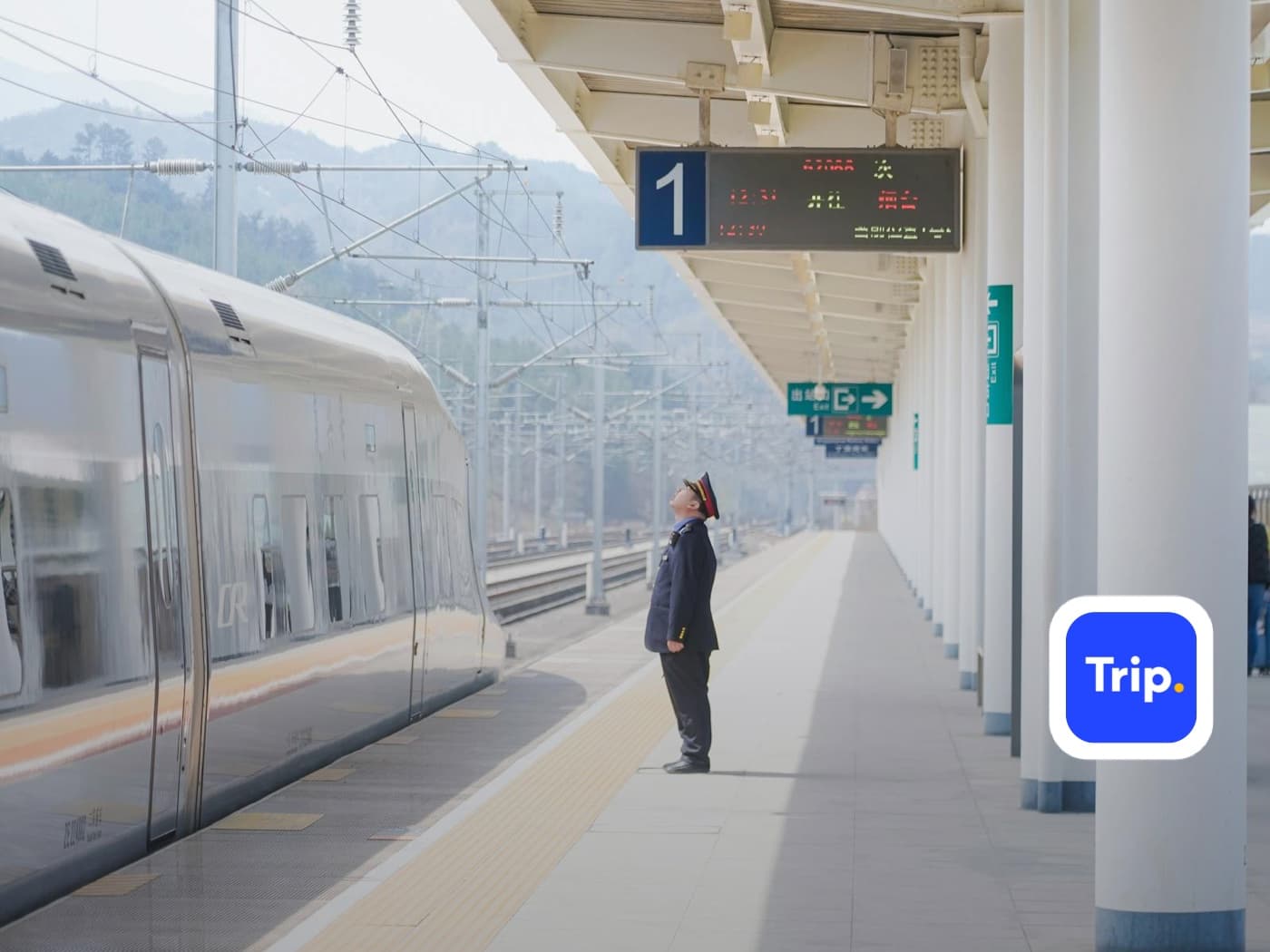
Departure board showing train number, destination, gate, and status
Train number is the safest anchor.
6

Wait near the gate and board when it opens

Go to the correct gate early and stay nearby. Boarding often starts around 15-20 minutes before departure, but it varies by station and train. When the status changes to boarding, join the correct line and use the manual/passport lane if the scanner does not accept your passport. Do not arrive at the gate at the exact departure time; ticket checks stop before the train leaves.

Official 12306 guidance says ticket sales and checks are halted before train departure according to station announcements.

Waiting hall and boarding gate for China high-speed rail
Be at the gate before boarding starts.
7

On the platform, match carriage first

After the gate, follow the crowd down to the platform but check your carriage number before stepping onto the train. Platform floor markings and overhead signs show where each carriage stops. Board the correct carriage if possible, then find your seat number. If you board the wrong carriage, you can usually walk through inside the train, but it is harder with large luggage.

Store large bags at carriage-end racks where available; smaller bags can go overhead or under/near your seat without blocking aisles.

Platform carriage and seat guide for China high-speed rail
Carriage first, seat second.
8

After arrival, exit or transfer with your passport ready

At the destination, follow signs for exit, transfer, metro, taxi, or toilets. Some exits also use ticket/passport checks, so keep your passport ready until you are outside the station. If you have a transfer, look for transfer signs and staff before exiting; some transfers can stay inside the station, while separate bookings or station changes may require exiting and re-entering.

Use toilets before boarding or after arrival if you have time. Facilities vary by station and train, and squat toilets may appear in some areas.

Exit, transfer, toilet, taxi, and metro signs after a China high-speed train
Keep the passport handy until the journey is fully finished.

Troubleshooting

Common problems and fixes

  • Passport will not scan: move to the staffed lane and show the physical passport plus booking details.
  • Trip.com only shows a confirmation, not a paper ticket: for paperless tickets, the ticket is linked to the ID document used at booking. Still keep the confirmation for train, seat, and support details.
  • Cannot find the gate: match train number on the large station screen and ask staff by showing the number.
  • Went to the wrong station: contact the app or ticket window immediately; station changes are usually not fixable at the gate.
  • Security removes an item: station security controls prohibited and restricted items; official rules and current station notices override travel-blog advice.
  • Large luggage has no nearby space: use carriage-end racks, overhead racks if it fits, or ask staff. Do not block doors or aisles.
  • Short transfer feels confusing: follow transfer signs and ask staff before exiting the station.

Important warnings

  • Do not leave your passport in checked luggage, hotel safe, or with another traveler. You need the physical document.
  • Do not arrive at the gate at departure time. Gate checks stop before the train leaves.
  • Do not assume all stations with the city name are interchangeable.
  • Do not rely only on English signs; use train number, Chinese station name, and screenshots.
  • Do not bring restricted items just because they were allowed on a previous route; security interpretation can vary.

Best route and backup plan

Recommended route

  • Most first-time visitors: arrive 60-90 minutes early, use the passport/manual lane, pass security, find the train number on the board, wait near the gate, board by carriage number, and keep the passport until exit.
  • Large stations or holidays: add extra time and avoid tight connections.
  • Short transfers: find the transfer route before exiting; ask staff with your next train number.

Backup options

  • Ask station staff by showing your train number and passport.
  • Use the ticket window or service desk if passport entry fails.
  • Use Amap or taxi signs to reach the correct station entrance.
  • If you miss the train, go to the ticket office or app immediately to check change/refund options.

Other ways to pay

  • Ticket office/service desk: useful if passport entry, booking name, or ticket status fails.
  • Trip.com support: useful if the booking was made through Trip.com and the issued ticket details look wrong.
  • 12306 app service area: useful for lost items, ticket changes, and official railway functions if your account works.
  • Station staff: often the fastest solution if you show train number, passport, and destination on your phone.

FAQ

Is my passport my train ticket in China?

For most paperless tickets booked with a passport, your ticket is linked to that passport. Bring the exact physical passport used for booking and keep the confirmation for train number, carriage, seat, and support details.

Can foreigners use the automatic gates?

Sometimes passports scan, but do not count on it. Use the staffed/manual channel if the gate is designed for Chinese ID cards or your passport does not scan.

How early should I arrive for a high-speed train?

For your first trip at a major station, 60-90 minutes is a practical buffer. Smaller stations or experienced travelers may need less, but official guidance says to reserve enough time for ID check, security, ticket gate, and walking distance.

Do I need to collect a paper ticket?

Usually no for standard paperless China Railway tickets. Your passport and e-ticket record are normally enough. If staff cannot find the booking, go to the ticket office or service desk.

What luggage can I bring on a China high-speed train?

12306's English FAQ lists 20 kg free carry-on allowance for most passengers, 130 cm total dimensions for EMU/high-speed train items, and 20 kg maximum per item. Enforcement varies, but prohibited/restricted items matter.

When does boarding start?

Many guides and user reports say boarding often starts around 15-20 minutes before departure, but station screens and announcements control the actual time. Be near the gate early.

What if I miss my train?

Go to the ticket office or open the booking app immediately to check change/refund options. Rules depend on ticket type, timing, route, and platform.

Are there toilets at the station and on the train?

Yes, but facilities vary. Use station toilets before boarding if you have time, and be prepared for both Western and squat toilets in some areas.

App reference

12306

The official China Railway app for checking and booking train tickets.

Advanced·Cards: Varies·English: Partial

Keep going

Related practical guides