
Hangzhou / Food & Daily Life
Dongpo Pork: The Su Dongpo Story Behind Hangzhou's Most Comforting Classic
If West Lake vinegar fish is Hangzhou's famous argument, Dongpo pork is its warmer handshake. The dish has a story, a poet, a public-works legend, and a square of pork belly that usually makes more immediate sense to Western visitors: slow heat, wine, soy, sugar, skin, fat, lean meat, and a glossy sauce that turns richness into comfort.
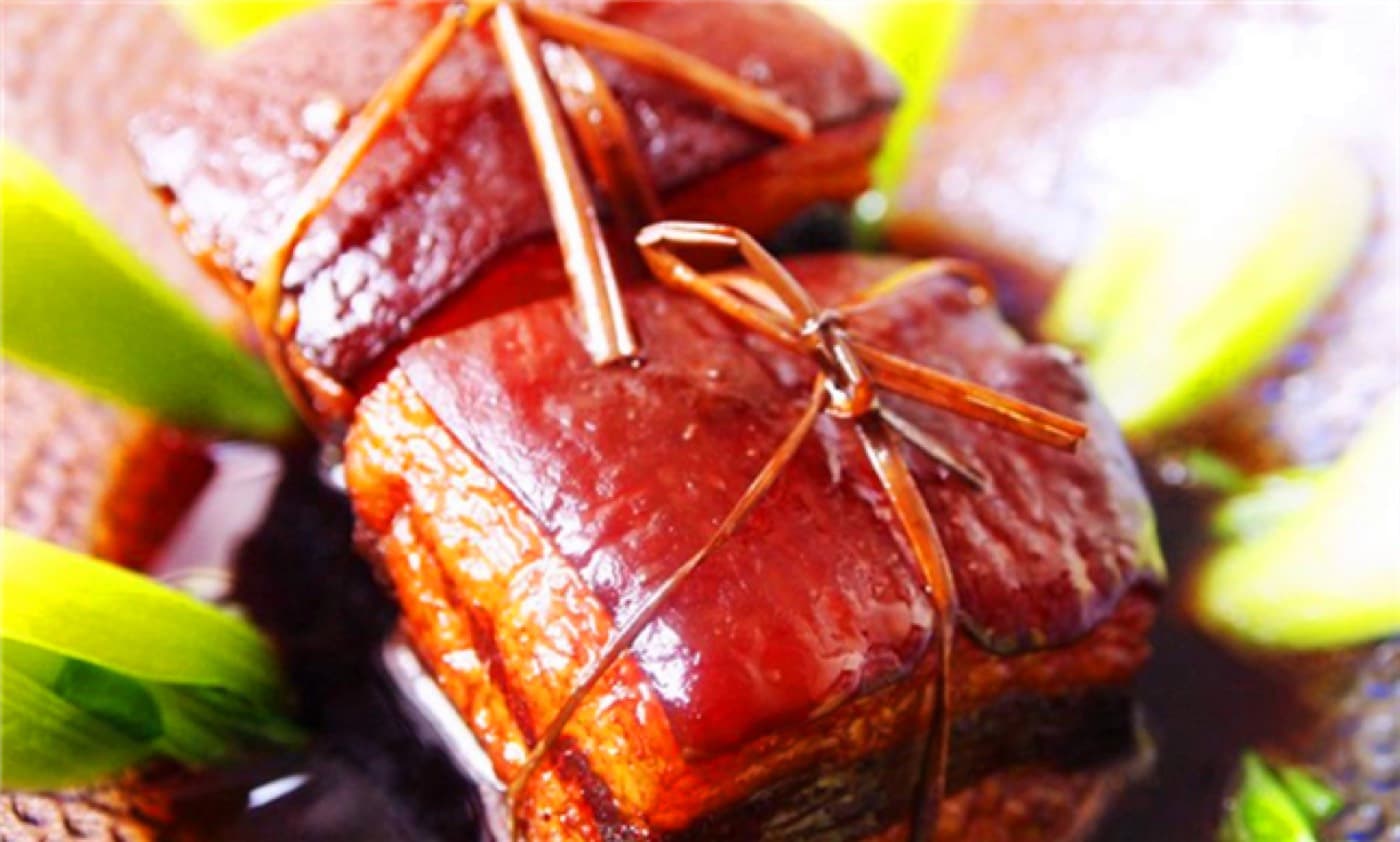
Why Dongpo pork works so well for visitors
Dongpo pork has a rare advantage: it feels local and understandable at the same time. A square of slow-braised pork belly does not require you to love bones, freshwater fish, or subtle vinegar sauce. It is rich, soft, fragrant, and easy to share.
That makes it a useful anchor for a Hangzhou meal. If the table includes skeptical eaters, Dongpo pork often buys goodwill while the more delicate or divisive dishes do their quieter work.
The Su Dongpo story
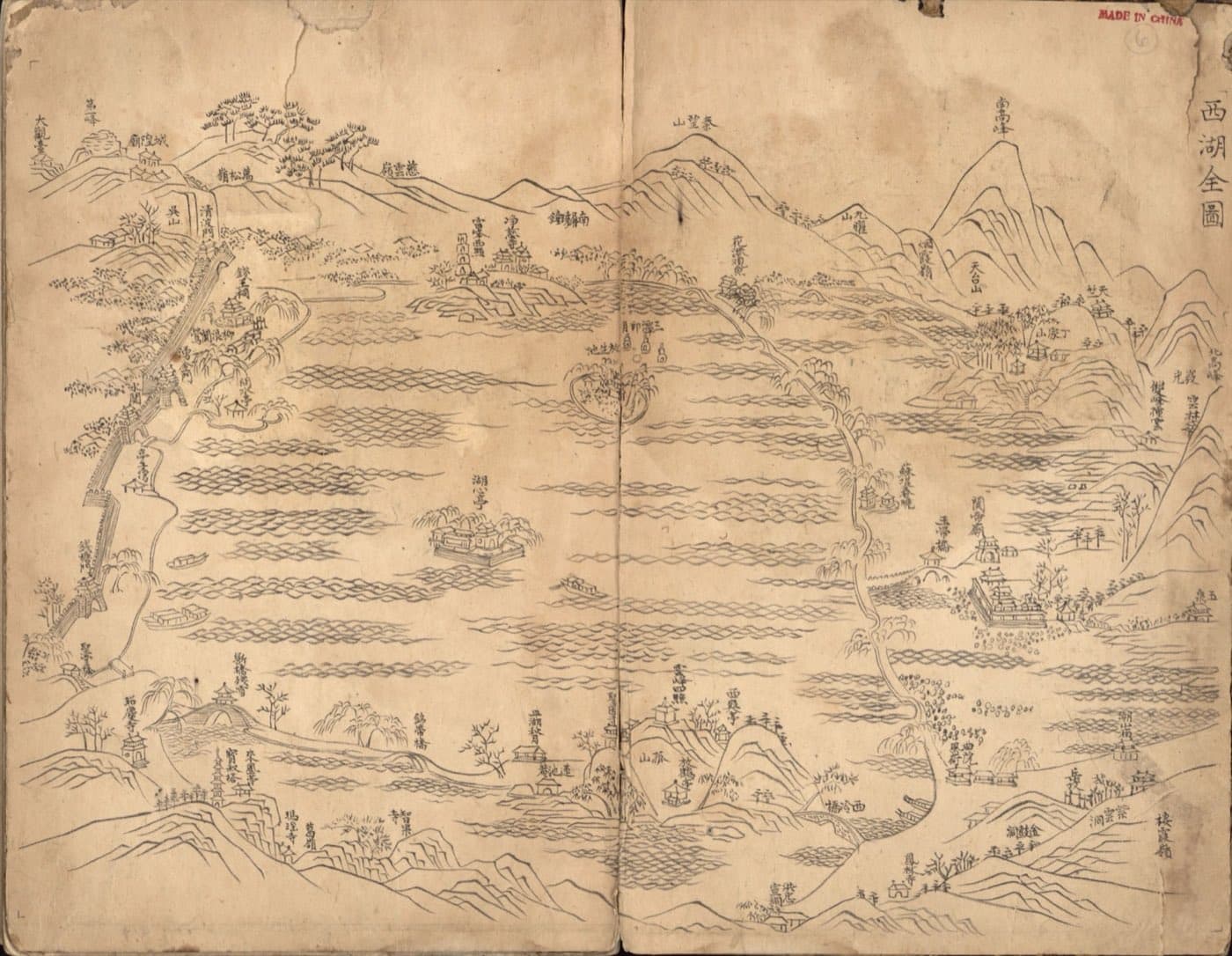
eHangzhou says the dish is named after Su Dongpo, who served as governor of Hangzhou and helped dredge West Lake. The local gratitude story says people gave him pork and wine during Spring Festival, and he had the pork stewed and distributed to workers.
As with many beloved food stories, the exact history has layers. Wikipedia frames Dongpo pork as a Hangzhou dish named for Su Dongpo, made with pork belly, red-cooking technique, soy sauce, brown sugar, and rice wine. The important travel point is that the dish turns an old poet-official into something you can taste.
What good Dongpo pork should feel like
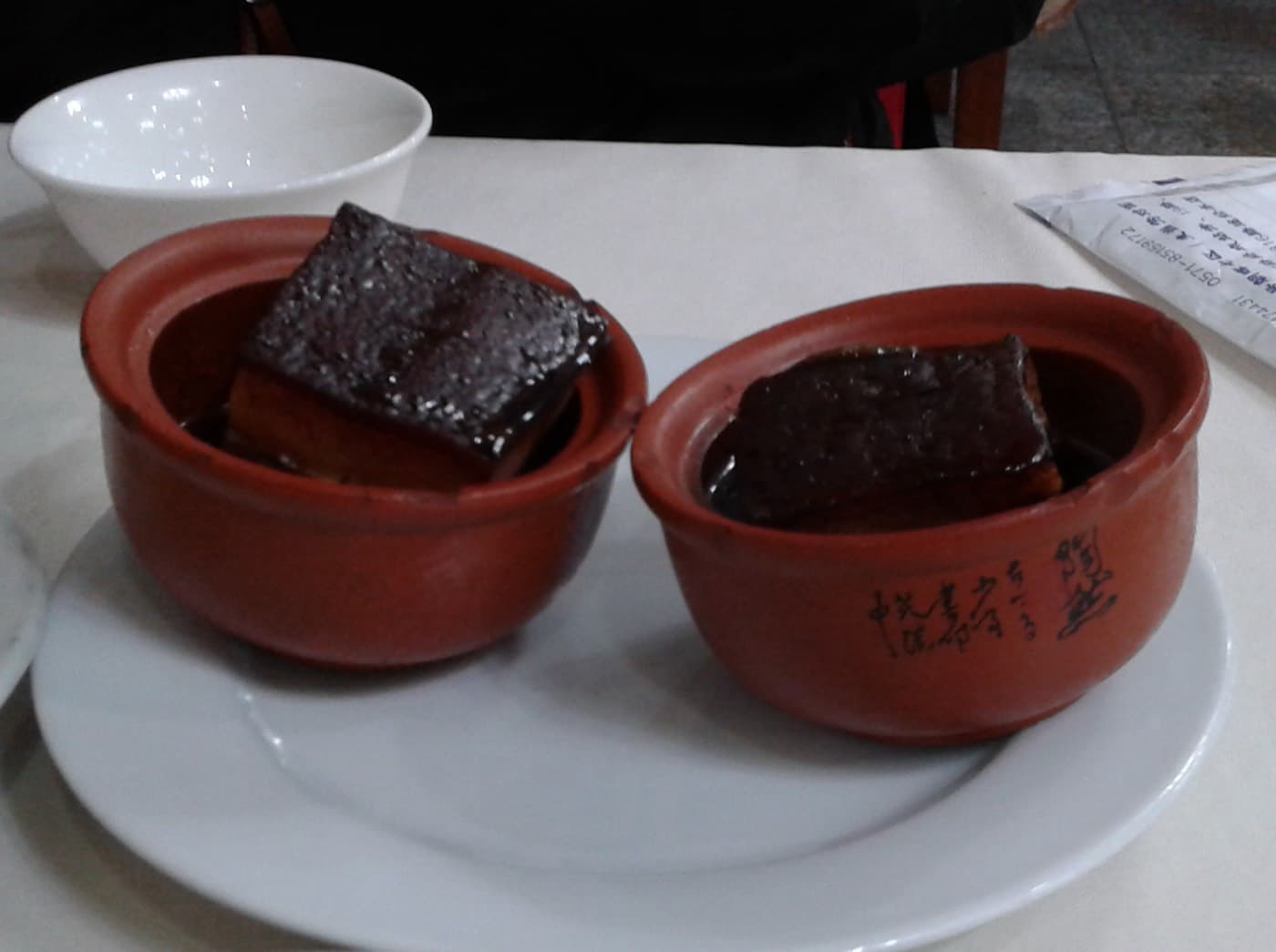
The classic square should have skin, fat, and lean meat in balance. eHangzhou describes the pork as red-glowing, soft as tofu but not fragile, glutinous but not greasy. In practical eating terms, the bite should be tender enough to yield easily, but not collapse into pure fat.
The sauce should be deep and sweet-savory rather than aggressively sugary. Rice wine gives aroma, soy gives depth, and slow heat turns a simple ingredient into something luxurious.
How to order it without overdoing the richness
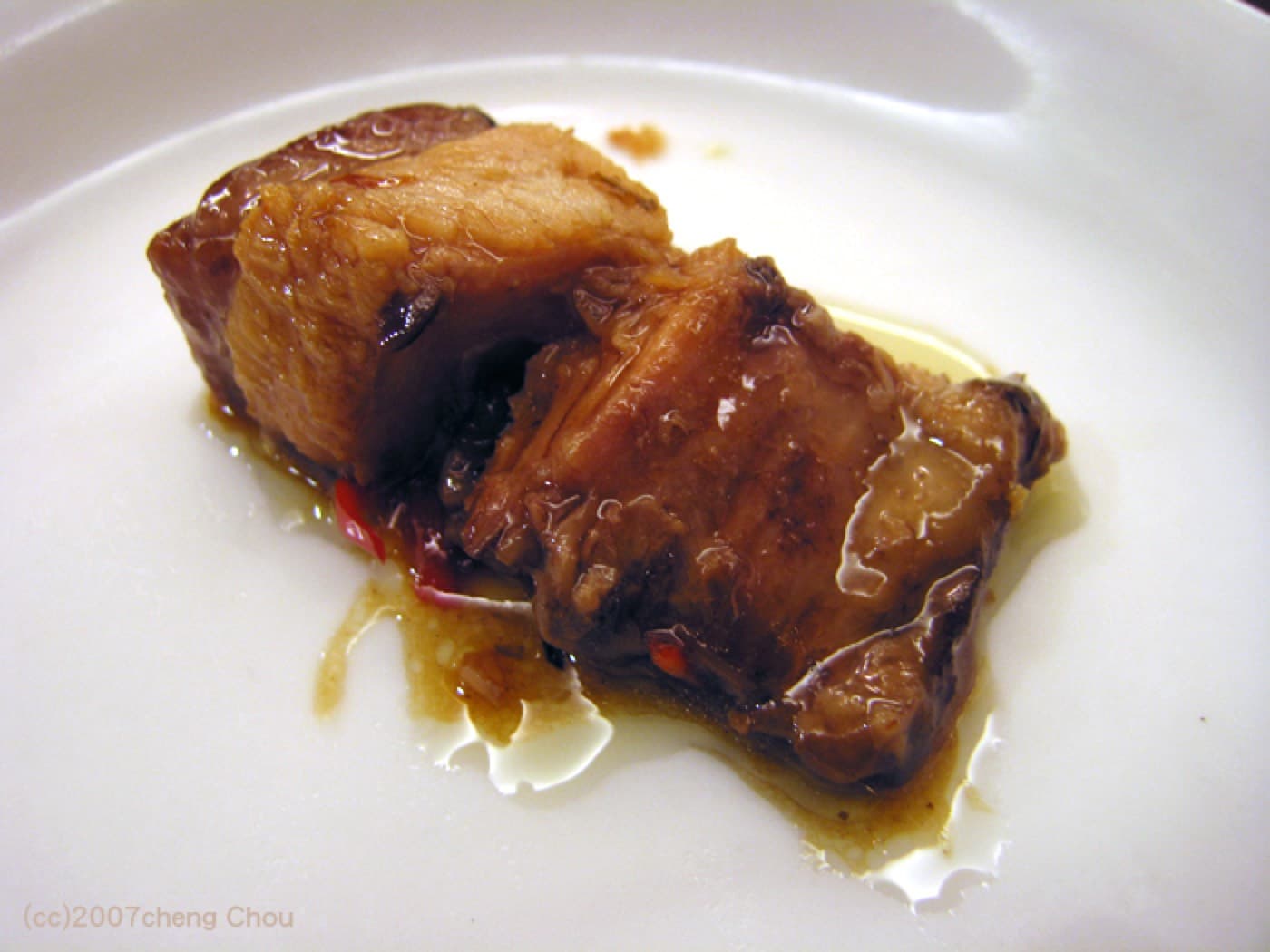
One portion is usually enough for sharing unless your group is pork-obsessed. Pair it with steamed rice, Longjing shrimp, greens, bamboo shoots, a clear soup, or tea. Do not build the whole table out of rich braises and sweet sauces.
If the restaurant offers individual pieces, one per person can be elegant. If it arrives as a larger shared plate, let it be the rich center and keep the rest of the order lighter.
Where it fits in the Hangzhou restaurant map
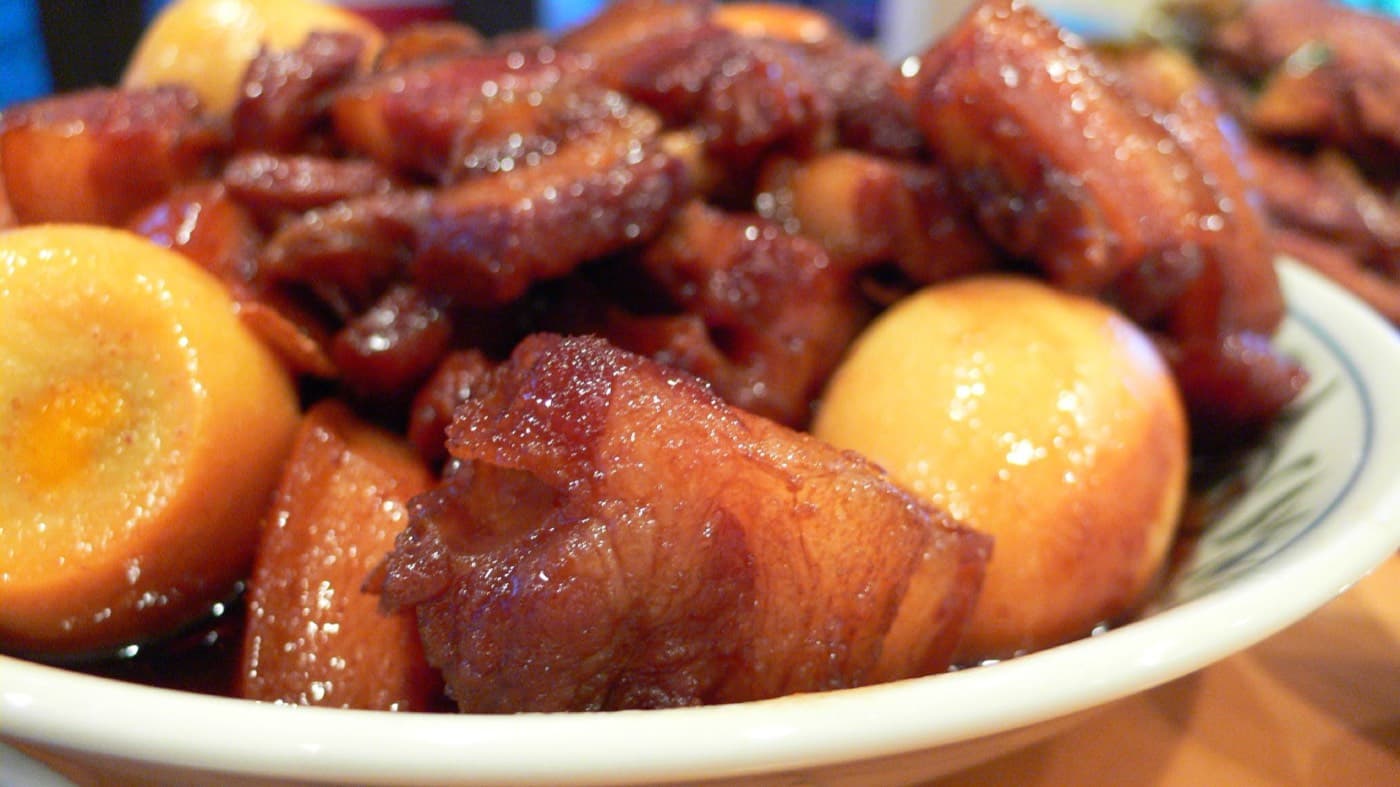
You will see Dongpo pork at classic Hangzhou restaurants, old names near West Lake, and many Hangbang cuisine chains. Mafengwo ranks it near the top of Hangzhou's signature-food list, and Reddit food questions also mention it quickly because the dish is visually memorable and easy to explain.
For a first trip, do not obsess over the single most famous version. Choose a convenient, well-reviewed Hangzhou restaurant with recent photos, order a balanced table, and let Dongpo pork carry the story.
Who should skip it
Pork-avoiding, halal, vegetarian, vegan, and low-fat travelers should skip Dongpo pork without regret. The dish is built around pork belly and cannot be made meaningfully equivalent by removing the fat.
If you can eat it, though, it may be the best single Hangzhou classic to start with: less controversial than vinegar fish, more story-driven than a simple shrimp dish, and rich enough to feel like a proper travel memory.