
How to Order Food in Restaurants in China
Restaurant ordering in China often happens through a QR code on the table. That can be easier than speaking Chinese, but only if you know how to scan, translate the menu, choose options, pay, and ask for help when the mini program or payment fails.
Difficulty
Easy
Time needed
5-15 minutes per meal
Updated
May 15, 2026

Start here
Quick answer
- At many sit-down restaurants, scan the table QR code with WeChat or Alipay, open the restaurant mini program, choose dishes, review the table number and total, then pay with WeChat Pay or Alipay.
- If the menu is Chinese-only, use the app's translate option if available, take screenshots for phone translation, use camera translation on a paper menu, and lean on dish photos rather than machine-translated dish names alone.
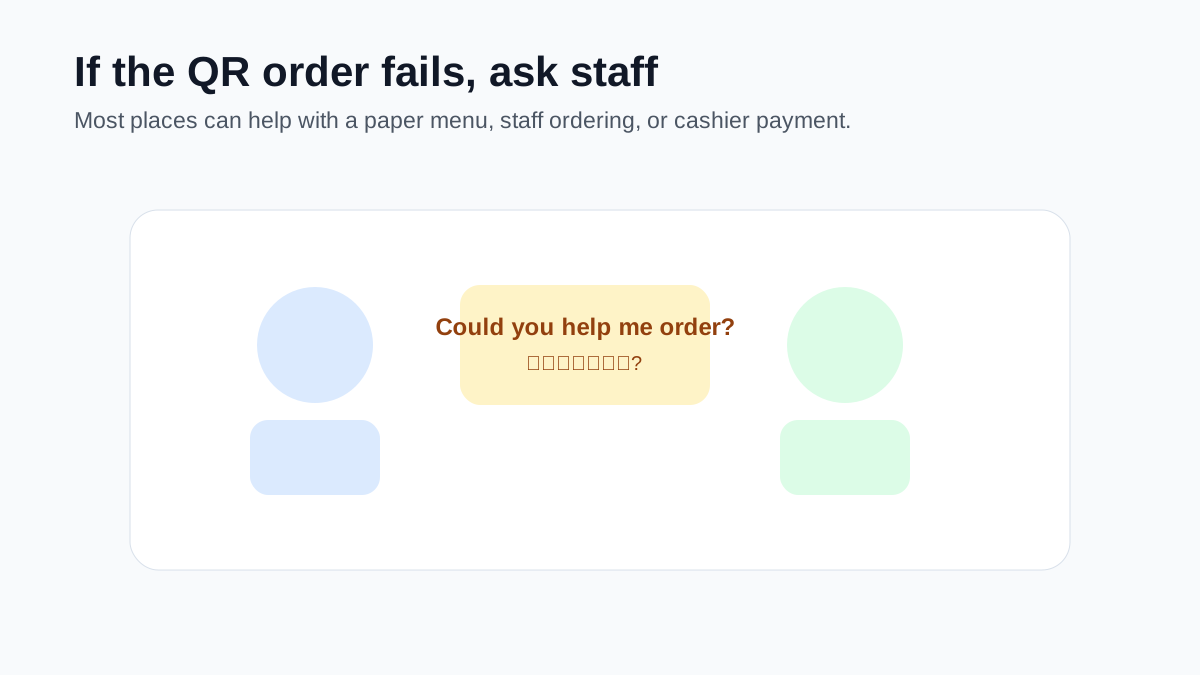
- If the QR system or payment blocks you, ask staff to help you order or bring a paper menu. Useful phrase: Could you help me order? 可以帮我点餐吗?
Requirements
- Required: WeChat or Alipay installed; many QR menus open inside one of these apps.
- Required: working payment setup, because some restaurant mini programs send the order only after payment.
- Required: mobile data or restaurant Wi-Fi.
- Recommended: screenshot translation, Google/Apple/WeChat/Alipay translation, or another camera-translation tool.
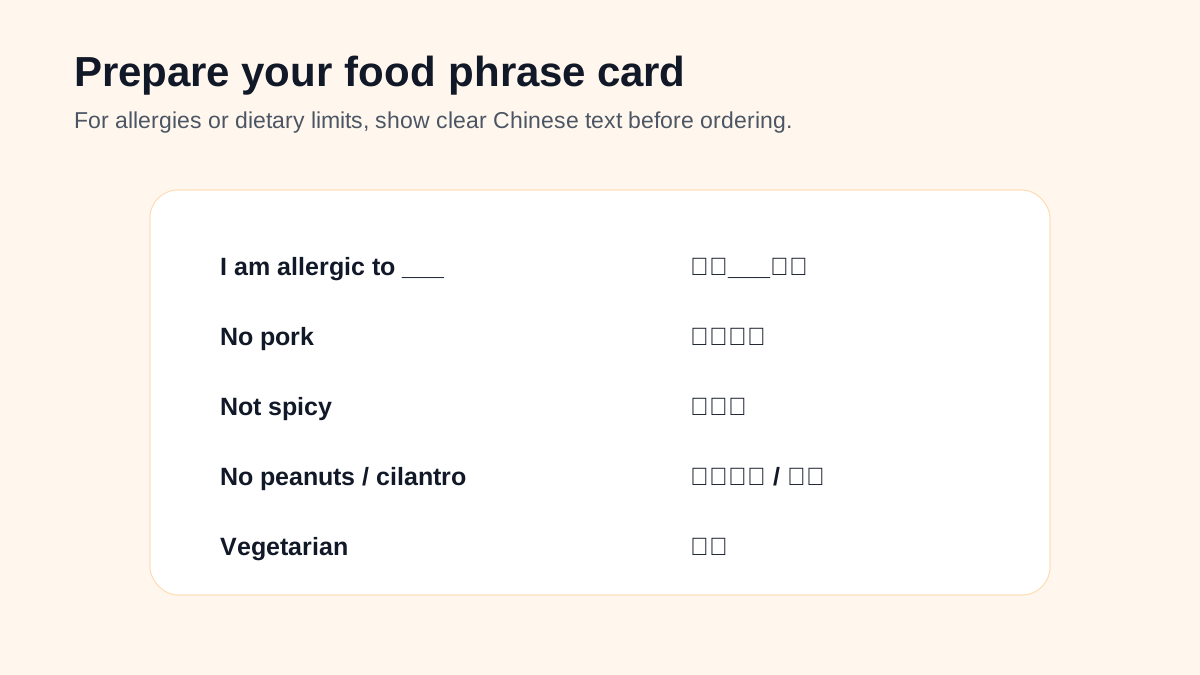
- Recommended: a Chinese phrase card for allergies, pork, beef, seafood, peanuts, cilantro, vegetarian food, and spice level.
- Optional: small cash backup or willingness to ask staff/cashier to place the order manually.
Visual manual
Step-by-step guide
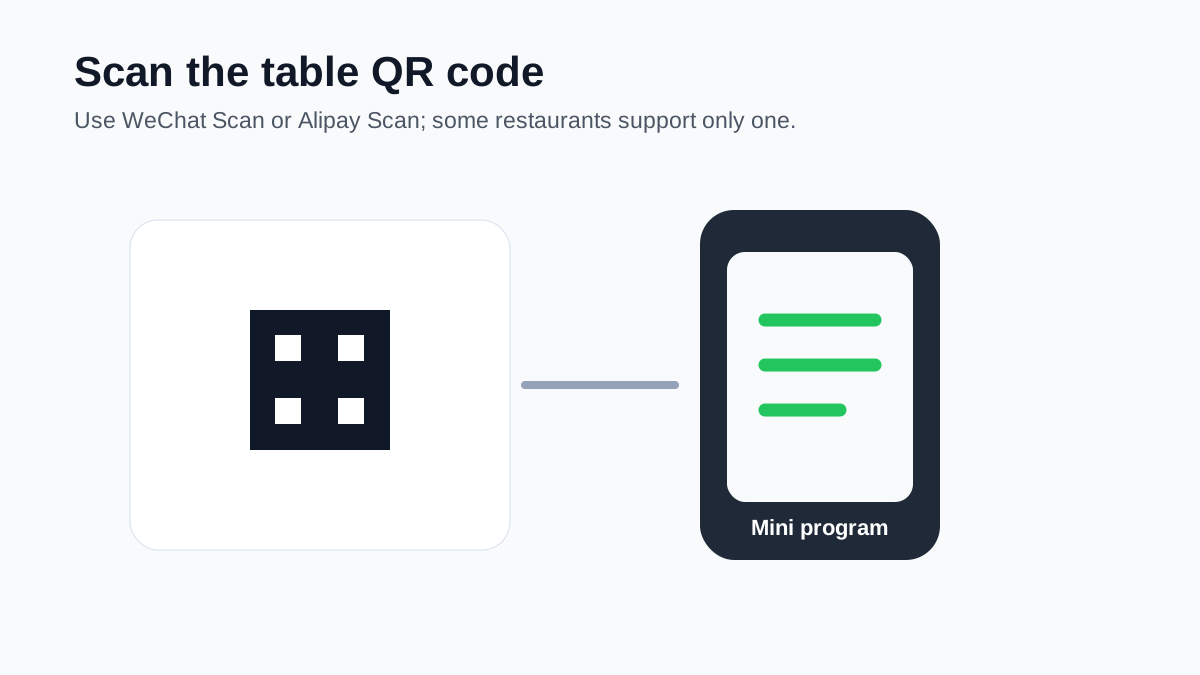
Look for the table QR code
After sitting down, look for a QR code on the table, menu stand, wall, receipt holder, or utensil box. Scan it with WeChat or Alipay. If one app opens a dead page, try the other app because some restaurants build the order flow around a specific mini program.
Some QR menus already know your table number; others ask you to confirm it.
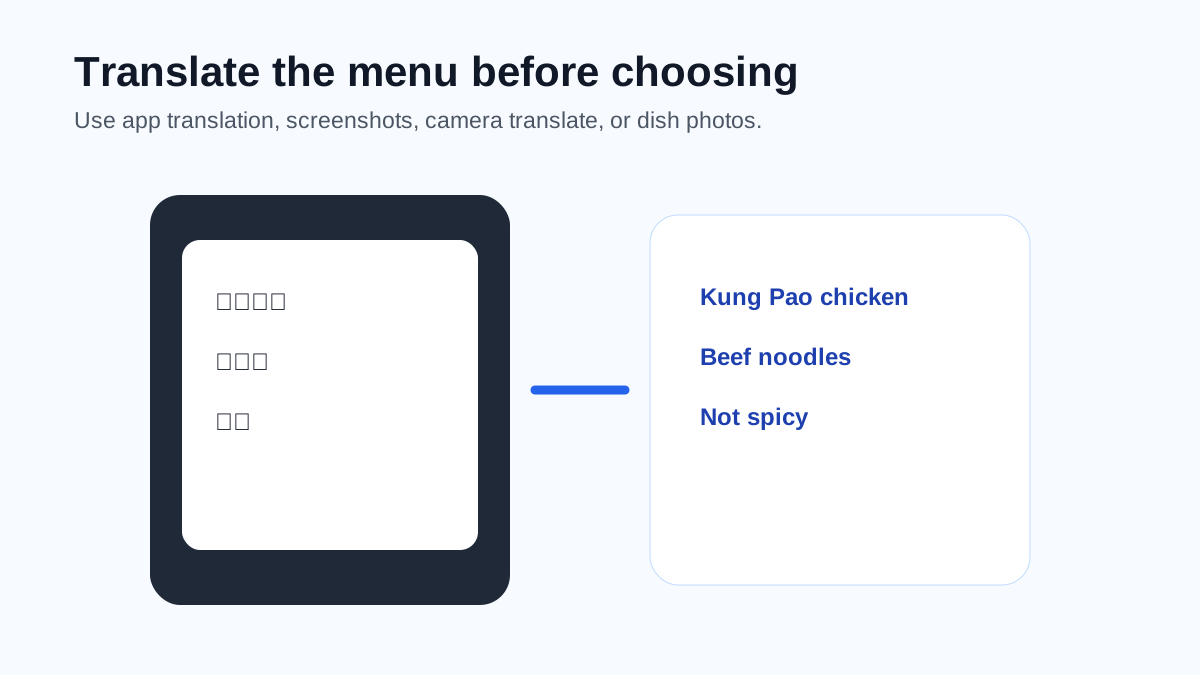
Translate before choosing dishes
Use the mini program's translate function if it has one. If not, screenshot the menu and translate the screenshot, or use camera translation for a paper menu or wall menu. Treat machine translation as a clue, not a guarantee. Dish photos, ingredient words, spice icons, and price are often more useful than awkward English dish names.
Reddit users repeatedly say QR menus are helpful, but Chinese-only interfaces and strange translations are still the main pain.
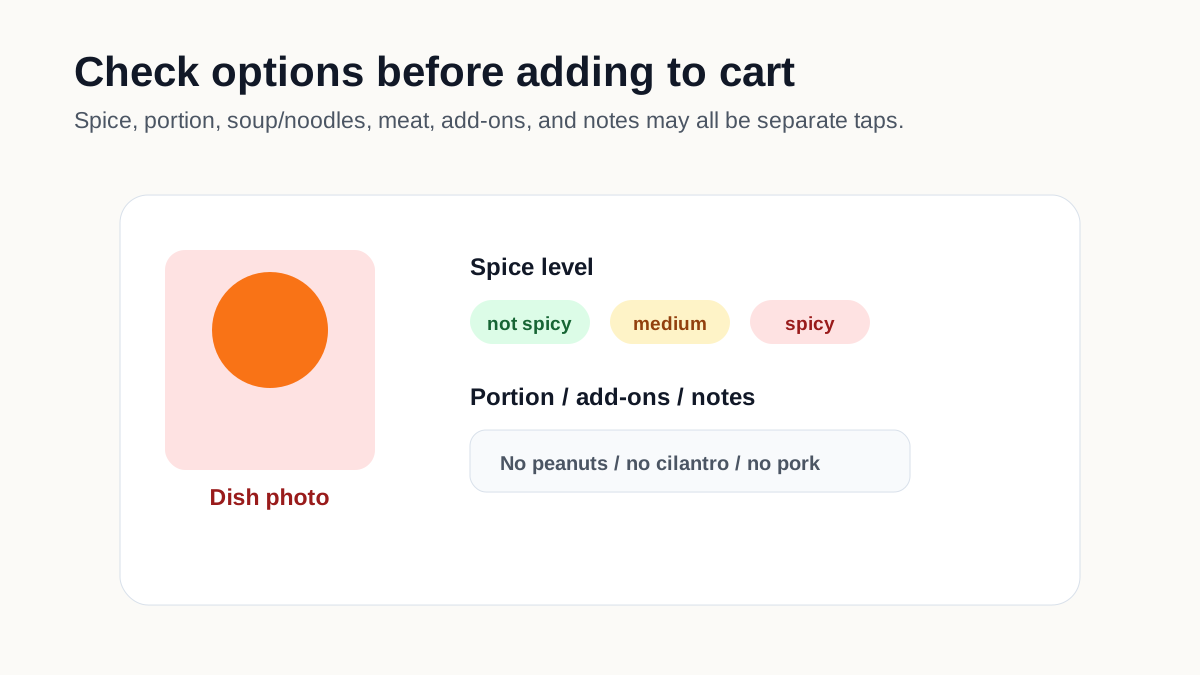
Check options, spice level, and notes
Before adding a dish to the cart, check whether the app asks for options: size, noodle/rice type, soup base, spice level, toppings, meat choice, add-ons, or pickup/dine-in settings. Common words: not spicy 不辣, less spicy 微辣, no cilantro 不要香菜, no peanuts 不要花生, no pork 不要猪肉.
For allergies, do not rely only on notes inside the app. Show staff a clear Chinese allergy card.
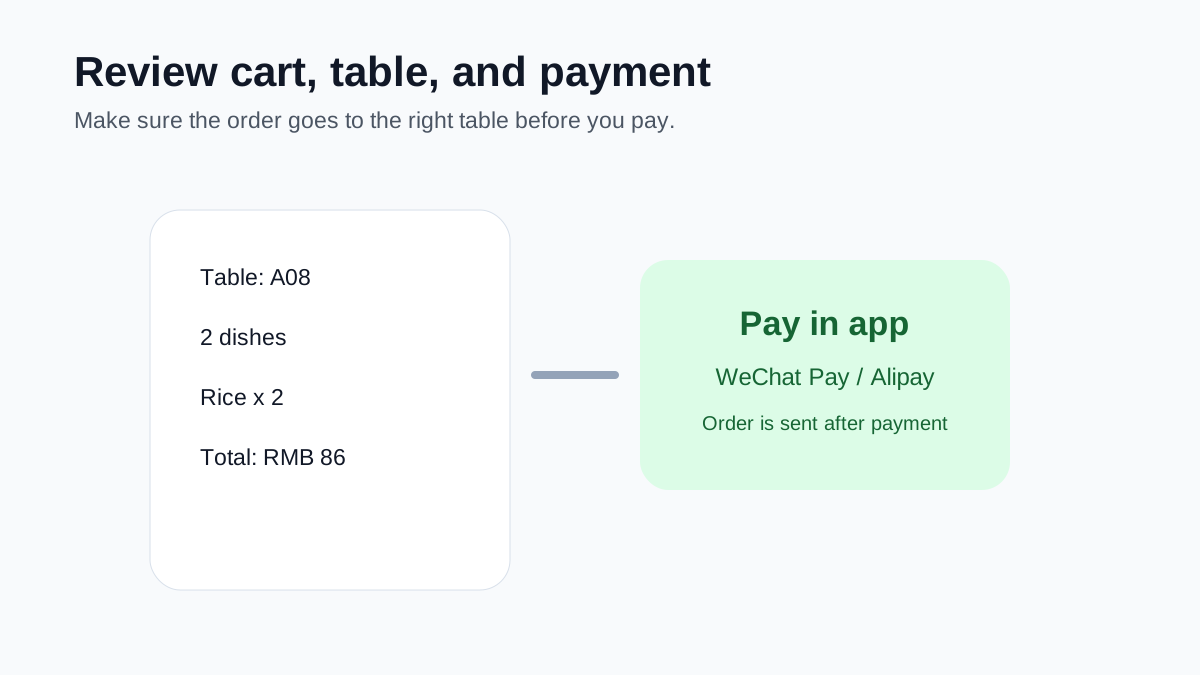
Review cart, table number, and payment
Open the cart and check the dish count, table number, quantity, rice/noodle add-ons, service charge if any, and total. In many QR systems, the kitchen receives the order only after payment succeeds. Pay with WeChat Pay or Alipay, then wait for a confirmation screen or order number.
If payment fails inside the mini program, ask staff to place the order and let you pay normally by QR code or at the cashier.
Ask staff if the QR system blocks you
It is normal to ask for help. Show your phone and say: 可以帮我点餐吗? (Could you help me order?) or 有纸质菜单吗? (Do you have a paper menu?). Reddit users report that staff often help even when paper menus are not visible. If the place is busy, point to photos or choose a less crowded restaurant for your first attempt.
If you cannot pay inside the mini program, staff may still let you pay at the cashier or scan a merchant QR code.
Use a phrase card for allergies or diet limits
If a wrong ingredient could make you sick or violate a strict diet, prepare a phrase card before entering the restaurant. Show it to staff before ordering, not after the dish arrives. Avoid complex requests during peak rush hours, and choose simpler dishes if communication is uncertain.
This is not medical advice. Cross-contact and hidden ingredients can happen, especially in small kitchens.
Troubleshooting
Common problems and fixes
- QR code only opens in Chinese: use built-in translate if available, screenshot translation, or ask staff to help order.
- Mini program asks for login or phone number: try the other app, ask staff, or order at the cashier.
- Payment is blocked in the restaurant app: ask staff to place the order and pay with normal merchant QR, Alipay, WeChat Pay, or cash if accepted.
- You cannot identify dishes: choose items with photos, point to another table's dish, ask for recommendations, or use a translation app on the menu.
- Street stalls move too fast: screenshot or photograph what you want, point, say one portion 一份, and pay after the vendor confirms price.
- You have allergies or strict diet needs: show a Chinese phrase card and choose simpler restaurants/dishes where staff can confirm ingredients.
Important warnings
- Do not assume a payment QR code and an ordering QR code are the same thing. Ordering QR codes create a kitchen order; payment QR codes only transfer money.
- Do not rely on machine translation for allergies or medical restrictions.
- Do not scan random QR codes away from the table or cashier.
- Do not submit the order until the table number and cart are correct.
- If you are very hungry or stressed, choose an easier first meal: mall restaurant, chain restaurant, food court, hotel restaurant, or picture-heavy menu.
Best route and backup plan
Recommended route
- Most sit-down restaurants: scan table QR with WeChat or Alipay, translate, choose photo-backed dishes, check options, pay in app, and keep the confirmation screen.
- If QR ordering fails: ask staff to order manually and pay at the cashier or by normal merchant QR code.
- For strict allergies/diet: show a phrase card first and avoid complex dishes if staff cannot confirm ingredients.
Backup options
- Ask staff: Could you help me order? 可以帮我点餐吗?
- Ask for a paper menu: Do you have a paper menu? 有纸质菜单吗?
- Point to dish photos or dishes on another table.
- Order at the cashier and pay by scanning the merchant QR code.
- Use a mall restaurant, chain restaurant, hotel restaurant, or food court if you need an easier first meal.
Other ways to pay
- Paper menu: not always visible, but many restaurants can produce one if asked.
- Counter ordering: common in noodle shops, fast food, bakeries, cafes, and small eateries.
- Pointing: works with dish photos, display counters, and dishes on nearby tables.
- Food delivery: useful when you need time to translate and choose slowly, but it requires address, phone, and delivery app setup.
FAQ
Can I order food in China without speaking Chinese?
Yes, especially in QR-code restaurants, malls, chains, and places with photos. Use WeChat or Alipay scan, screenshot translation, dish photos, and staff help.
Do most restaurants in China use QR code ordering?
QR ordering is very common in cities, especially casual restaurants, hot pot, barbecue, cafes, and chains. Small stalls and some traditional restaurants may still use counter or staff ordering.
Should I scan with WeChat or Alipay?
Try the app the restaurant expects. Many QR menus open in WeChat mini programs, while others support Alipay. If one app fails, try the other or ask staff.
Can I pay after eating?
Sometimes, but many QR systems require payment before the kitchen receives the order. Watch for an order confirmation after payment.
What if payment fails inside the mini program?
Ask staff to place the order manually and let you pay at the cashier or by scanning a normal merchant payment QR code. This is a common practical workaround.
How do I say not spicy?
Say or show 不辣 (bu la), meaning not spicy. For less spicy, use 微辣 (wei la). In very spicy regions, still confirm with staff.
How do I handle allergies?
Prepare a Chinese phrase card and show staff before ordering. Do not rely only on the app notes or machine translation for serious allergies.
What if the restaurant is too busy to help?
Choose a simpler dish with photos, point to the item or another table's dish, or go to a mall/chain restaurant where staff and menus are easier to navigate.
China’s essential messaging, payments, mini program, and everyday identity app.
Keep going
Related practical guides

How to Set Up Alipay as a Foreigner in China
Set up Alipay with a foreign phone number, passport, and international bank card so you can pay by QR code in China.

How to Use WeChat Pay with a Foreign Bank Card
Set up WeChat Pay with a passport and foreign bank card, then use QR payments in shops, taxis, restaurants, and mini programs.

How to Order Food Delivery in China
Prepare your address, phone, payment, and delivery handoff flow before ordering meals.