Beijing / Food & Daily Life
Eat Where Beijingers Queue: A Hungry Walk Through Niujie
Niujie is one of Beijing's best food neighborhoods because it still feels lived-in. The mosque, halal supermarket, lamb hotpot queues, beef buns, glutinous rice cakes, sesame breads, and takeaway counters make the street feel less like a staged snack market and more like a working appetite map of the city.
Why Niujie feels different from tourist snack streets
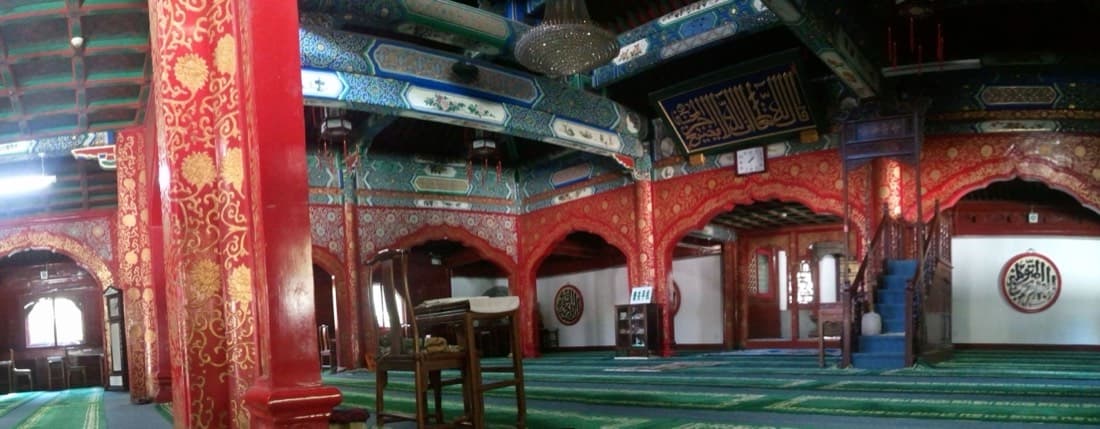
Visit Beijing describes Niujie as a street known for its Muslim community, Niujie Mosque, Islamic culture, and ethnic snacks. That matters because the food here is not a generic 'Beijing street food' performance. It is tied to Hui Muslim daily life, halal butchers, bakeries, old snack counters, family shopping, and people carrying food home.
For Western visitors, Niujie is useful because the foods are vivid and approachable: beef buns, lamb skewers, sesame breads, sticky rice cakes, hotpot, supermarket snacks, and noodle counters. It can still be crowded and chaotic, but it rarely feels empty or ornamental.
Hongji Snacks: start where the line is moving
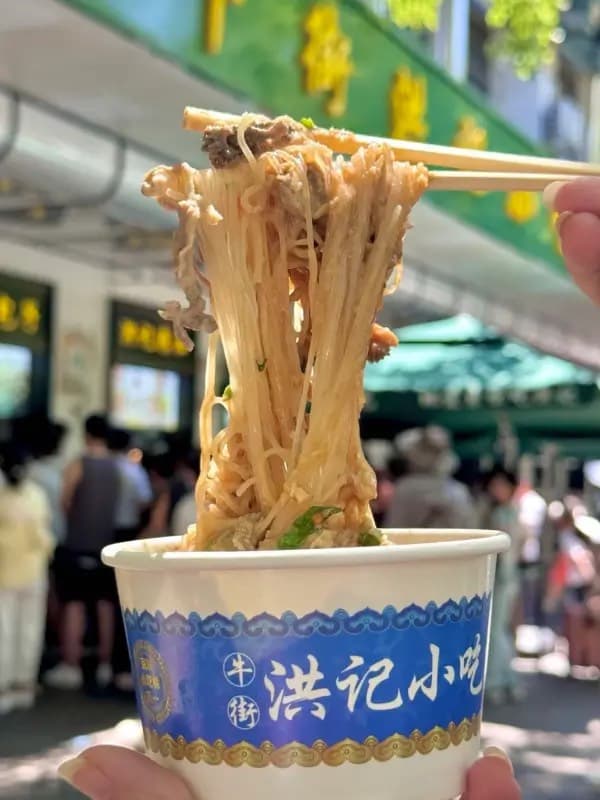
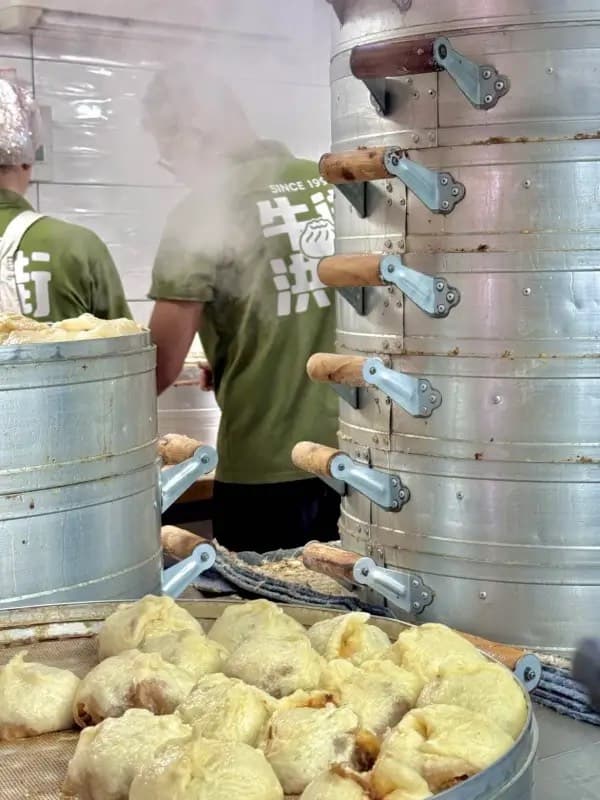
Hongji Snacks is the kind of place where a visitor understands Niujie quickly: signs, steam, trays, takeaway boxes, people ordering with confidence, and a line that looks intimidating but often moves. Look for beef buns, fried beef boxes, quick-fried tripe, sticky snacks, and whatever everyone near you seems to be buying.
This is not the moment to demand a perfect translated menu. Point, translate, ask for one or two pieces, and keep moving. The best Niujie crawl is built from small decisions, not one huge meal.
Jubaoyuan: the queue is part warning, part endorsement
Jubaoyuan is the name many Beijing food lovers attach to Niujie. The appeal is straightforward: halal copper-pot lamb, hand-cut meat, sesame sauce, and shaobing that people discuss with unusual seriousness. The problem is also straightforward: it can be crowded at almost any normal meal time.
If Jubaoyuan is your main goal, do it like a plan, not a casual drop-in. Arrive early, check whether a virtual queue is possible, and have a backup snack route. If the wait becomes absurd, Niujie still has enough food to save the day.
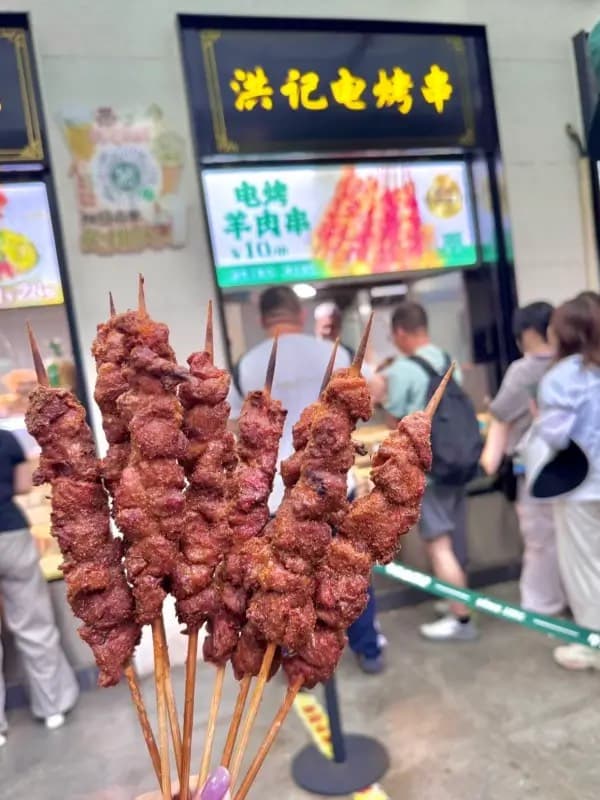
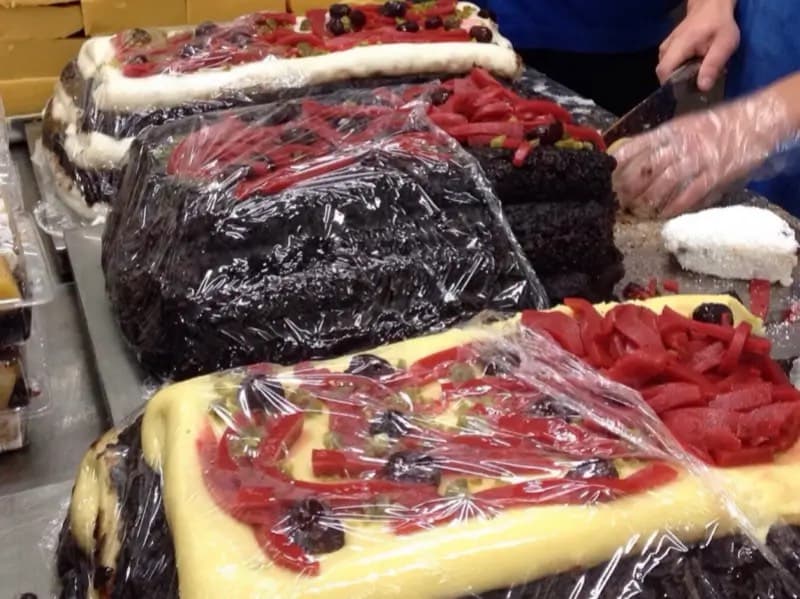
Baiji rice cakes and the sweet side of Niujie
Do not make Niujie only about lamb. Baiji Rice Cake and similar shops show the sweet, sticky, old-Beijing snack side of the street: glutinous rice cakes, pea-flour sweets, aiwowo, sesame rolls, bean-paste textures, and desserts that feel closer to a family snack box than a restaurant course.
Western travelers sometimes expect Chinese desserts to be very sugary. Many Beijing snacks are gentler: chewy, nutty, floral, bean-heavy, or lightly sweet. Buy a small mixed box and share it later with tea or coffee.
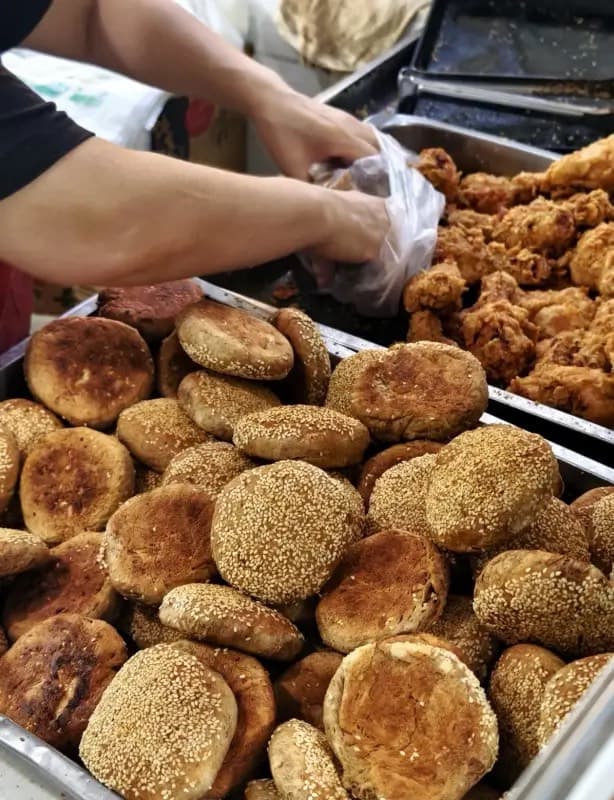
Manji shaobing and the snack you actually want in your hand
Shaobing is one of the easiest Beijing snacks for visitors to love: flaky, sesame-scented, warm, and portable. Manji-style beef shaobing is especially satisfying because it feels like street food and comfort food at the same time.
If you see a line, watch what people carry away. Some buy stacks for home, which is usually a good sign. Eat one fresh if possible, then save another for the taxi ride, hotel room, or late-night hunger.
The halal supermarket is not a side quest
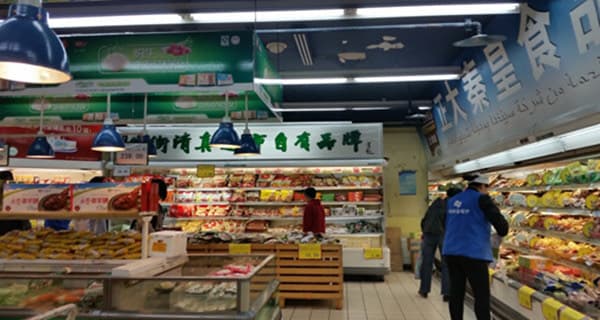
Niujie Muslim Supermarket is useful even if you are not cooking. You can look for packaged pastries, spiced beef and lamb, sesame products, takeaway snacks, and gifts that feel more local than airport souvenirs. It also helps you understand how Niujie works as a shopping district, not only a restaurant strip.
Respect the neighborhood's halal setting. Do not bring pork snacks into halal restaurants, be patient with crowds, and avoid blocking counters while translating every label. Buy, step aside, taste, and keep the line alive.