
Beijing / Practical Guides
Getting Around Beijing: Subway First, DiDi When It Matters, Bikes for Short Hops
Beijing is not a city where you casually hop between far-apart sights because they look close on a phone map. It is enormous, ring-roaded, historic, and full of transport choices that work best when you use them for the right job. Make the subway your default, DiDi your strategic backup, airport rail your clean arrival route when luggage allows, and shared bikes your short-hop tool.
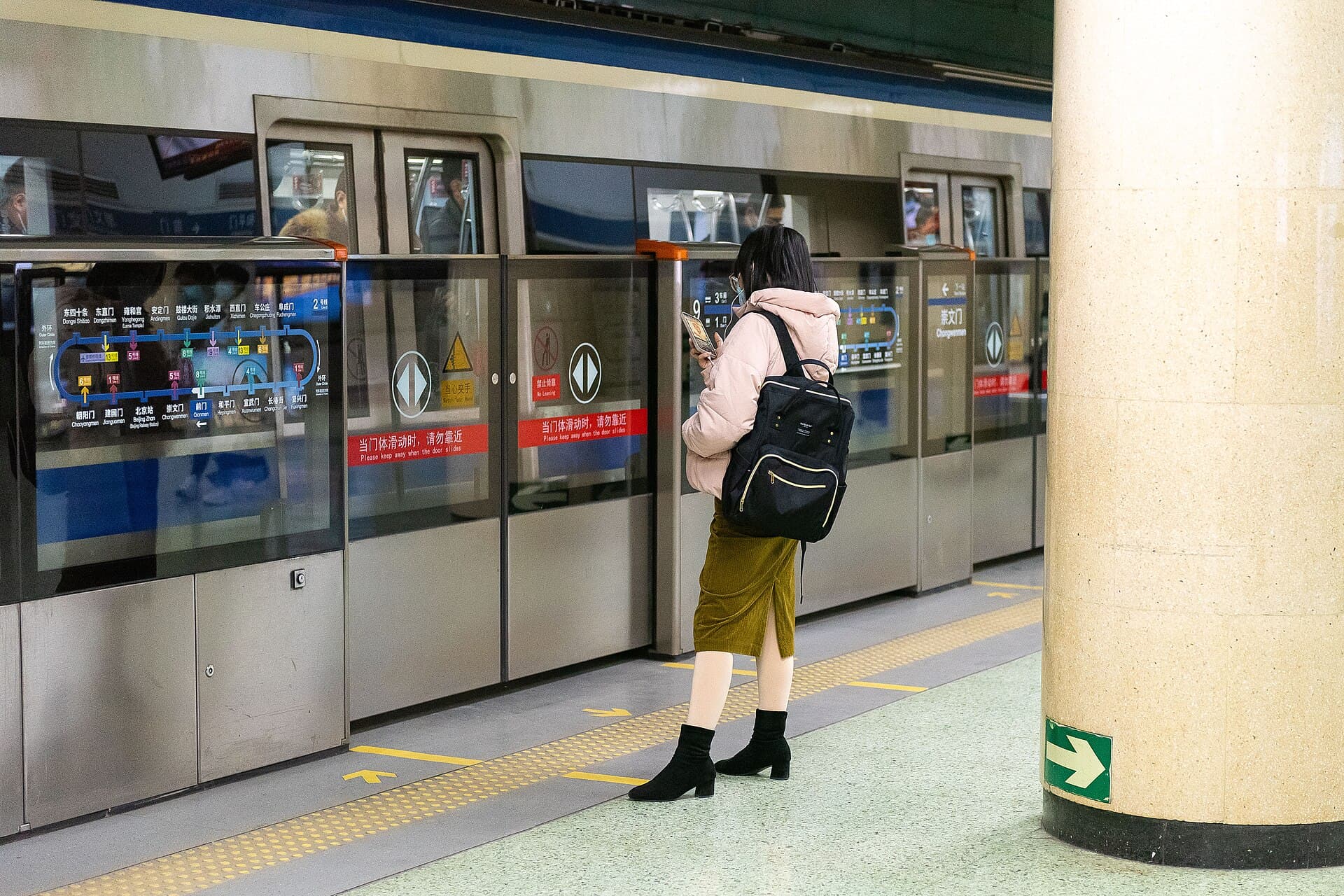
Beijing is bigger than your itinerary thinks
Many first-time visitors plan Beijing like a compact European capital: Forbidden City in the morning, Summer Palace after lunch, a hutong stroll, then dinner across town. The map lets you dream that way. Traffic, security checks, station exits, queues, and walking distances often disagree.
The better method is to group sights by area and choose transport by job. Subway for predictable distance. Taxi or DiDi for luggage, late nights, awkward transfers, or tired feet. Shared bikes for short surface-level connectors when the weather is kind.
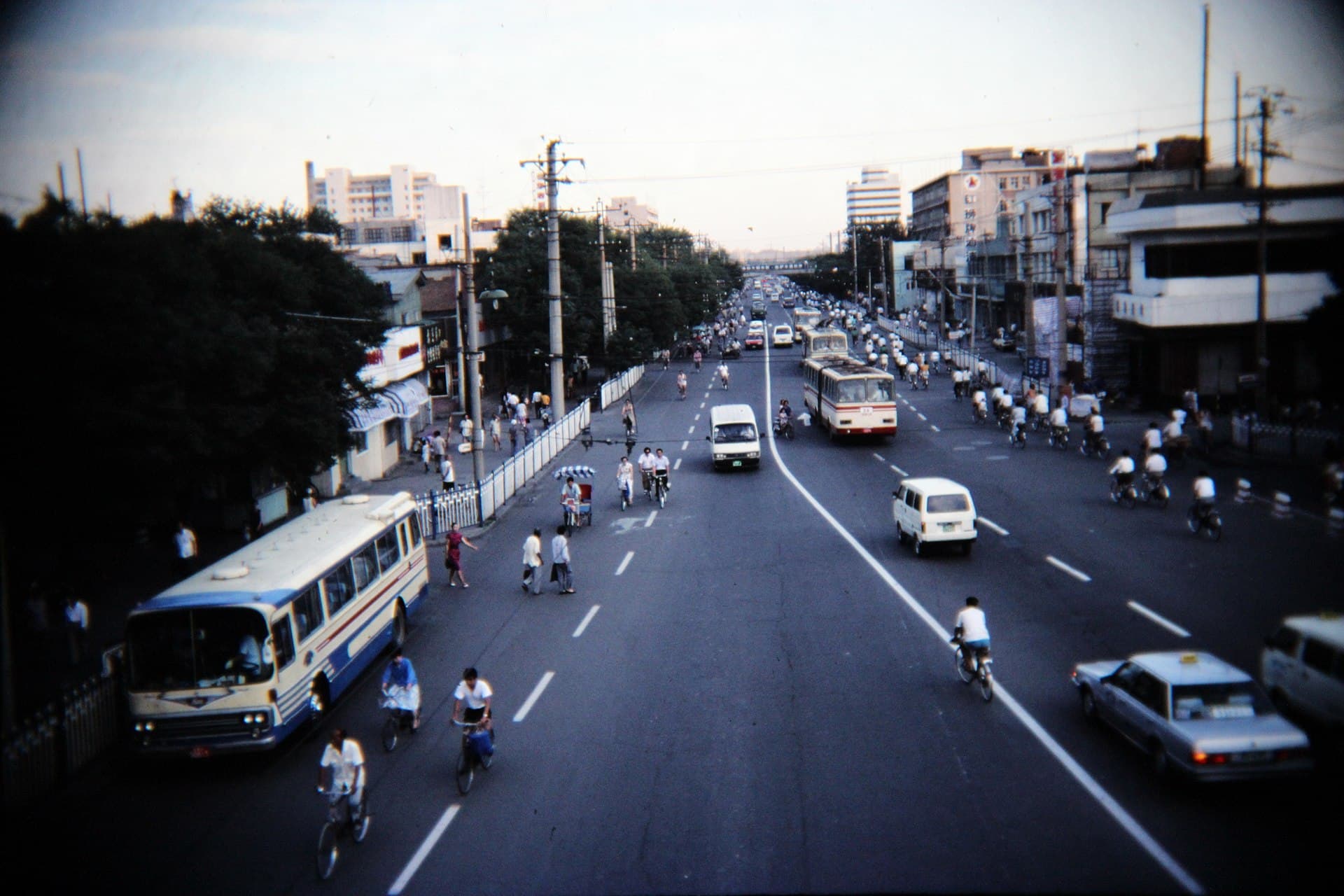
Use the subway first, then design around rush hour
Official Beijing transport guidance calls the subway the most convenient public transit in the capital, with stations near many major attractions, entertainment areas, transport hubs, and airport lines. For tourists, that makes it the default for Tiananmen-area sights, Qianmen, Olympic Park, railway stations, and many cross-city moves.
Rush hour is the catch. A local Beijing Reddit post warns visitors not to ride during weekday peaks around 7:30-9:30 and 17:30-19:30. Treat that as practical street wisdom rather than law: if you can shift a museum, lunch, or hotel return by an hour, you may save your energy for the part of Beijing you came to see.
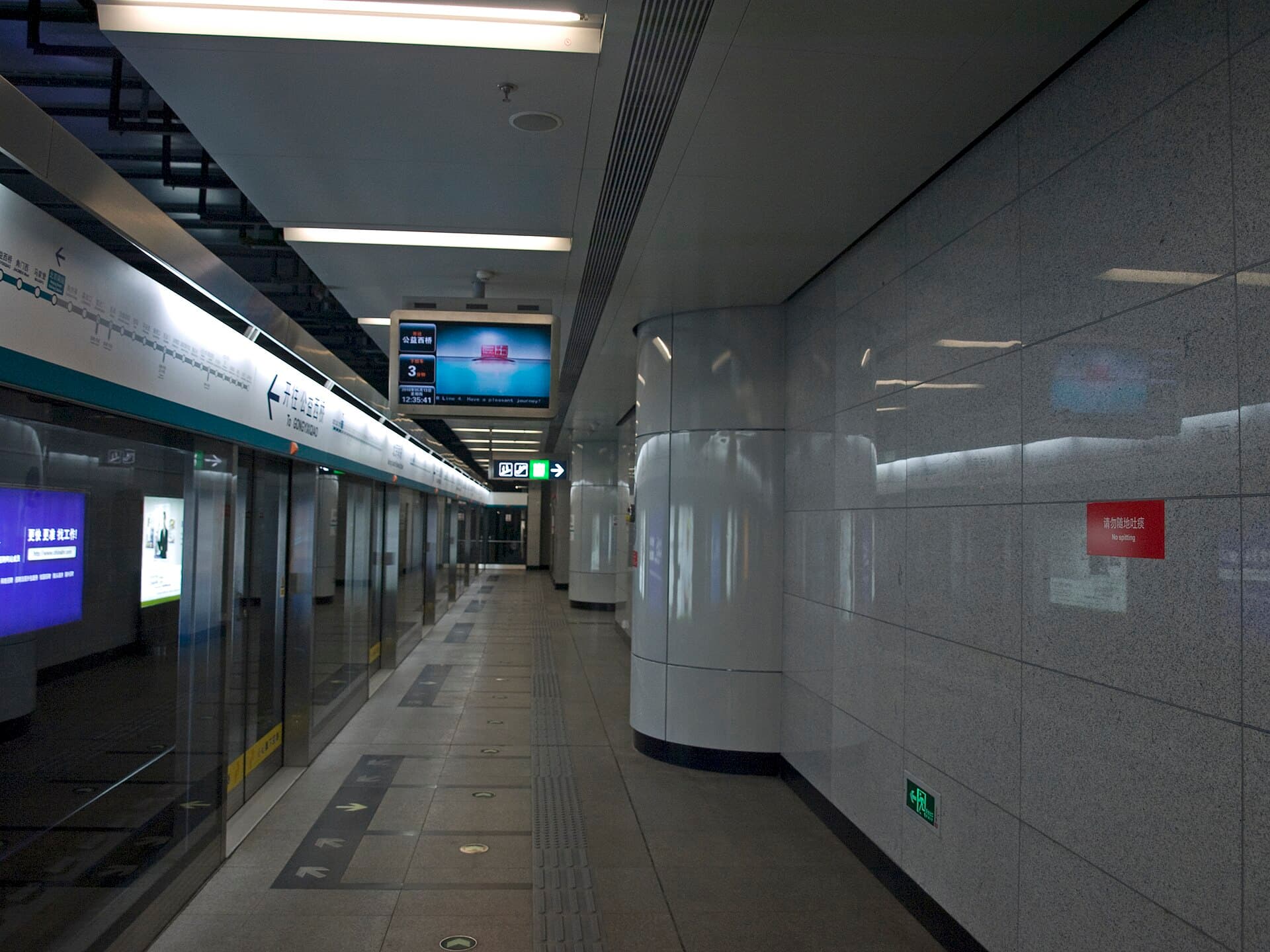
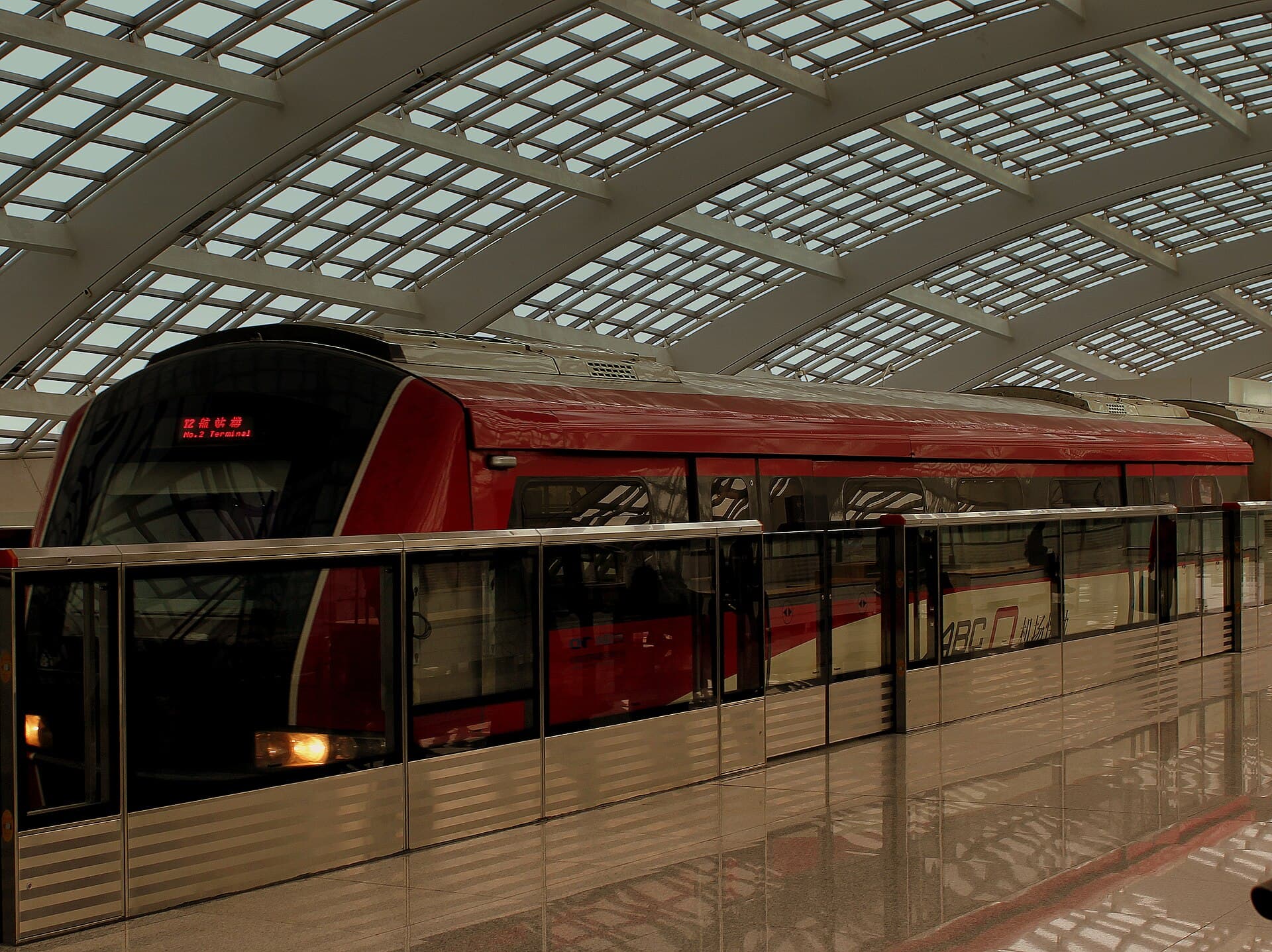
Airport routes: PEK, PKX, rail, taxi, or ride-hailing
Beijing has two major airports, and your arrival airport changes the first route. For Capital Airport, Visit Beijing describes the Airport Express as a fast option connecting Terminal 3 and Terminal 2 with Sanyuanqiao and Dongzhimen, with taxis usually taking around 45 to 60 minutes to the city depending on traffic.
Daxing Airport has its own airport express route and large terminal layout. If your luggage is manageable, airport rail is usually clean and predictable. If you are arriving late, traveling with children, or staying far from a rail-friendly hotel, an official taxi or carefully managed ride-hailing pickup may be saner.
DiDi is useful, but pickup zones are the real test
Beijing's official new-arrivals transport page describes DiDi as a 24/7 ride-hailing app with an English interface, and says foreign and Chinese phone numbers can be used for registration. It also notes that airports have designated pickup areas. That last sentence is the one visitors should take seriously.
At airports, train stations, malls, and big sights, the hard part is not pressing the button. It is getting to the exact pickup zone, matching the license plate, and handling messages from a driver who may not speak English. If you are tired, the official taxi queue can be the smarter choice.

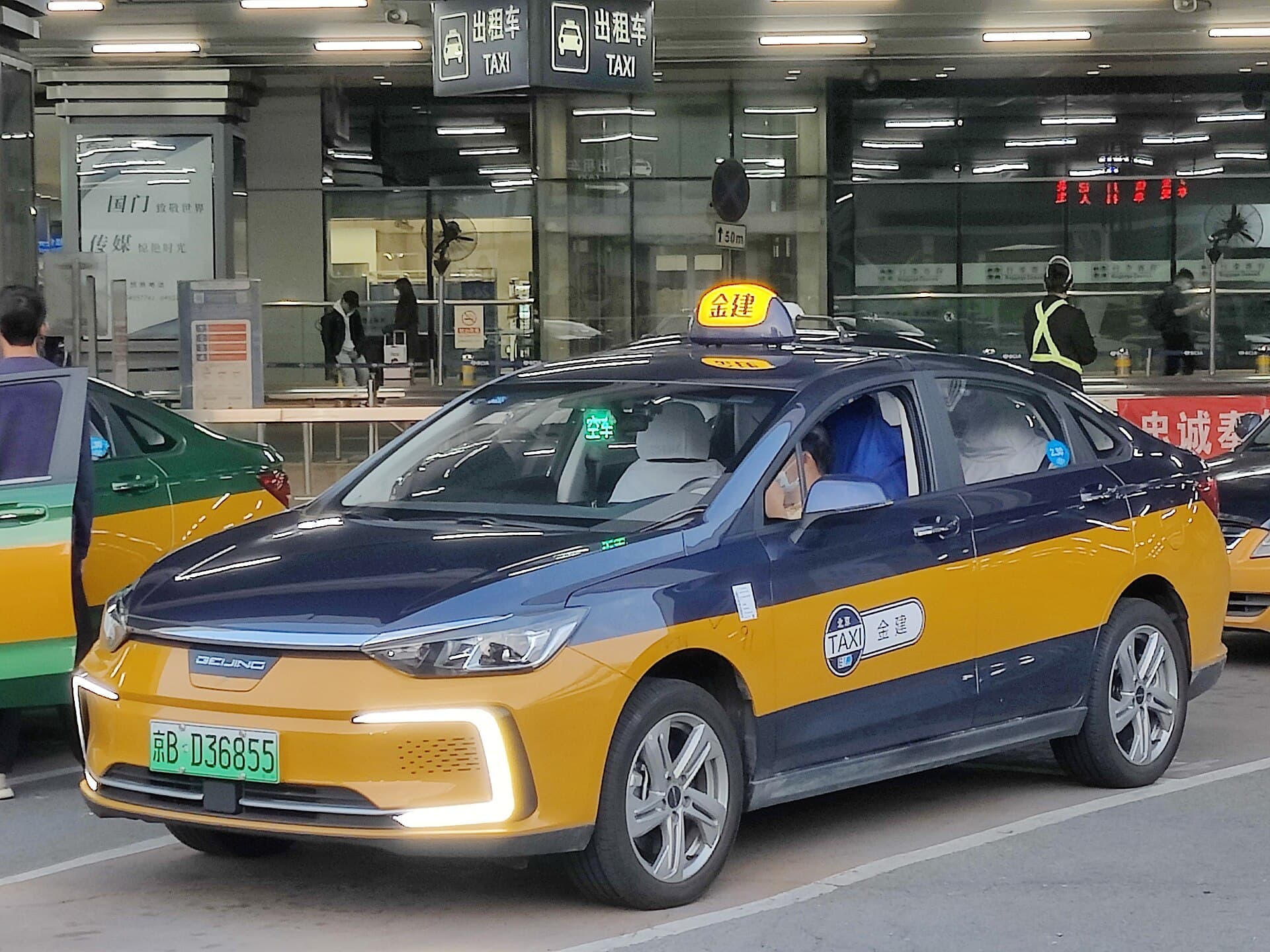
Taxis are not old-fashioned if you use them correctly
Official airport guidance tells visitors to follow English signs for the taxi queue and keep the destination address in Chinese because most drivers do not speak English. That remains excellent advice. A proper taxi is often the easiest solution after a long-haul flight or a late dinner far from the subway.
Avoid unofficial drivers who approach you. Use the official queue, the in-app ride price, or a hotel-arranged car. Beijing is generally safe for visitors, but tired travelers are easier targets for bad transport decisions.
Shared bikes are for short hops, not heroic sightseeing
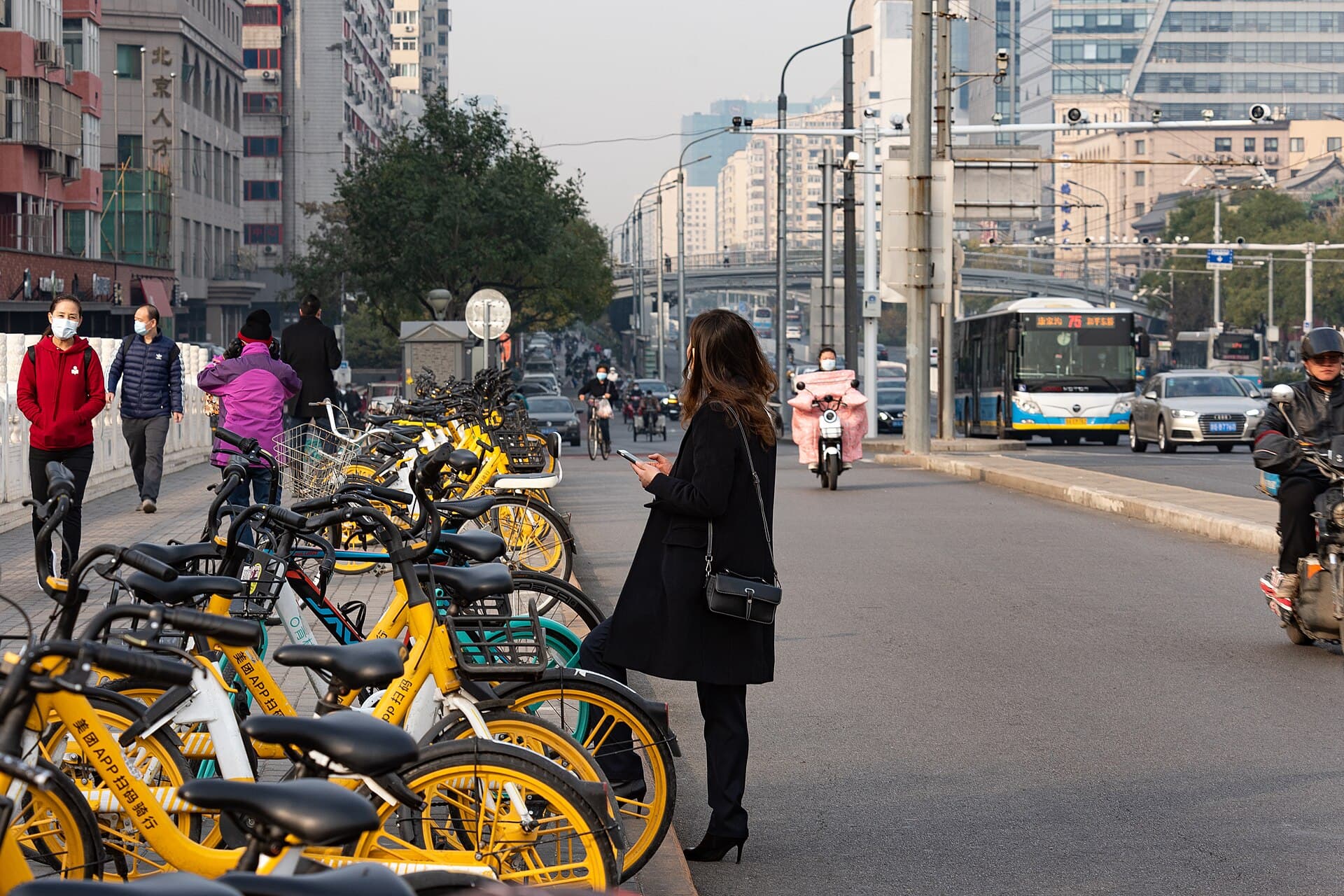
Beijing's flat roads make bikes tempting, and official guidance says shared bikes can be unlocked through Alipay by selecting Transport, choosing Bike, scanning the QR code, and parking in marked areas before ending the ride. That is perfect for short connectors between hutongs, parks, cafes, and subway exits.
Do not turn your first Beijing day into a long bike expedition across unfamiliar arterial roads. Use bikes where they feel obvious: one neighborhood, good weather, visible bike lanes, and a short route you can abandon easily.
Amap is the map layer that makes everything easier
For Western visitors, Google Maps can be unreliable in China. Amap, also called Gaode, is much more useful for live routing, Chinese place names, station exits, and walking directions. Even if the interface is not perfect for your phone setup, it is worth having as your ground-truth map.
Before leaving the hotel, save the hotel in Chinese, screenshot the address, check the subway exit, and pin the destination. Beijing rewards people who plan the final 800 meters, not just the long ride.