Beijing / Food & Daily Life
The Beijing Noodle Bowl Locals Still Queue For: Zhajiangmian at Fangzhuanchang No. 69
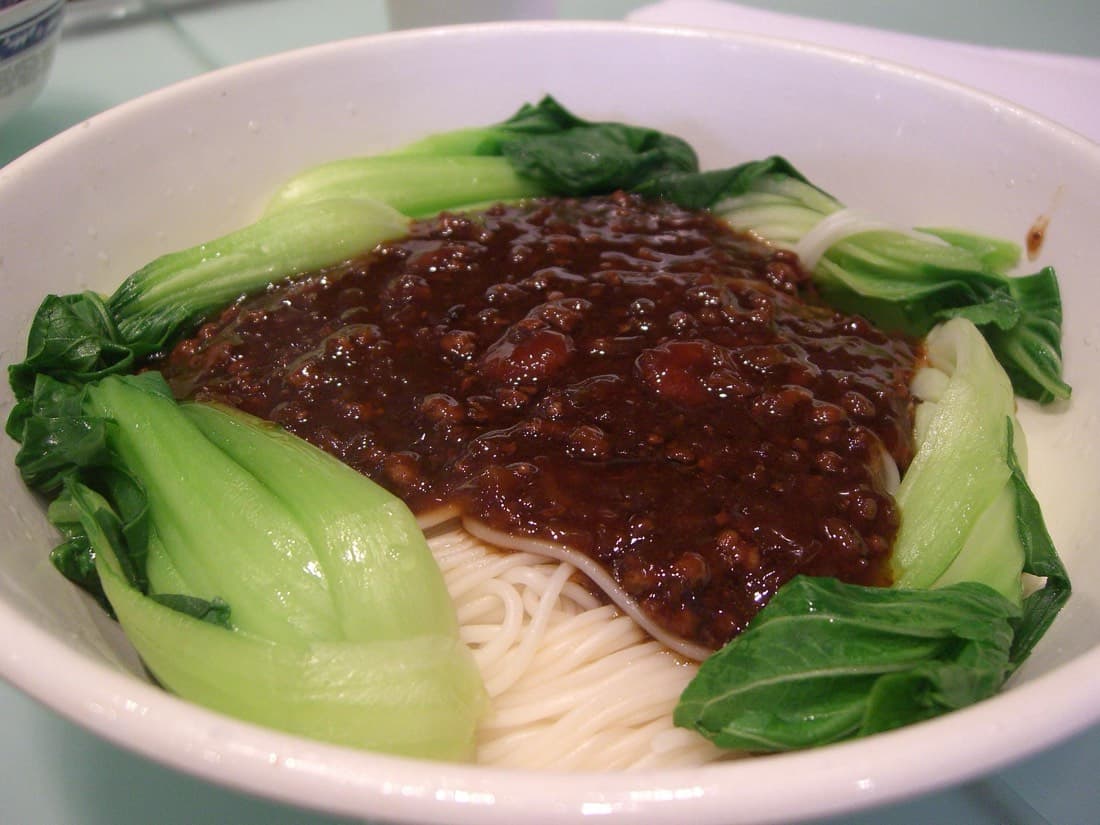
Zhajiangmian is Beijing's comfort-food magic trick: a bowl that looks plain until the sauce, noodles, cucumber, radish, bean sprouts, and chopstick work come together. It is cheap, filling, salty, deeply local, and suddenly internet-famous again whenever someone unexpected stands in a hutong eating it.
Why zhajiangmian belongs in a Beijing trip
Beijing has grand foods and humble foods. Zhajiangmian is humble in the best way. It does not try to impress with height, spice, or plating. It wins by texture: chewy noodles, salty bean paste, crisp vegetables, and the satisfaction of turning separate parts into one bowl.
For Western visitors, it is also a good bridge dish. It is unfamiliar enough to feel local, but familiar enough that the idea of noodles with sauce makes immediate sense. Think less 'Chinese spaghetti' and more 'northern wheat comfort food with a stronger, saltier personality.'
What is actually in the bowl
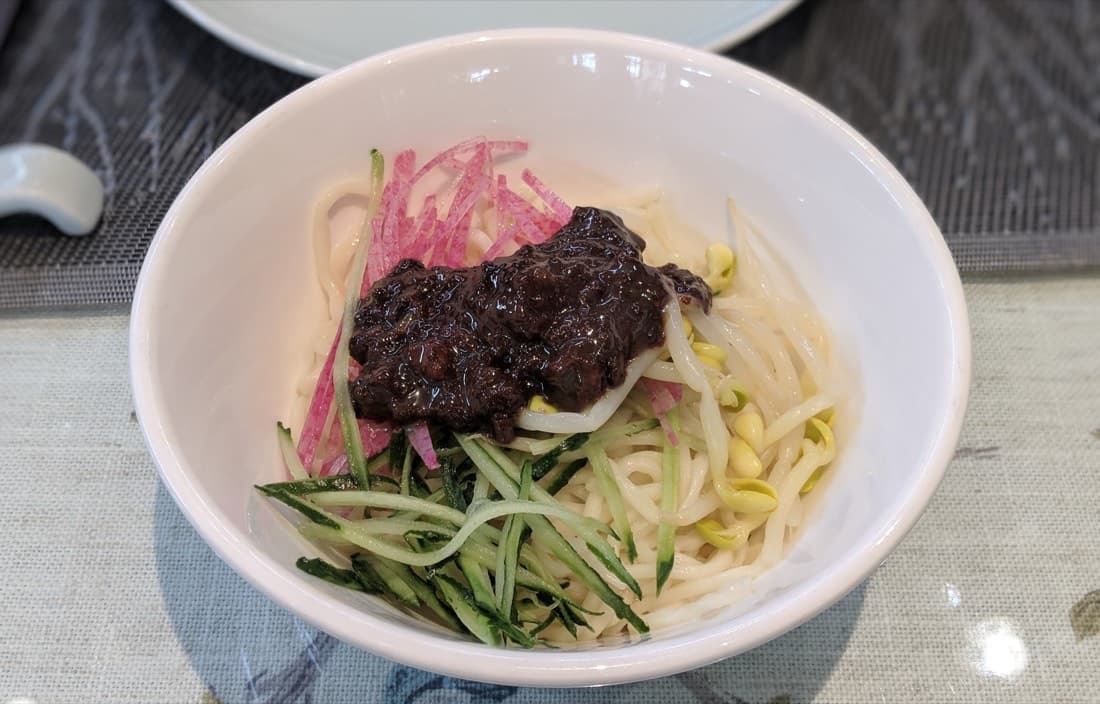
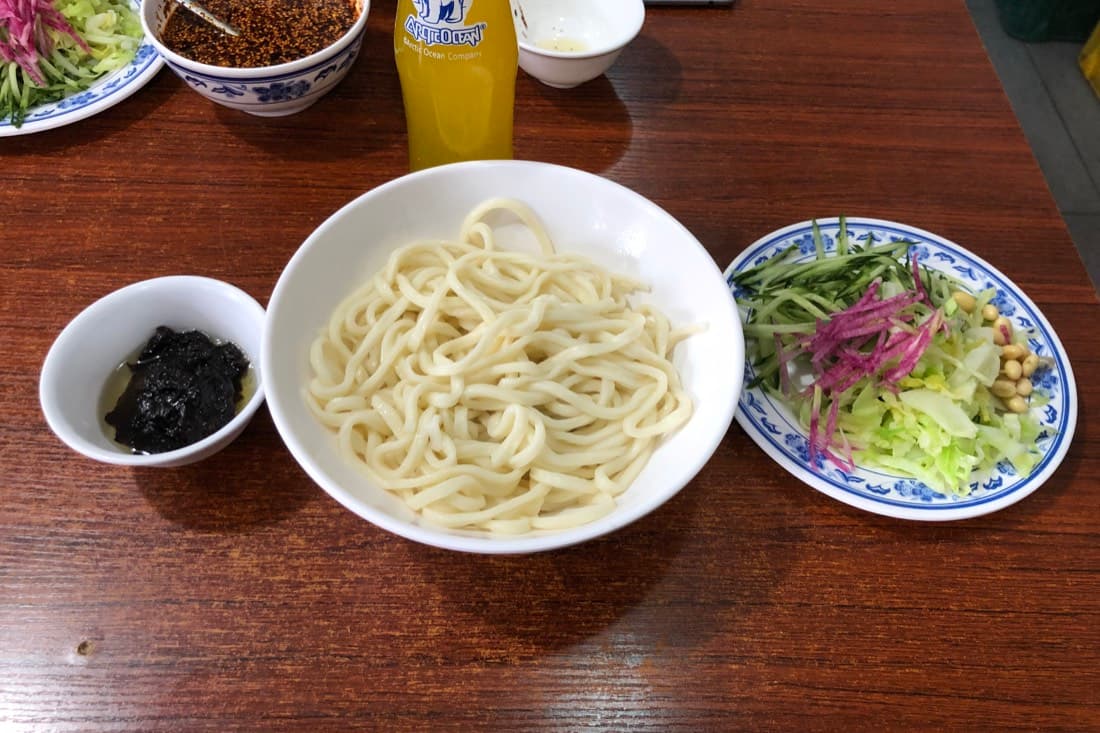
A classic bowl usually arrives deconstructed: noodles, dark zhajiang sauce, cucumber strips, radish, bean sprouts, sometimes soybeans or cabbage, and a small collection of condiments depending on the shop. The sauce is the point. It is thick, savory, fermented, and often cooked with minced pork.
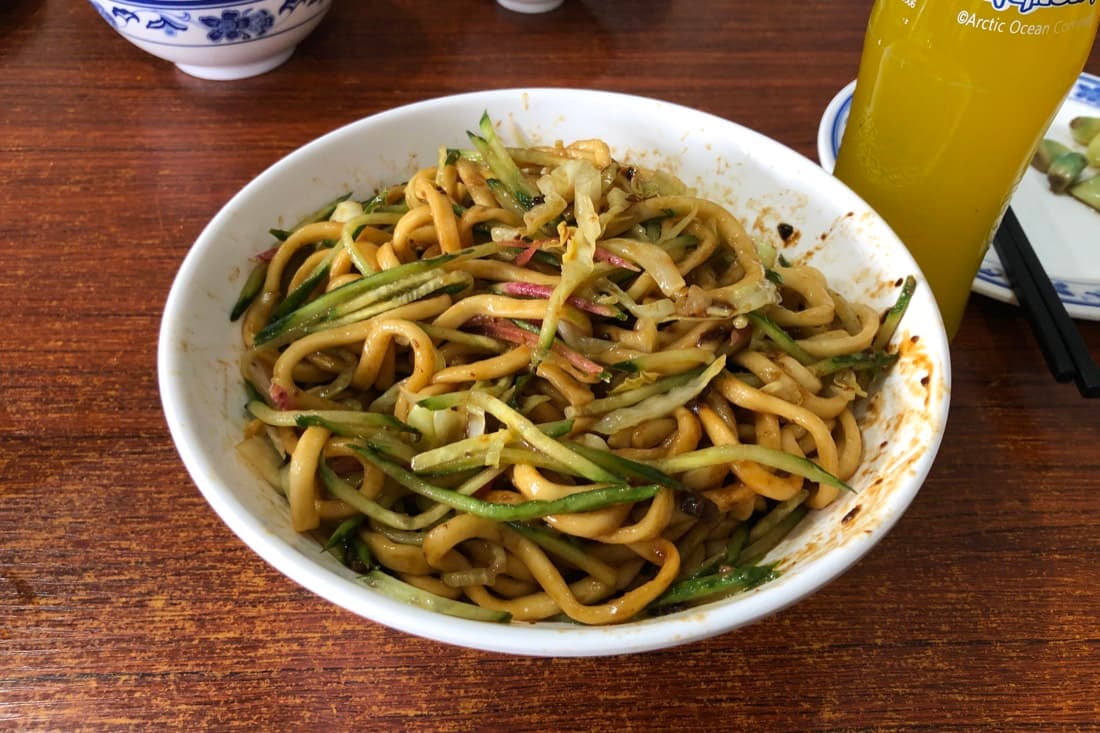
Mix more than you think you need to. The first lazy stir leaves one bite too salty and another too plain. The goal is even coating, crunch in each mouthful, and enough sauce to cling without becoming heavy.
Fangzhuanchang No. 69: why one noodle shop became the shorthand
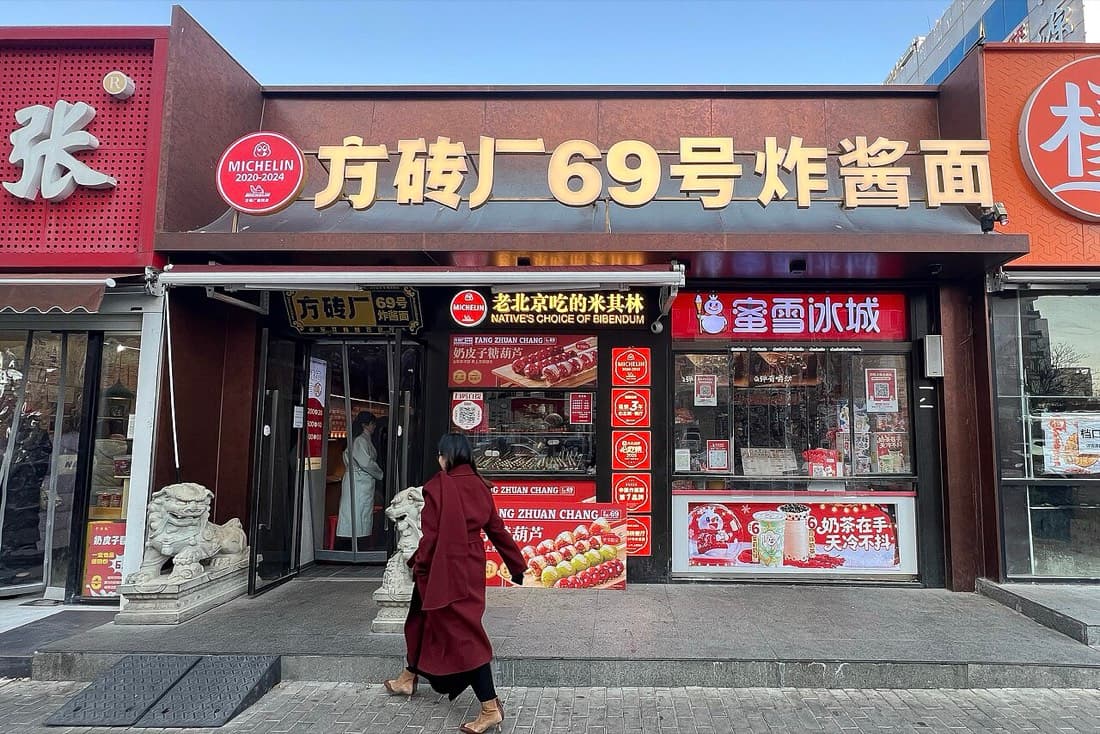
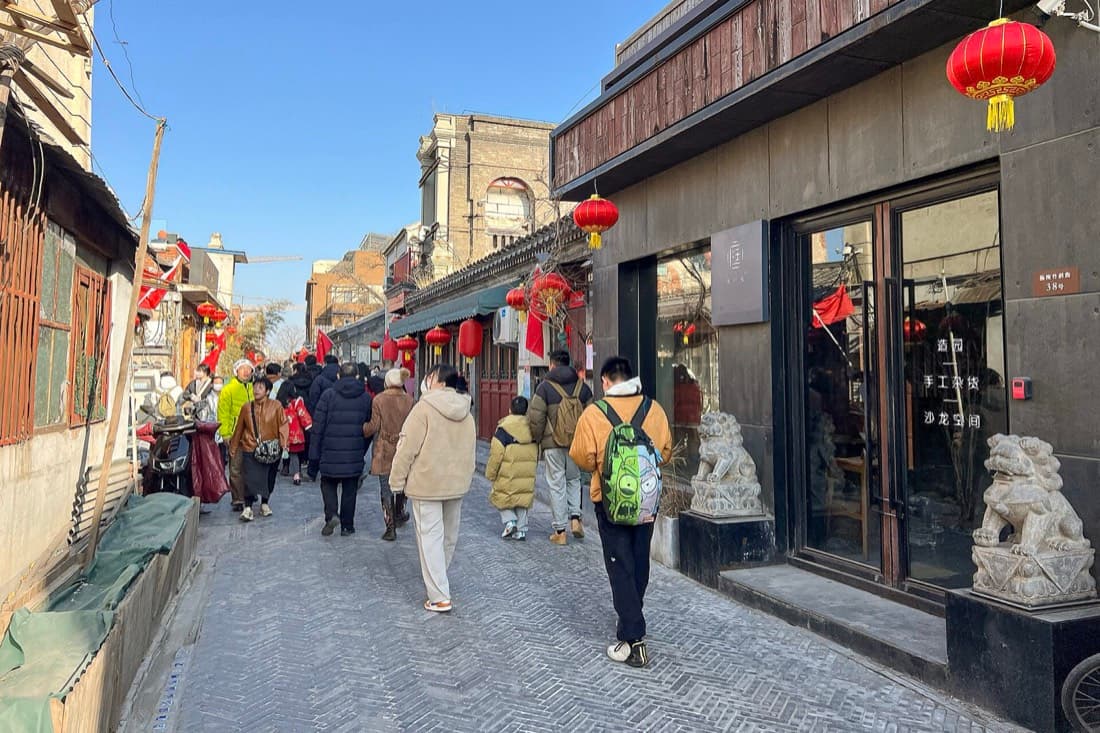
Fangzhuanchang Hutong No. 69 is the name travelers now see again and again. Reddit food-route advice points people to the original near Gulou and the Qianmen branch for sightseeing convenience. Michelin also lists No. 69 Fangzhuanchang Zhajiangmian in its Beijing restaurant guide.
Then came the 2026 internet moment: AP reported that Nvidia CEO Jensen Huang was spotted eating zhajiangmian at No. 69 Fangzhuanchang Noodles during a Beijing food tour. Celebrity sightings do not make a bowl better, but they do explain why a simple hutong lunch suddenly feels like part of the current Beijing conversation.
Do you have to eat at the famous one?
No. Fangzhuanchang is useful because it is findable, famous, and focused. But zhajiangmian is also a daily food. Small hutong restaurants, neighborhood noodle counters, and old Beijing eateries can serve bowls that feel less performative and more like lunch.
If you are near Gulou, Qianmen, or a hutong area and see a shop with steady local turnover, it may be worth trying. The key is freshness and rhythm: noodles should not feel tired, vegetables should be crisp, and the sauce should taste deeply savory rather than flat.
How to order without turning lunch into homework
At a specialist shop, ordering can be refreshingly simple. Show the name, point to the signature bowl, and use translation only for add-ons or dietary needs. If you cannot eat pork, ask before ordering. If you do not like strong fermented flavors, split one bowl first rather than committing everyone.
The best time is early lunch or a slightly off-peak afternoon. A famous bowl plus a nearby Drum Tower, Bell Tower, Shichahai, or Nanluoguxiang walk makes a very efficient half-day.
What to drink with it
The classic local dare is douzhi, Beijing's sour fermented mung bean drink. It is culturally important, deeply divisive, and often a shock to first-timers. If you are curious, try a small amount and keep a backup drink nearby.
Otherwise, cold bottled tea, a soft drink, or plain water will do. Zhajiangmian is salty and filling; you do not need a complicated pairing. You need napkins, patience with the queue, and enough appetite to finish the bowl while the noodles still have bounce.