
Useful Chinese Phrases for Travelers in China
You do not need to study full Mandarin before a China trip. What you need is a small phrase set that solves common travel moments and works well when shown on a phone screen.
Difficulty
Easy
Time needed
10-15 minutes
Updated
May 16, 2026
Start here
Quick answer
- Save a few phrase cards offline before arrival: payment, taxi/address, hotel, restaurant, restroom, and emergency help. Showing Chinese text often works better than trying to pronounce a long sentence.
- For addresses, use Chinese characters, not only pinyin or English. Drivers, couriers, and hotel staff can handle Chinese map addresses much more reliably.
- For anything high-risk such as allergies, passports, times, payment amounts, or medical help, combine the phrase with translation app confirmation.
Requirements
- Required: screenshots of phrase cards saved offline.
- Required: hotel name and address in Chinese characters.
- Recommended: translation app with offline or low-data support.
- Recommended: WeChat set up for chat translation.
- Recommended: emergency numbers saved: 110 police, 120 ambulance, 119 fire.
Visual manual
Step-by-step guide
Start with payment phrases
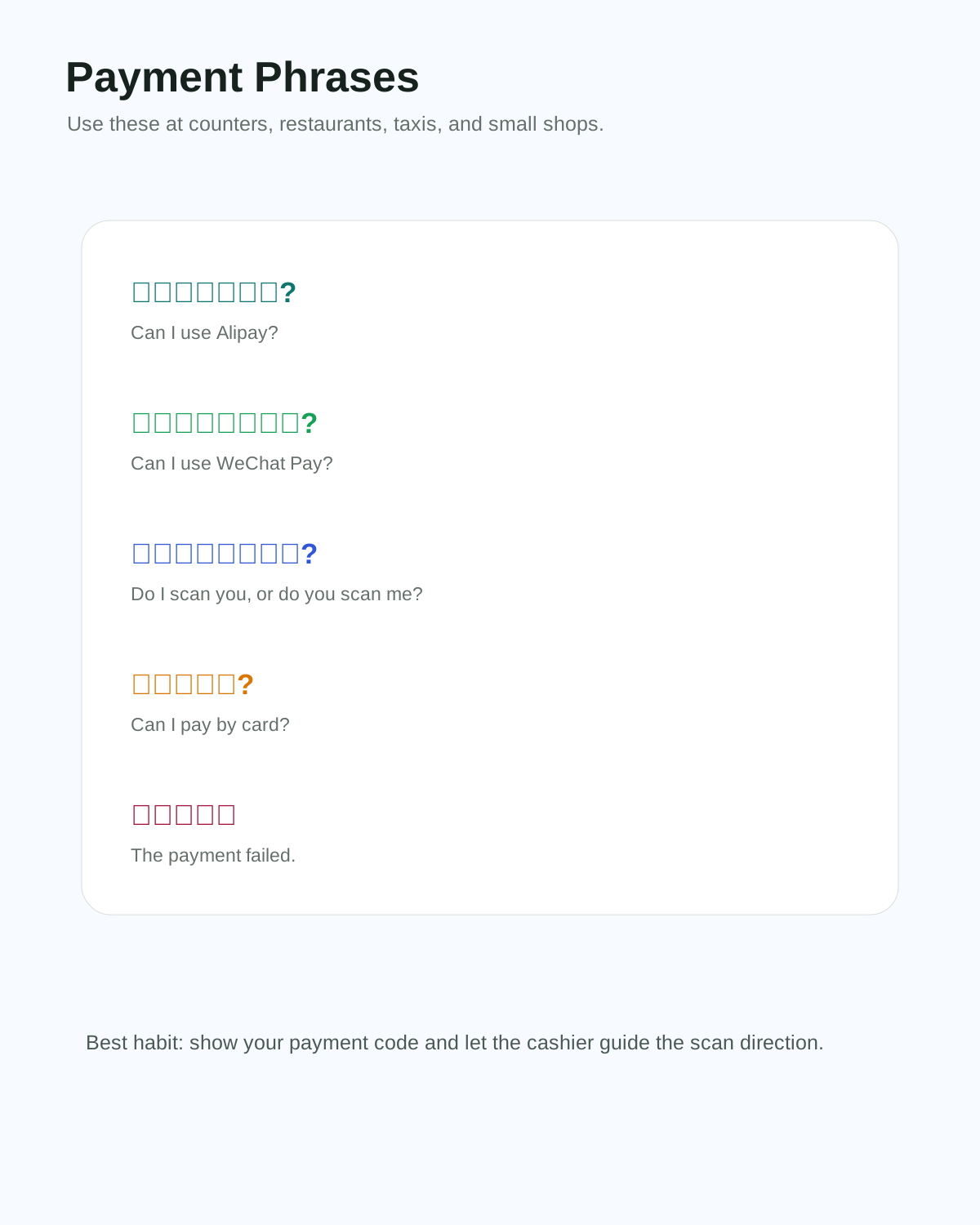
Payment is the most common quick interaction. Use 可以用支付宝吗? for Can I use Alipay? 可以用微信支付吗? for Can I use WeChat Pay? 我扫你还是你扫我? asks whether you should scan their QR code or show your payment code. 支付失败了 means the payment failed.
If payment fails, switch app/card or use the payment failure troubleshooting guide.
Use Chinese addresses for taxis and ride-hailing
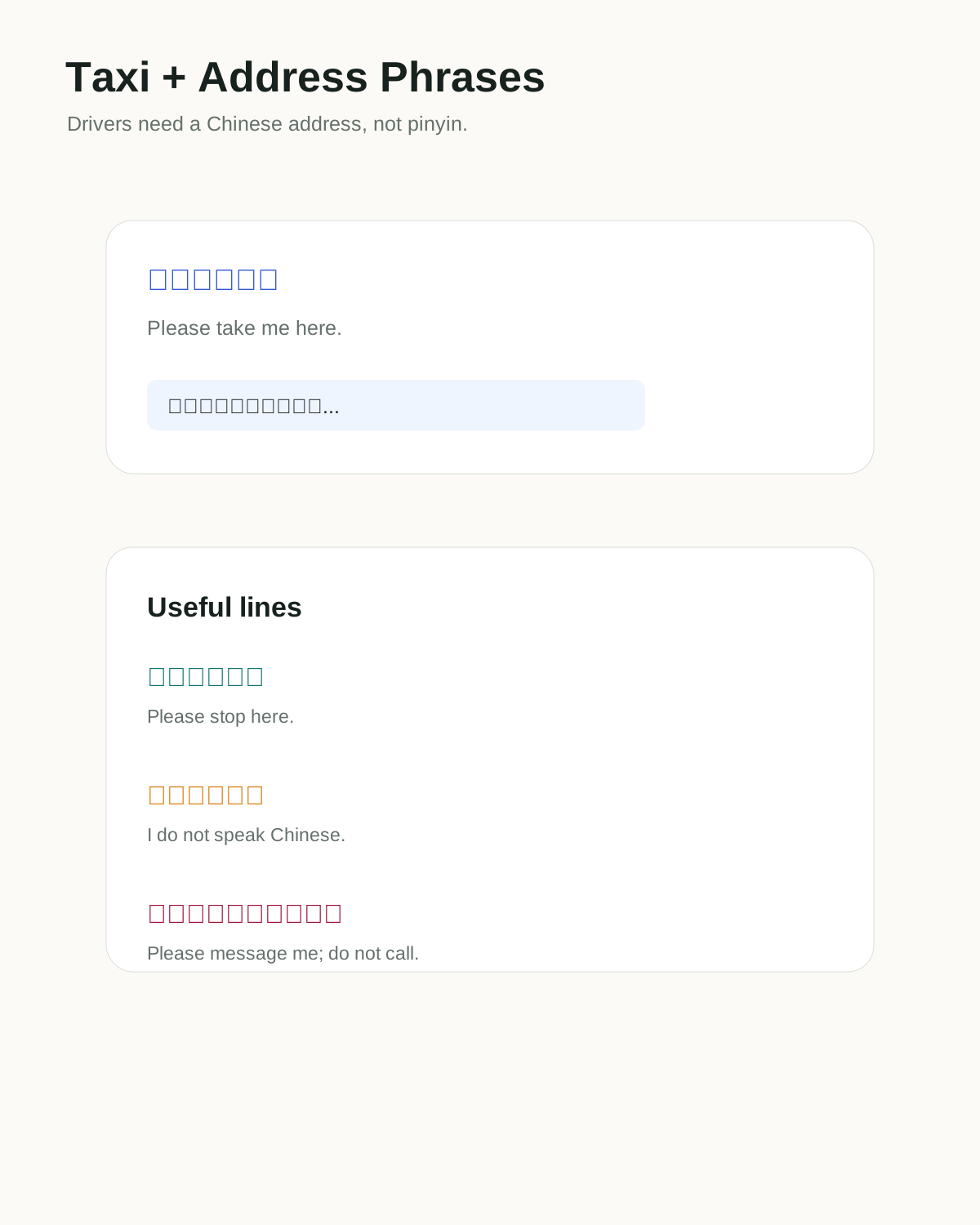
For taxis, drivers need the Chinese address or a map pin. Use 请带我去这里 for Please take me here, 请在这里停车 for Please stop here, and 我不会说中文 for I do not speak Chinese. If you use ride-hailing, save 请发消息,不要打电话 to ask the driver to message instead of calling.
Save hotel and destination addresses in Amap before leaving Wi-Fi.
Save hotel phrases for check-in
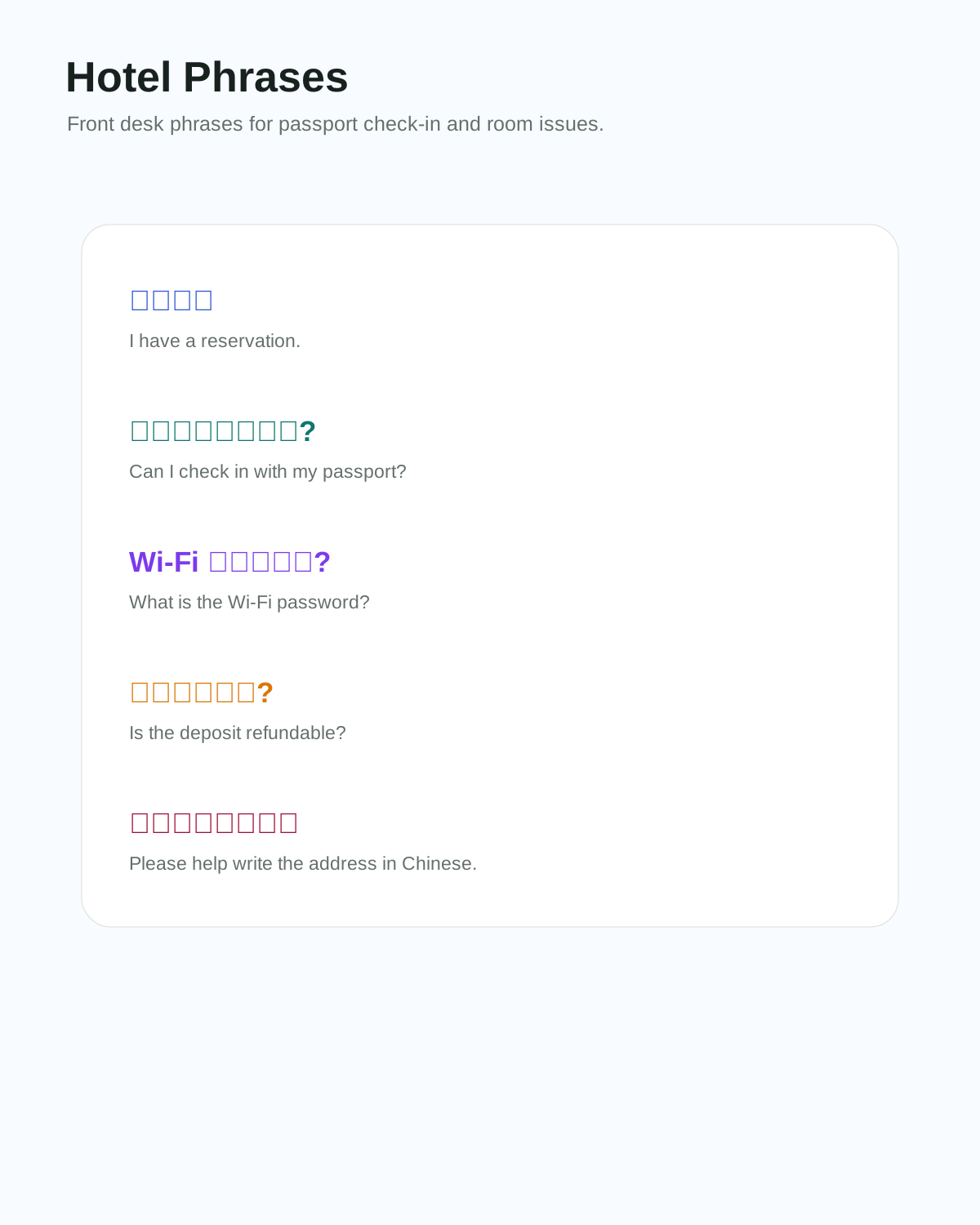
Useful lines include 我有预订 for I have a reservation, 可以用护照登记吗? for Can I check in with my passport?, Wi-Fi 密码是多少? for What is the Wi-Fi password?, and 请帮我写中文地址 for Please help write the address in Chinese.
Ask the front desk to write your hotel address in Chinese for taxis, couriers, and emergency use.
Use restaurant phrases for QR ordering and diet needs
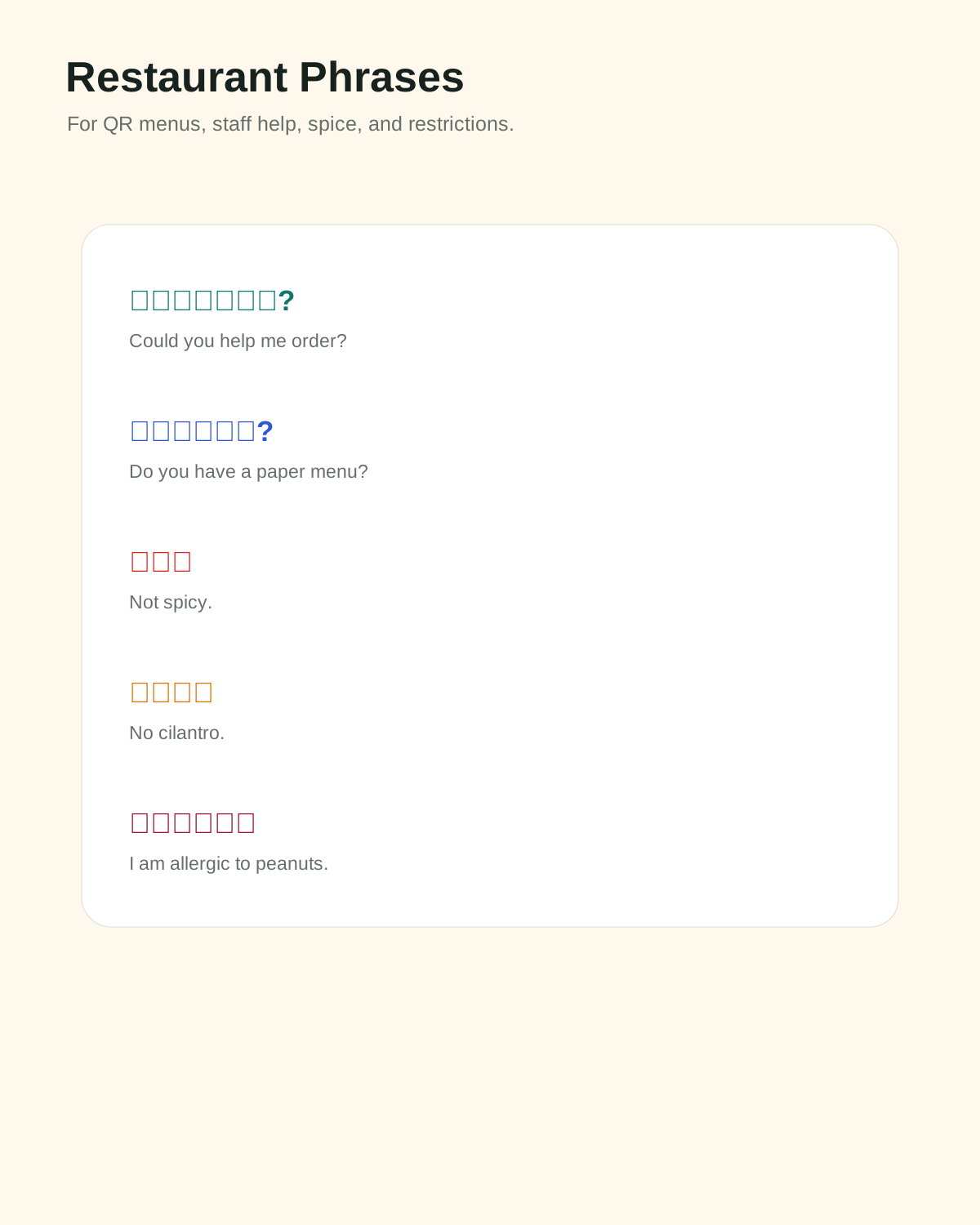
At restaurants, use 可以帮我点餐吗? for Could you help me order? 有纸质菜单吗? for Do you have a paper menu? 不要辣 for not spicy, 不要香菜 for no cilantro, and 我对花生过敏 for I am allergic to peanuts. Replace the allergy word with your real allergy.
For serious allergies, use a dedicated allergy card instead of relying on a casual phrase.
Keep restroom and emergency phrases offline
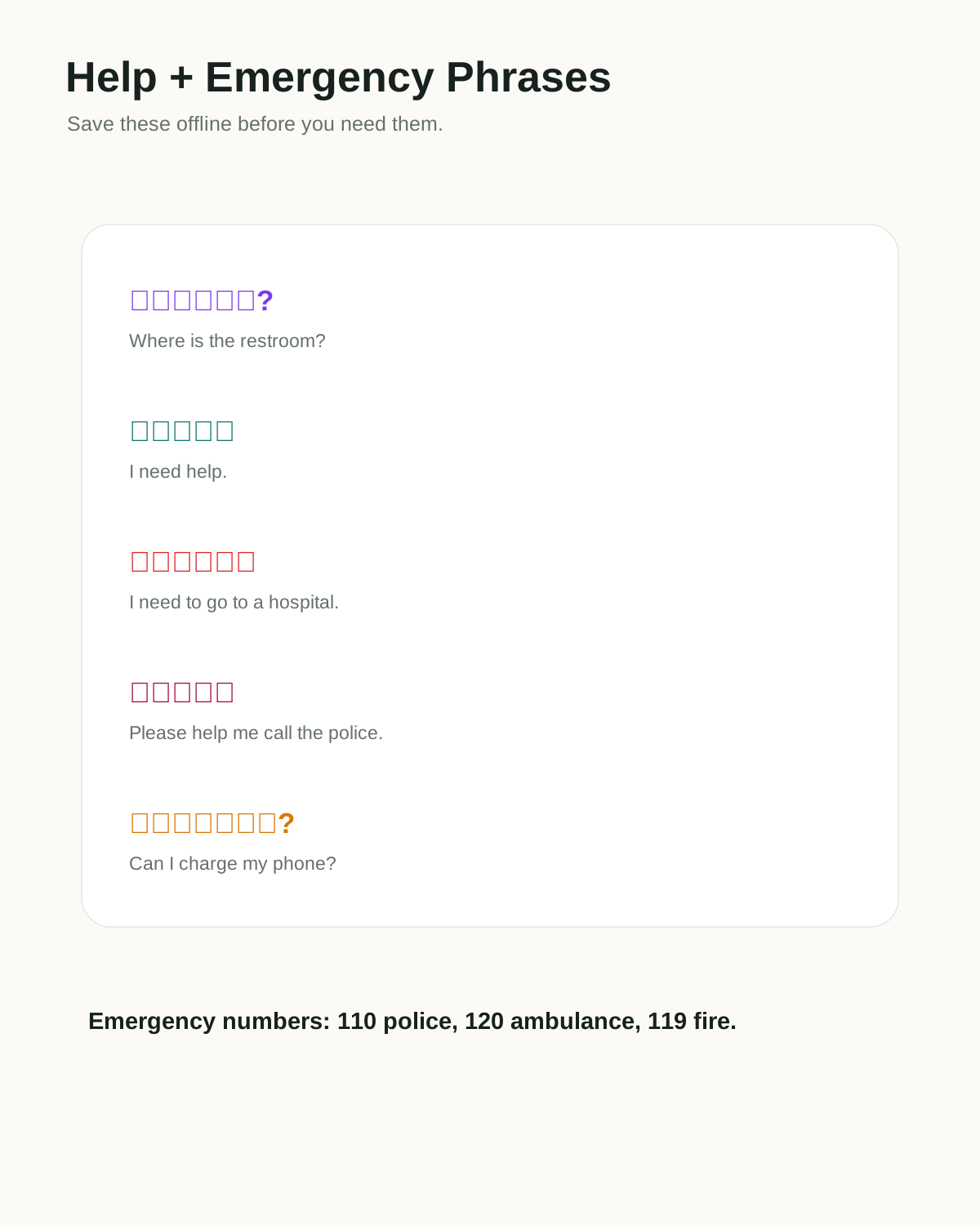
Save 洗手间在哪里? for Where is the restroom?, 我需要帮助 for I need help, 我需要去医院 for I need to go to a hospital, 请帮我报警 for Please help me call the police, and 可以借我充电吗? for Can I charge my phone?
Numbers to know: 110 police, 120 ambulance, 119 fire.
Troubleshooting
Common problems and fixes
- People answer in fast Chinese after you use a phrase: show 'I do not speak Chinese' and switch to translation app text.
- Taxi driver cannot understand pinyin: show the Chinese address in Amap or WeChat.
- Pronunciation fails because of tones: show the phrase card instead of repeating it louder.
- Restaurant staff are too busy: point to the phrase and menu photo, or choose a less rushed place.
- Phone has no internet: keep phrase cards, hotel address, and emergency numbers saved offline.
Important warnings
- Do not rely on pinyin-only addresses for taxis or deliveries.
- Do not use allergy phrases casually if the allergy is serious; show a full card and confirm.
- Do not expect every staff member to speak English outside international hotels, airports, and tourist-heavy services.
- Do not turn a translation app message into a long paragraph. Short phrases translate better.
Best route and backup plan
Recommended route
- Before arrival, screenshot the five phrase cards in this guide and save your hotel address in Chinese.
- During the trip, show Chinese text first, then use voice or conversation translation if the answer is complicated.
- For restaurants, taxis, and hotel desks, combine a phrase card with a map pin, photo, or app screen.
Backup options
- Show the Chinese phrase on your phone instead of speaking it.
- Ask hotel staff to write a Chinese note for your destination, allergy, or problem.
- Use translation app conversation mode one question at a time.
- Point to photos, app screens, or map pins when words are slow.
FAQ
Do I need to speak Mandarin to travel in China?
No, but you should prepare key phrases, Chinese addresses, translation apps, and payment apps. The phrase cards help in the common moments where English is limited.
Should I learn pinyin?
Pinyin helps you read pronunciation, but Chinese characters are more useful for showing addresses, restaurant names, and app screens to local staff.
What is the most useful Chinese phrase?
我不会说中文 means I do not speak Chinese. Pair it with a translated message or phrase card so the other person knows how to help.
How do I ask if I can pay with Alipay?
Show 可以用支付宝吗? For WeChat Pay, show 可以用微信支付吗?
How do I ask for a bathroom?
Show or say 洗手间在哪里? It means Where is the restroom?
How do I ask a taxi to stop here?
Use 请在这里停车, meaning Please stop here.
Can I use these phrases for medical emergencies?
Only as a starting point. Use 我需要去医院 for I need to go to a hospital and call 120 for ambulance help, but use translation support and local assistance as soon as possible.
China’s essential messaging, payments, mini program, and everyday identity app.
Keep going
Related practical guides

How to Communicate in China Without Speaking Mandarin
Set up a practical communication system for China travel using translation apps, camera translation, WeChat translation, screenshots, phrase cards, and confirmation habits.

How to Order Food in Restaurants in China
Use QR-code restaurant menus, translate Chinese dishes, customize orders, pay with WeChat Pay or Alipay, and ask staff for help when the mini program is confusing.

How Hotel Check-In Works for Foreigners in China
Prepare for passport registration, foreign guest acceptance, deposits, and arrival timing.