
How to Use China 240-Hour Visa-Free Transit
China's 240-hour visa-free transit policy can let eligible travelers enter China for up to 10 days without a tourist visa, but it is not a simple visa-free holiday rule. Your passport, route, confirmed onward ticket, entry and exit ports, and travel area all need to fit the official transit conditions.
Difficulty
Medium
Time needed
20-40 minutes
Updated
May 15, 2026
Start here
Quick answer
- China's 240-hour visa-free transit lets eligible travelers from 55 countries enter mainland China for up to 10 days without a visa when they are transiting to a third country or region.
- The simplest rule is: your route should be A -> mainland China -> B, where B is different from A. You also need a valid passport, a confirmed onward ticket within 240 hours, an eligible entry/exit port, and a plan to stay inside the permitted areas.
- This is not the same as ordinary visa-free tourism. If your nationality, route, port, onward ticket, or travel area does not fit, apply for a visa or confirm with 12367 and your airline before travel.
Requirements
- Required: passport from one of the current eligible countries, valid for at least 3 months.
- Required: confirmed onward ticket to a third country or region within 240 hours, with date and booking or seat details where available.
- Required: entry and exit through eligible ports that apply the policy. As of the November 2025 NIA update, the policy covers 65 ports in 24 provinces, autonomous regions, and municipalities.
- Required: hotel address or stay address, arrival card information, and route proof showing you will remain inside permitted areas.
- Recommended: printed and offline copies of passport page, inbound ticket, onward ticket, hotel booking, travel insurance, and NIA policy page.
Visual manual
Step-by-step guide
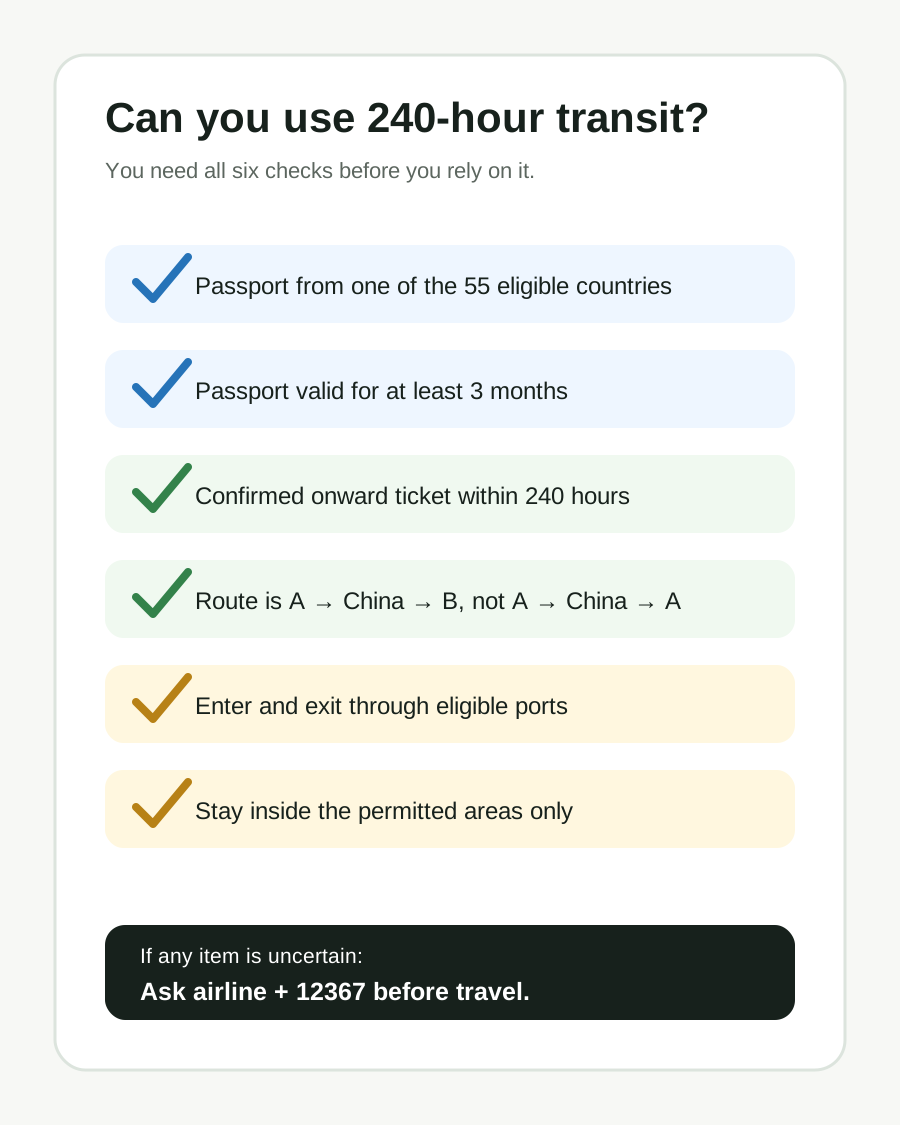
Check the six eligibility points before booking
Do not start with the question, Do I need a visa? Start with the six checks: eligible nationality, passport validity, confirmed onward ticket, true third-country transit route, eligible port, and permitted stay area. If one check fails, the airline or border officer may treat the trip as ineligible.
Original China Life Kit eligibility checklist based on NIA conditions.
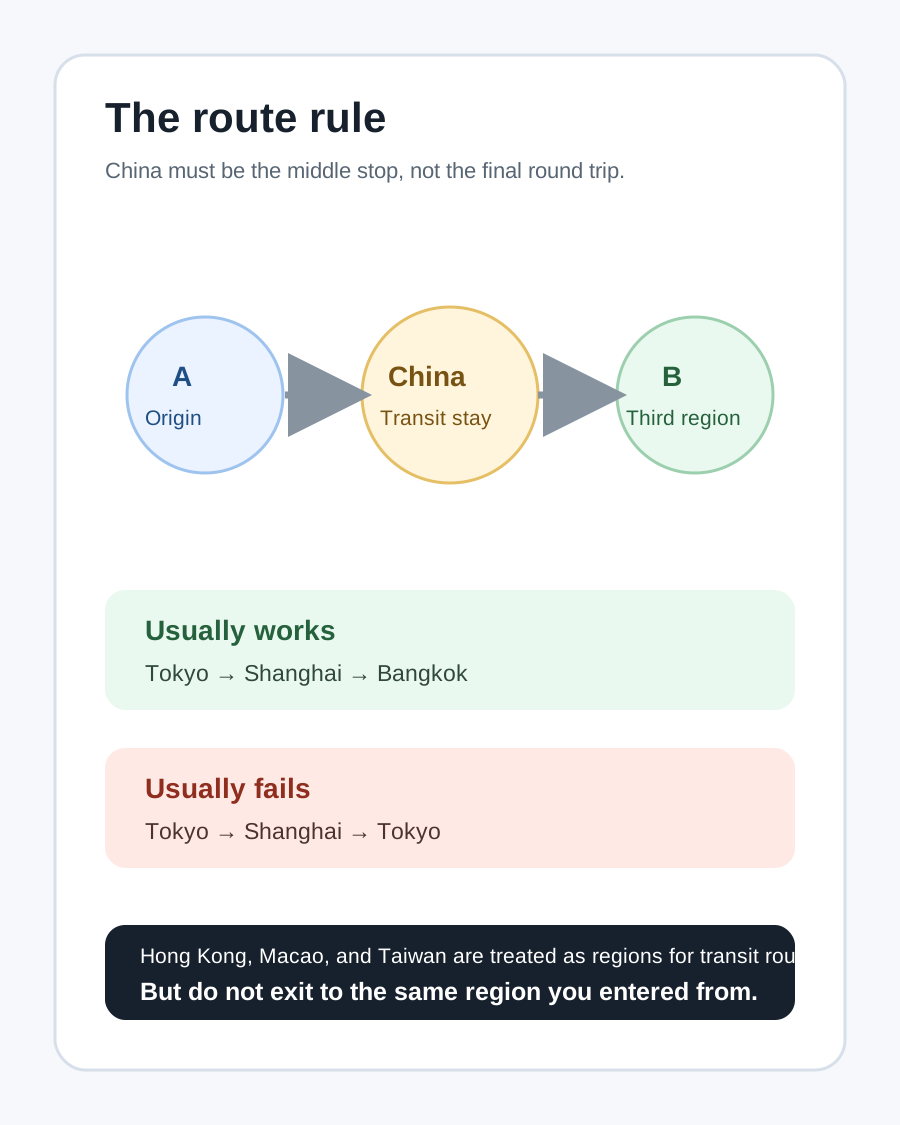
Make the route a real transit: A -> China -> B
Your mainland China stay must sit between two different countries or regions. Hong Kong, Macao, and Taiwan can count as separate regions for routing, but the place you go after mainland China should not be the same place you came from. A route like Seoul -> Shanghai -> Hong Kong is easier to explain than Seoul -> Shanghai -> Seoul.
Original route-rule diagram.
Book an onward ticket that proves your exit within 240 hours
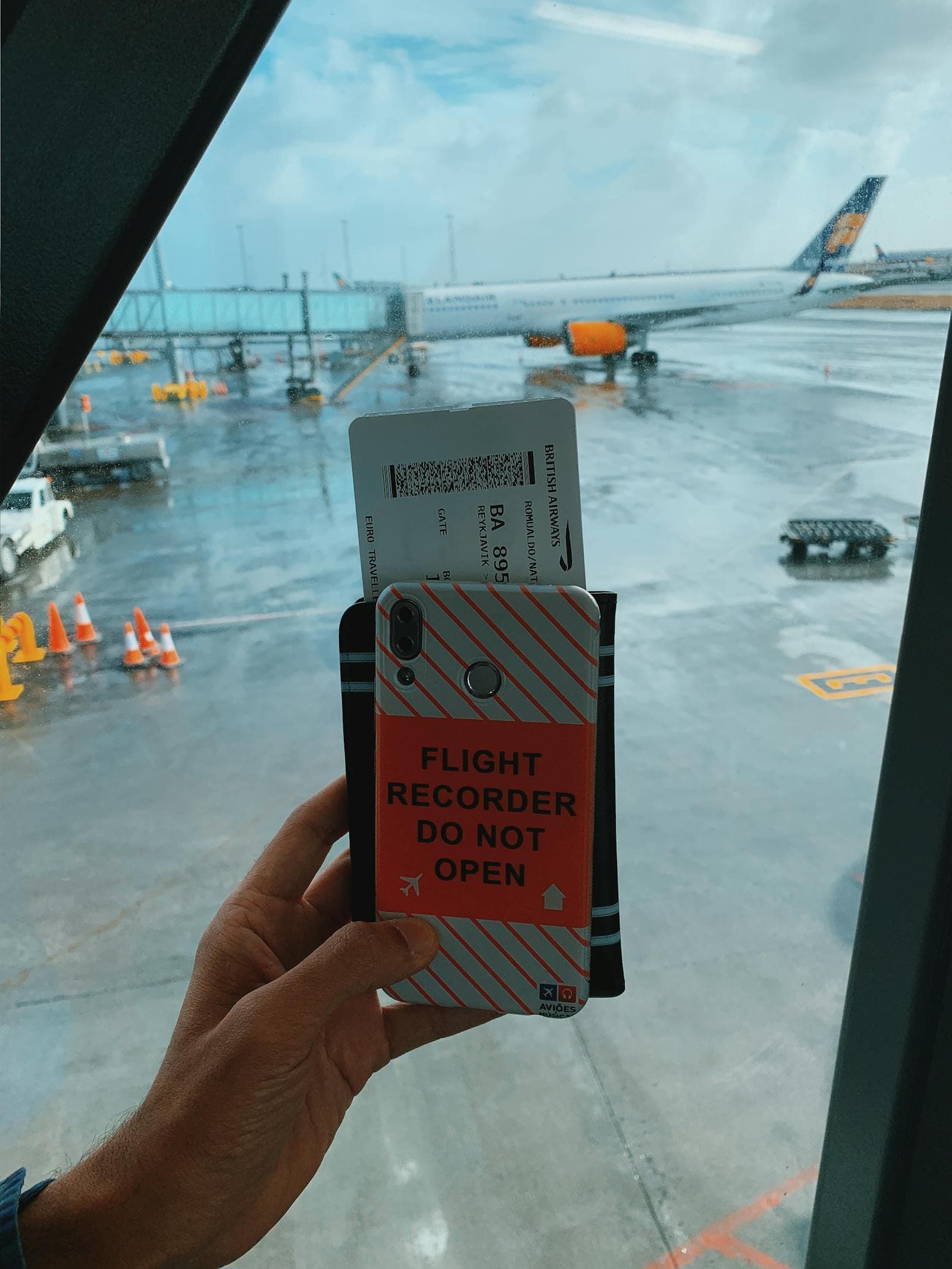
NIA says travelers need interline tickets or proof documents with confirmed arrangements and departure dates within 240 hours. Keep the booking confirmation, route, flight/train/ship number, departure date, and destination available offline. Separate tickets can still be understandable, but they are more likely to trigger airline questions.
Pexels travel document photo downloaded locally; review before publishing.

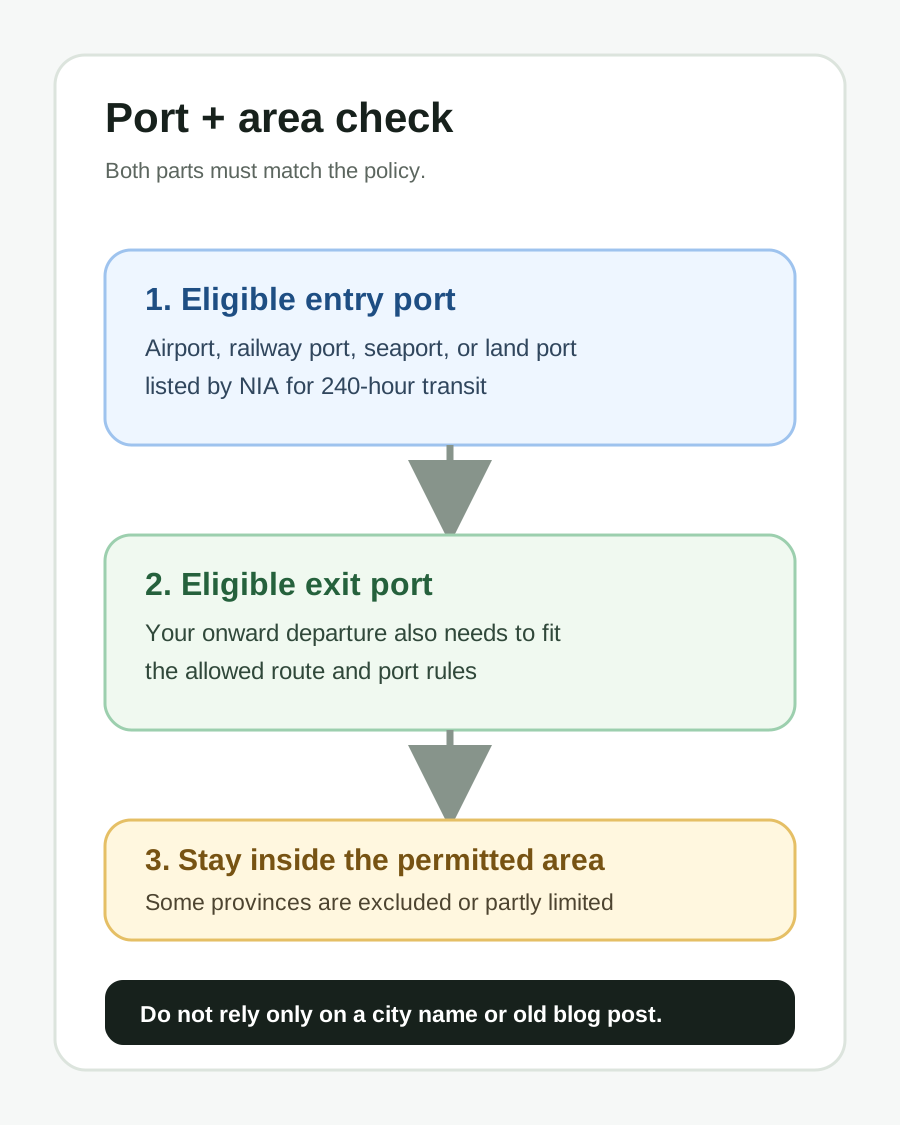
Check the port and the permitted travel area
The newest NIA notice says eligible travelers may apply through 65 designated ports across 24 province-level regions. But not every part of mainland China is open under the transit policy: for example, Inner Mongolia, Jilin, Xizang/Tibet, Gansu, Qinghai, Ningxia, and Xinjiang are not part of the 240-hour permitted stay area listed in the China Daily/NIA Q&A context. Some included provinces also have city-level limits.
Original port and area check diagram.
Understand when the 240-hour clock starts
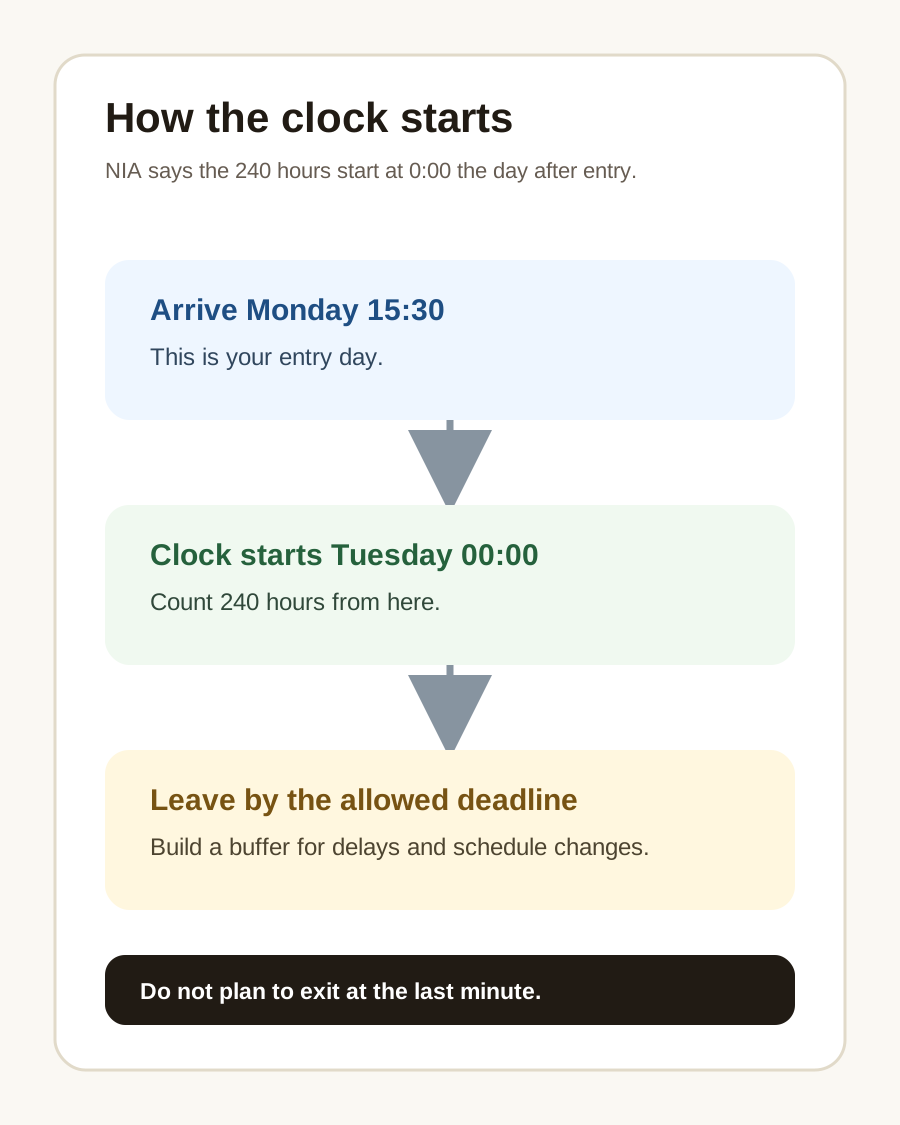
The NIA notice says the visa-free stay period is calculated from 0:00 on the day following the day of entry. That sounds generous, but do not plan to leave at the last possible minute. Flight changes, weather, train delays, or port issues can turn a clever itinerary into an overstay risk.
Original timing diagram based on NIA wording.
Prepare for airline check-in before you reach China
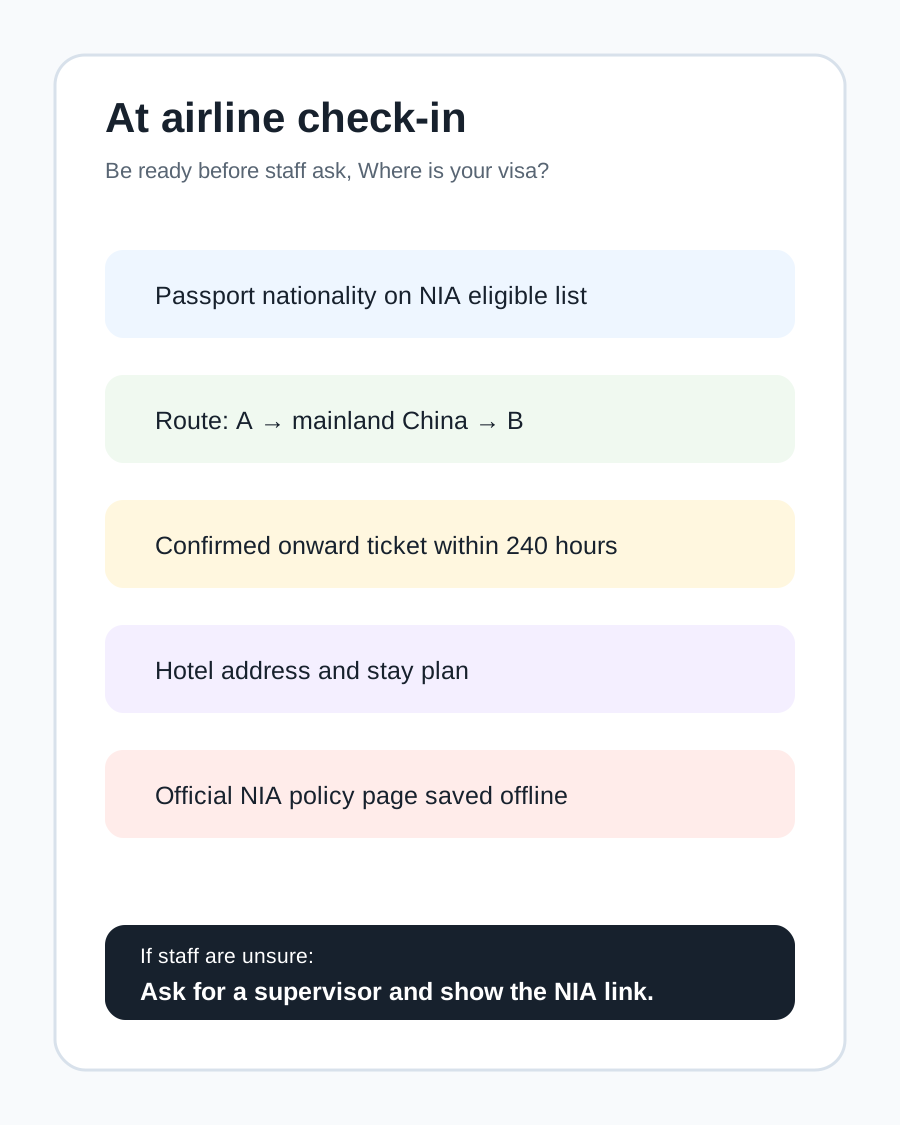
The first practical gatekeeper is often the airline. At check-in, be ready to show that your passport nationality is eligible, your destination after mainland China is a third country or region, and your onward ticket leaves within 240 hours. If the airline cannot verify the policy, ask for a supervisor and show the official NIA page.
Original airline check-in proof checklist.
Apply at the temporary entry / visa-free transit counter on arrival
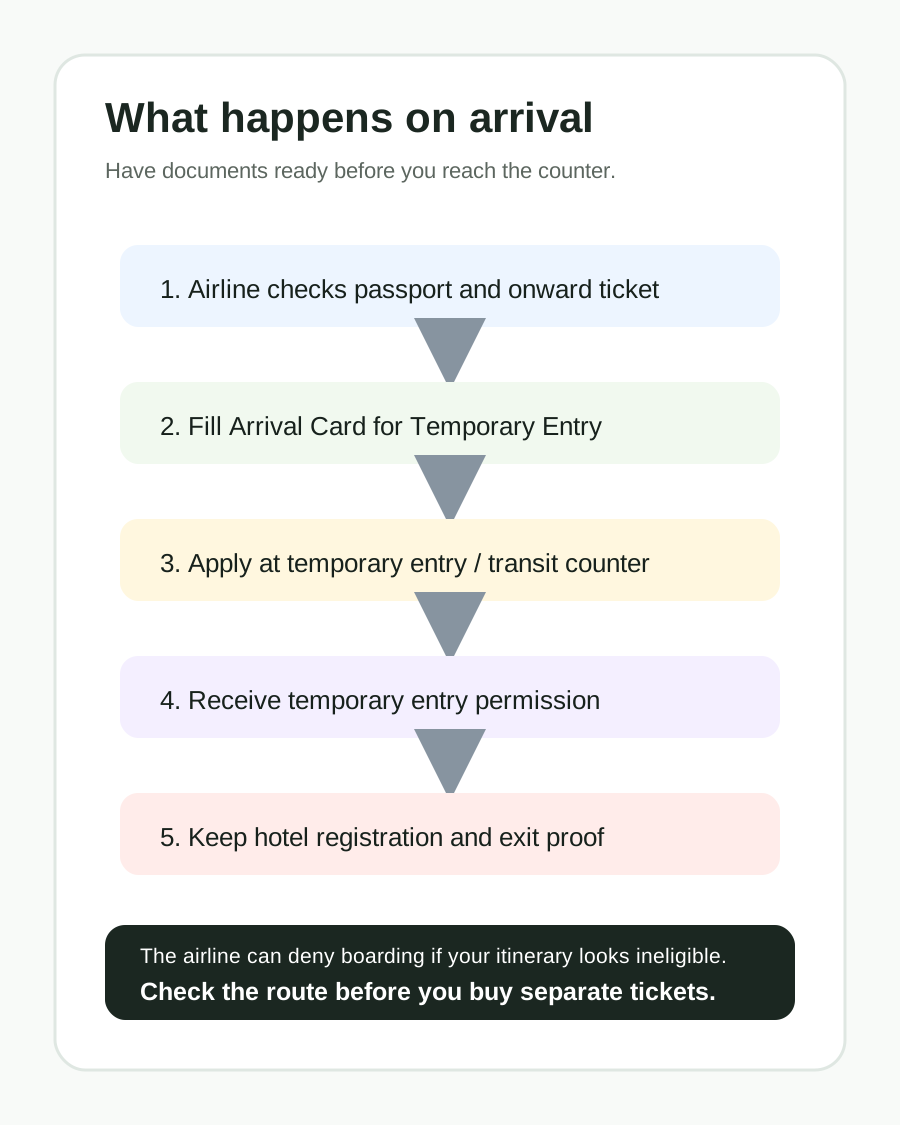
On arrival, follow signs or staff instructions for temporary entry, transit without visa, or visa-free transit. Fill the Arrival Card for Temporary Entry Foreigners if required, then show passport, inbound and onward tickets, hotel address, and itinerary. NIA also introduced online arrival card filling channels, but travelers who cannot do it online can complete it on arrival.
Original arrival flow diagram based on NIA entry-process notes.
During the stay, keep proof and stay within the rules
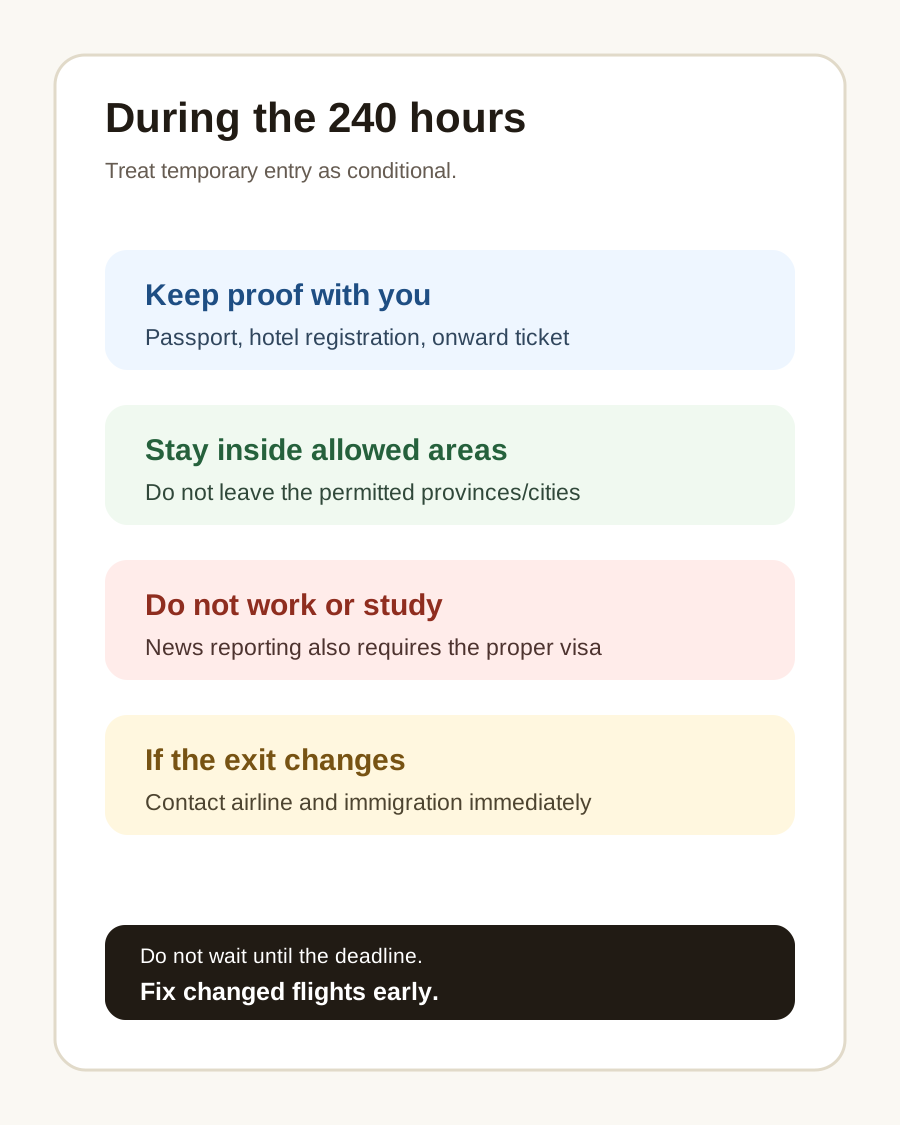
After entry, register your accommodation through the hotel or local system, keep your passport and onward ticket accessible, and do not work, study, or do news-reporting activities without the proper visa. If your onward flight changes, confirm immediately that the new plan still exits within the allowed time and from an eligible port.
Original stay-rules diagram.
Troubleshooting
Common problems and fixes
- Problem: you enter from and return to the same country or region. Likely reason: the route is a round trip, not transit. What to do: change the onward destination or apply for a visa.
- Problem: airline staff ask for a China visa. Likely reason: they do not understand your eligibility or your itinerary is unclear. What to do: show the official NIA page, ask for a supervisor, and make sure your onward ticket is confirmed.
- Problem: separate tickets make the trip look risky. Likely reason: the airline cannot see the full through-itinerary. What to do: carry all confirmations offline and leave extra connection time.
- Problem: you want to visit a province not covered by the policy. Likely reason: 240-hour transit only allows designated areas. What to do: change the itinerary or get the correct visa.
- Problem: your onward flight is delayed or canceled. Likely reason: operational disruption. What to do: contact airline and local immigration authorities immediately; do not wait until the deadline.
- Problem: you confuse this with unilateral visa-free entry. Likely reason: China has several visa-free systems. What to do: check which policy applies to your passport and route.
Important warnings
- Visa and immigration rules can change. Re-check the official NIA source, airline rules, and your nearest Chinese embassy or consulate before travel.
- Do not use fake onward tickets, fake hotel bookings, or screenshots that cannot be verified.
- Do not work, study, or conduct news-reporting activities under this transit permission unless you have the correct visa and approval.
- Do not travel outside the permitted stay areas. This can create immigration problems even if your 240-hour timing is still valid.
- If you are eligible for a separate mutual visa exemption or unilateral visa-free policy, those rules may prevail over transit rules.
Best route and backup plan
Recommended route
- For most travelers, use a simple, easy-to-explain itinerary through a major eligible airport: Country/Region A -> mainland China -> Country/Region B, with a confirmed onward ticket, hotel booking, and travel plan that stays inside the permitted area.
Backup options
- Apply for the correct visa if your route, nationality, port, or travel area is uncertain.
- Call the China Immigration Service Hotline 12367 for policy questions and keep the answer documented if possible.
- Ask the airline before buying or checking in, especially when using separate tickets.
- Simplify the route to a clear A → China → B itinerary through a major eligible airport.
- Keep a refundable onward ticket or flexible booking where appropriate, but do not use fake documents.
FAQ
Is China's 240-hour visa-free transit the same as a tourist visa exemption?
No. It is a transit policy. You must be traveling from one country or region through mainland China to a third country or region, and you must meet the nationality, document, port, timing, and permitted-area rules.
Which nationalities are eligible?
The NIA list currently has 55 countries, including the United States, Canada, the United Kingdom, many European countries, Australia, New Zealand, Japan, South Korea, Singapore, Brunei, UAE, Qatar, and Indonesia. Check the official NIA page before booking because the list can change.
When does the 240-hour clock start?
The November 2025 NIA notice says the visa-free stay period is calculated from 0:00 on the day following the day of entry. Still, you should leave a buffer and avoid planning an exit at the last possible hour.
Can I fly into Beijing and leave from Shanghai?
Potentially yes, if both ports are eligible, your route is a true third-country transit, and your travel remains within the permitted areas. Cross-province travel is allowed within designated areas, but always check your exact itinerary.
Can Hong Kong or Macao count as the third region?
Yes, Hong Kong and Macao are commonly treated as separate regions for transit routing. But you should not enter mainland China from Hong Kong and then exit back to Hong Kong if you are relying on the third-country/region transit rule.
Do I need a confirmed seat?
NIA policy interpretation mentions onward tickets with confirmed seats and departure dates; the November 2025 notice refers to confirmed arrangements and departure dates or other proof documents. In practice, carry the strongest proof you can: booking confirmation, route, date, destination, and seat where available.
Can I use separate tickets?
Separate tickets may be possible, but they are harder for airline staff to verify. Keep all confirmations offline, allow enough connection time, and ask the airline before travel.
Can I visit any city in China during the 240 hours?
No. You must stay within the designated permitted areas. Some provinces are fully included, some are partly limited, and several provinces/autonomous regions are not included under the policy.
What documents should I show on arrival?
Prepare passport, inbound ticket, onward ticket, hotel or stay address, itinerary, and Arrival Card for Temporary Entry Foreigners if required. You may be asked to cooperate with immigration checks.
Who should I contact if I am unsure?
NIA says travelers can contact the China Immigration Service Hotline 12367 for more information. Also confirm with your airline before departure, because airline check-in staff decide whether you can board without a visa.
Keep going
Related practical guides
First-Time China Travel Checklist
Plan first-time routes, city choices, seasons, budgets, entry basics, and pre-trip preparation.
First-Time China Travel Checklist
A practical pre-trip checklist for first-time visitors covering documents, payments, connectivity, maps, hotels, transport, and backups.

How to Book a Hotel in China as a Foreigner
Choose a hotel that can host foreign guests, confirm passport registration, and prepare check-in details.

First 72 Hours in China: Practical Setup Checklist
A focused checklist for payments, phone access, transport, hotel basics, food, and emergency backups.